Samsung Launches Mobile CT in India to Deliver Imaging wherever Patients are

The new devices are designed to function in environments such as intensive care units, operating rooms, emergency departments, and smaller healthcare facilities that may not have access to fixed CT installations.
Samsung India, through its medical subsidiary NeuroLogica, has introduced a portfolio of mobile CT scanners to the Indian market.
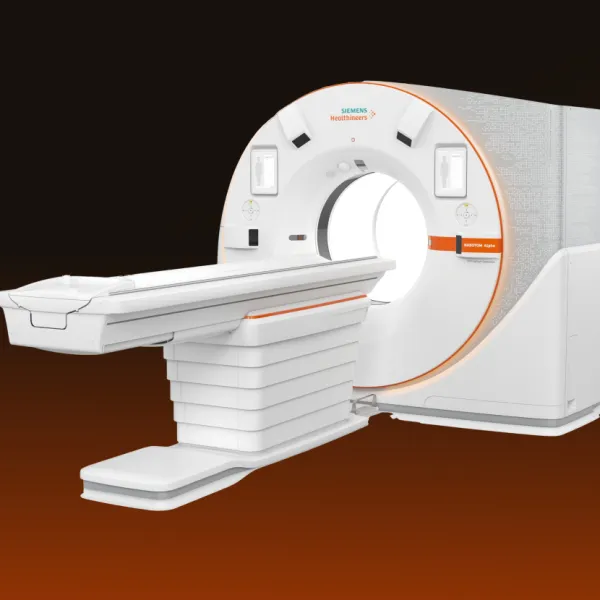
The launch includes four systems, CereTom Elite, OmniTom Elite, OmniTom Elite PCD, and BodyTom 32/64, designed to transform patient-centric imaging by bringing advanced diagnostics directly to the bedside.
The new devices are designed to function in environments such as intensive care units, operating rooms, emergency departments, and smaller healthcare facilities that may not have access to fixed CT installations.
Unlike conventional scanners that require significant infrastructure and patient transfers, these mobile units are compact, battery-operated, and capable of moving freely across clinical departments.
Key Features
CereTom Elite is an eight-slice CT scanner with a 32-centimeter patient opening and a 25-centimeter field of view. It operates on a two-hour battery, making it suitable for routine bedside neuroimaging.
OmniTom Elite introduces ultra-high-resolution scanning with 0.125-millimeter by 80-slice reconstruction, a 40-centimeter opening, and a 30-centimeter field of view.
With a 1.5-hour battery, this device is targeted at intraoperative workflows, where neurosurgeons can conduct scans during procedures and complete interventions such as deep brain stimulation in far less time than traditional methods allow.
The OmniTom Elite PCD incorporates photon-counting detector technology, an advancement that delivers sharper images and reduces artifacts. This feature enhances imaging for oncology, complex neurology, and interventional radiology.
The BodyTom 32/64 provides full-body imaging with either 32- or 64-slice options. It has an 85-centimeter opening, a 60-centimeter field of view, and a lithium-polymer battery capable of up to 12 hours of standby, allowing it to support trauma, oncology, and critical care applications.
From a clinical perspective, the portfolio is designed to reduce patient risk by eliminating the need for transfers. In critical care settings, patients can be scanned without being moved from the ICU or operating room.
In neurosurgery, intraoperative imaging allows surgeons to detect complications such as hemorrhage immediately, reducing the likelihood of repeat surgeries.
The scanners are integrated with AI-assisted imaging and connect with hospital PACS and electronic medical records, enabling faster diagnostic workflows and seamless incorporation into digital health systems. This is particularly relevant in high-volume centers where speed and accuracy are essential.
Furthermore, Samsung’s introduction of mobile CT technologies also has implications for healthcare access.
Fixed CT scanners require costly infrastructure, limiting availability in many tier-2 and tier-3 cities. Mobile systems offer flexibility and can help extend advanced imaging to underserved regions without the need for major construction.
Stay tuned for more such updates on Digital Health News
Follow us