MedTech Innovations Transforming Indian Hospitals & Healthcare Delivery
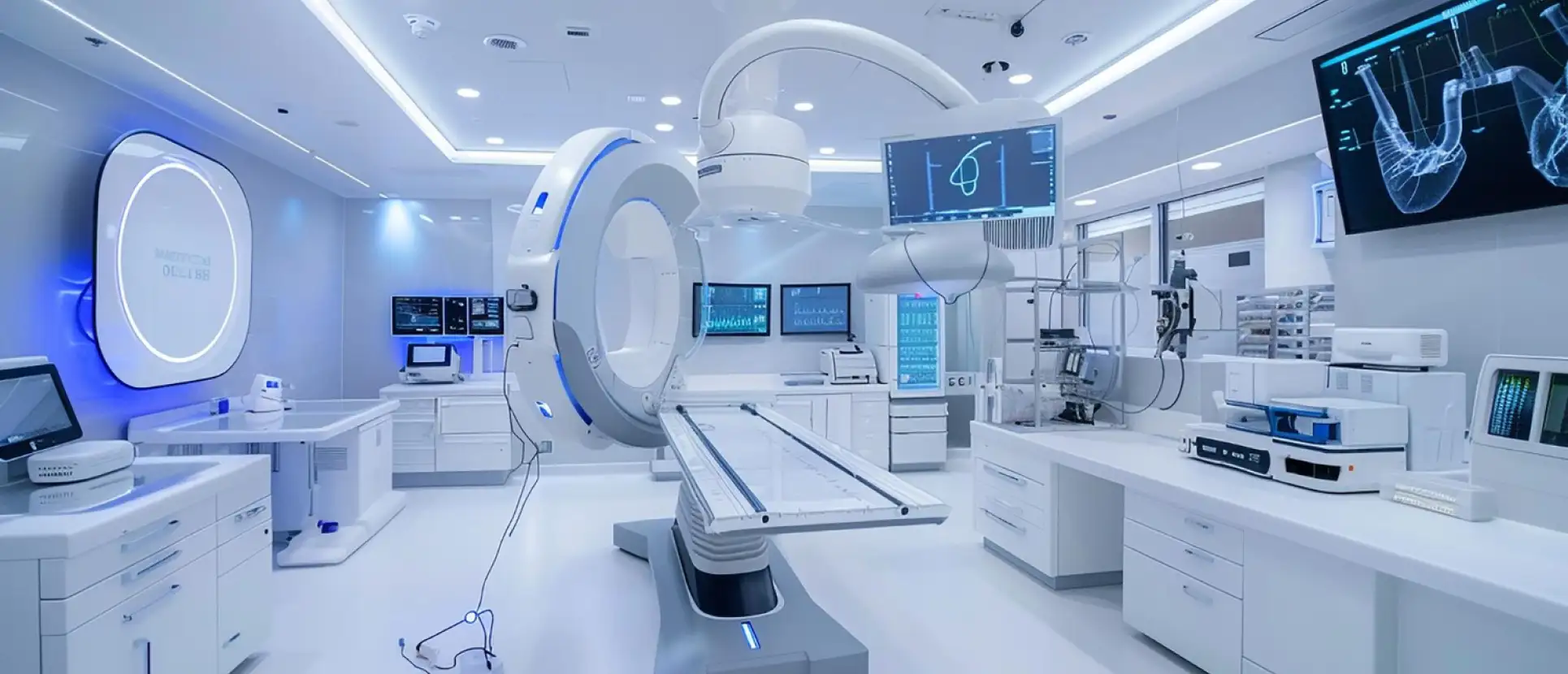
In recent years, the Indian healthcare ecosystem has witnessed a dramatic upsurge in medical technology (MedTech) innovations. Driven by digital transformation, supportive government policies such as the Make in India initiative, and an expanding startup ecosystem, hospitals across India are embracing advanced technologies that enhance clinical outcomes, improve operational efficiencies, and expand access to care, particularly in underserved and rural regions.
As per industry reports, India’s MedTech sector was valued at approximately $ 12 billion (about INR 1.02 lakh crore) in 2023‑24, making it one of the top 20 markets globally.
The industry is further projected to grow more than fourfold to reach around $ 50 billion (approximately INR 4.33 lakh crore) by 2030, driven by rising digital health adoption and supportive policies such as the National Medical Device Policy and Production Linked Incentive schemes.
Further, India’s current share of the global MedTech market (currently ~1.65%) is expected to increase significantly over the coming decades, potentially capturing 10–12 % of the worldwide market in the next 25 years.
In this article, we shall delve into how MedTech innovations are reshaping how healthcare is delivered, monitored, and managed.
Key MedTech Innovations India
1. Artificial Intelligence (AI) in Diagnostics & Patient Care
AI-powered diagnostic tools help early detection of disease with accuracy, while in patient care, AI supports early warning systems, predictive analytics, etc. E.g., Qure.ai’s AI-powered tools are enhancing the detection of conditions such as tuberculosis, pneumonia, and brain injury.
2. Robotics & Robotic-Assisted Surgery
Robotic-assisted surgery is increasingly being adopted in Indian hospitals for minimally invasive procedures across specialties such as urology, gynecology, oncology, and general surgery to ensure precision and enable faster patient recovery.
For example, Meril’s Mizzo Endo 4000, an indigenously developed robotic surgical system are improving surgery precision
3. Portable & Low-Cost Medical Devices
Portable medical devices enable affordable, on-site diagnostics and critical care in low-resource settings, improving healthcare access in rural and remote areas
These devices reduce dependence on centralized hospitals and allow healthcare providers to deliver essential services closer to the patient. Further, this portable equipment supports early diagnosis, faster treatment decisions, and improved emergency response.
4. Internet of Medical Things (IoMT) & Wearables
IoMT devices and wearable technologies enable continuous health monitoring through connected sensors that track vital parameters such as heart rate, respiration, oxygen saturation, and activity levels. E.g., vTitan has announced the launch of vCardio, an AI-enabled wearable cardiac monitor
5. Advanced Imaging & Radiotherapy Technology
Advanced imaging technologies like MRI, PET-CT, OCT, and image-guided radiotherapy have improved diagnostic accuracy and treatment precision, staging, and monitoring. These technologies enable targeted cancer treatment with improved precision, better treatment planning, and reduced damage to healthy tissues.
In India, their adoption is steadily expanding across tertiary care hospitals, cancer institutes, and multi-specialty centers, improving access to advanced diagnostics.
6. Nanotechnology & Smart Implants
Nanotechnology & Smart Implants are being used for long-term patient monitoring and diagnostic tools to support personalized treatment.
These innovations enable controlled drug delivery, real-time tracking of physiological parameters, and improved diagnostic accuracy, while Smart implants used in cardiology and orthopedics help clinicians monitor patient recovery and detect complications early.
7. Telehealth & Remote Patient Monitoring Tools
Telehealth platforms and remote patient monitoring tools such as Dozee enable continuous, contactless monitoring of vital signs and facilitate virtual consultation beyond clinical settings
These tools allow doctors to track patient health in real time, detect early signs of deterioration, and provide timely interventions, reducing the need for frequent hospital visits.
In India, such platforms are increasingly used in homecare, post-operative follow-ups, and chronic disease management, particularly in rural and semi-urban areas.
Significance of MedTech Innovations in India
The growing adoption of MedTech innovations is playing a critical role in addressing long-standing challenges, including
- Improved Clinical Outcomes: AI-powered medtech tools enable early disease detection, accurate diagnosis, and targeted treatment, especially for complex conditions.
- Enhanced Accessibility: Telehealth & RPM strengthen quality healthcare services to rural, remote, and underserved populations.
- Operational Efficiency: Robotics tools and automated connected medical devices have reduced clinician workload and optimized hospital workflows through automation and connected devices.
- Affordability & Indigenous Innovation: Portable devices have lowered healthcare costs by promoting locally developed, scalable medical technologies.
- Continuity of Care: Wearables and IoMT enable continuous health monitoring and support long-term patient management beyond the traditional hospital setting
Wrapping Up
MedTech innovations are transforming Indian hospitals by improving care quality, efficiency, and access through AI, robotics, telemedicine, IoMT, and portable devices. With advances in AI, immersive technologies, next-generation connectivity, and personalized medicine, India is poised to build a connected, patient-centric healthcare ecosystem.
Backed by a strong startup ecosystem and enabling policy frameworks, India’s healthcare system is set for rapid transformation, expanding access to world-class care while strengthening indigenous innovation.
Stay tuned for more such updates on Digital Health News
Follow us