Empowering Nurses Through Innovation: How Digitalization & Technology are Redefining Nursing Care & Workflow
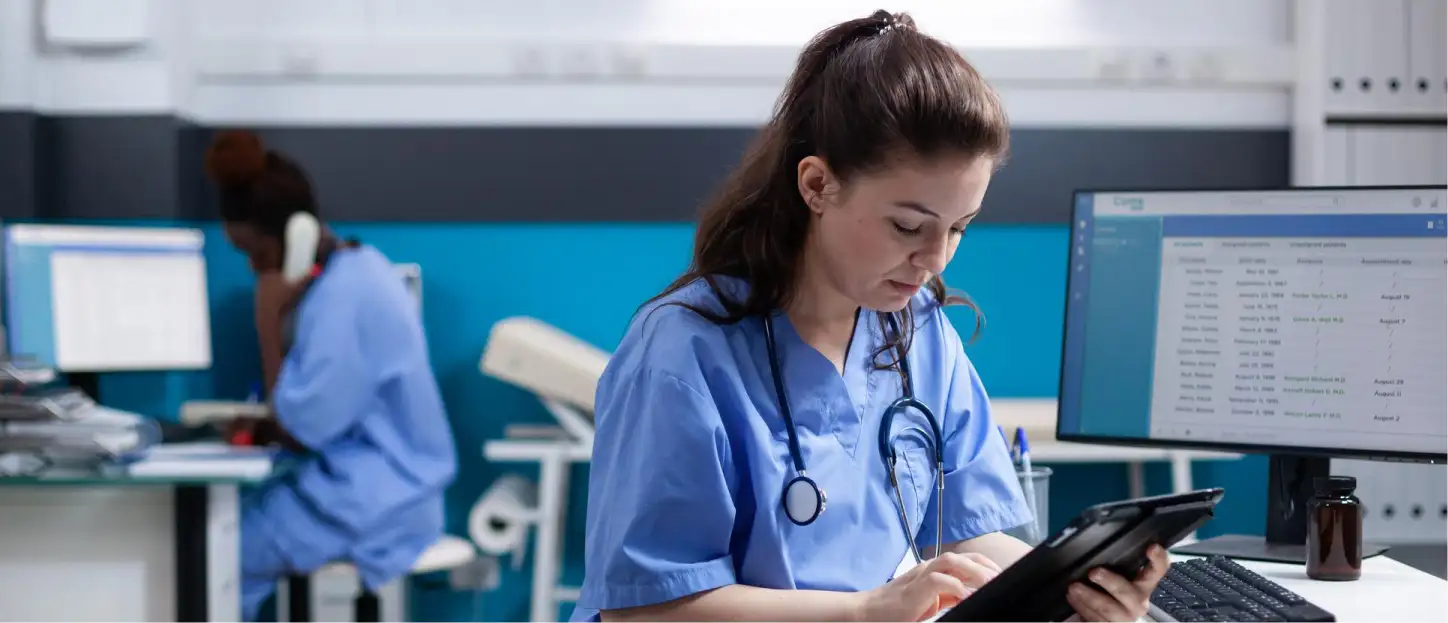
In the demanding realm of healthcare, nursing interventions play a critical role, often serving as the backbone of effective patient care. Whether in hospitals, community health centres, emergency departments, or home care settings, nurses remain at the forefront of healthcare delivery, ensuring patient safety and continuity of care.
Every year, International Nurses Day is celebrated on May 12th to honour the birth anniversary of Florence Nightingale and to recognise the invaluable contributions of nurses to global healthcare.
The 2026 theme, “Our Nurses. Our Future. Empowered Nurses Save Lives,” emphasises the need to empower the nursing workforce through better working conditions, professional opportunities, and access to advanced healthcare technologies.
Sharing his thoughts on a social media post, Union Minister of Health and Family Welfare JP Nadda said, "On International Nurses Day, we honor the unwavering compassion, resilience, and dedication of our nurses. Echoing this year’s theme, 'Our Nurses. Our Future. Empowered Nurses Save Lives', we see how nurses strengthen our healthcare systems and drive national progress. By investing in their well-being, we build healthier communities, thriving societies, and a robust future."
Commenting on the significance of this day, Punitha Singh, Associate Vice President-Nursing at HealthCare Global, said, “Nurses are the backbone of any healthcare organization. If not for the nurses, the patient care would be affected drastically. If the hospital administrators and the doctors are sleeping peacefully, it is because of the nurse who is taking care of the patient at 1 am at night.”
“This nurse’s day is special because the ICN wants the nurses to be empowered. The theme for 2026 Nurses’ Day is ‘Our Nurses Our Future: Empowered nurses save lives.’ The empowered nurses are powerful and can save lives. The nurses who are not empowered are powerless,” she added.
As healthcare systems face rising patient demands, workforce shortages, and operational complexities, healthcare technologies such as EHR and AI are emerging as a transformative tool to reduce administrative workload burden and improve clinical decision-making. Above all, nursing technology enables caregivers to spend more time in patient care and treatment.
In this article, we shall explore how digital healthcare technologies are emerging as a powerful tool that augments nursing capabilities and improves patient outcomes.
Rising Nursing Technologies in Modern Healthcare
Traditionally, nurses have been largely connected with bedside care and clinical aid; however, over the last decade, nurses have been increasingly involved in patient education, chronic illness management, preventative healthcare, care coordination, digital recording, and population health management.
The contemporary healthcare systems require faster decision-making, interdisciplinary teamwork, and continuous patient monitoring. However, the rising patient volumes and workforce shortages often contribute to burnout, fatigue, and administrative overload.
According to the World Health Organisation's 2025 State of the World’s Nursing Report, the global nursing workforce shortage declined from 6.2 million in 2020 to 5.8 million in 2023, but major disparities persist across countries and regions. The report also highlights concerns regarding nurse well-being, noting that only 42% of responding countries have formal mental health support systems for nurses despite rising workplace stress and burnout.
In this regard, several technologies are currently reshaping nursing care globally by helping nurses move from reactive care models toward more predictive, preventive, and patient-centred approaches, some of them are-
AI in Clinical Decision Support & Workflow Automation
Artificial Intelligence is rapidly emerging as an important support tool in healthcare and nursing practice. AI-powered clinical decision systems can analyze large volumes of clinical data, predict sepsis risk, monitor cardiac abnormalities, identify patients requiring urgent attention in intensive care settings, and provide predictive insights that support faster and more accurate decision-making.
Further, AI-powered virtual assistants and chatbots are also helping manage routine patient inquiries, appointment scheduling, medication reminders, and follow-up communication.
These tools improve patient participation and continuity of treatment while relieving nursing teams of administrative burdens.
For instance, Microsoft’s Nuance DAX Copilot automatically converts patient-provider conversations into clinical notes, reducing documentation burden for nurses and physicians.
Similarly, Hippocratic AI introduced Nurse Co-Pilot, developed with Cincinnati Children’s Hospital Medical Center, OhioHealth, and the Cleveland Clinic to automate routine nursing workflows and EHR documentation through an AI voice assistant.
EHRs Enhancing Clinical Coordination
Nursing practice has changed dramatically due to the use of electronic health records. Conventional paper-based documentation frequently led to errors, communication gaps, and delays in information-sharing.
EHR systems have enabled nurses to access real-time patient histories, diagnostic reports, prescription details, allergies, and treatment plans. This enhances care coordination, clinical decision making, and patient safety while reducing medical errors and minimising paperwork, freeing up nurses to concentrate more on patient care.
Several healthcare organisations have implemented EHR systems to streamline nursing workflows. For instance, Ambience Healthcare has rolled out Chart Chat for Nursing, an AI conversational tool integrated with EHR designed to automate patient documentation and clinical summaries while supporting point-of-care coding for inpatient nurses.
Similarly, Mayo Clinic’s Nurse Virtual Assistant tool consolidates critical patient information into a single EHR tab to support emergency department nurses and improve workflow efficiency.
RPM & Telehealth Expanding Access to Care
Remote Patient Monitoring (RPM) and telehealth technologies are empowering nurses to deliver care beyond hospital settings through wearable devices, smart sensors, and connected healthcare platforms that respond proactively to health concerns.
These technologies enable continuous monitoring of patients with chronic diseases such as diabetes, hypertension, cardiovascular conditions, and respiratory disorders. By tracking vital signs, nurses can quickly identify abnormalities and intervene before conditions worsen, reducing hospital admissions and improving preventive care.
In addition, telehealth platforms also facilitate virtual consultations, patient education, post-discharge follow-ups, and mental health assistance, improving access to care for underserved and rural communities.
For example, platforms like Teladoc Health provide 24/7 care with virtual nurses' support for common conditions, therapy, and bedside care for chronic condition management.
Mobile Health Technologies Strengthening Patient Engagement
Patients are becoming empowered by mobile health applications, which often provide access to wellness programs, prescription reminders, appointment schedules, health education resources, and symptom trackers.
This app facilitates improved disease management and increases patient engagement for nurses. Nurses can teach patients self-management techniques for chronic illnesses, lifestyle modifications, rehabilitation exercises, medication adherence, and preventive healthcare measures.
Additionally, digital communication tools also boost collaboration between healthcare teams, which enhances workflow effectiveness and reduces care delivery delays.
Robotics & Smart Assistive Devices in Nursing Care
Robotics and smart assistive devices are increasingly supporting nurses by reducing physical workload, improving workflow efficiency, and enhancing patient safety. In modern healthcare, autonomous robots are being leveraged to transport medicines, laboratory samples, and medical equipment, while robotic lifting devices and smart mobility aids assist nurses in safely repositioning patients, reducing physical strain and injury risks.
In addition, smart assistive devices such as wearable monitors, smart beds, fall-detection sensors, and AI-enabled monitoring systems also provide real-time patient alerts, enabling faster clinical intervention and improved patient safety.
A remarkable example in this case would be Nurabot, introduced by Foxconn and powered by Nvidia AI, which assists nurses by automating duties like test sample transport and medication distribution
Similarly, US-based VSee has developed a telenursing robotics platform aimed at reducing hospital nursing workload and operational costs.
Virtual Reality (VR) & simulation-based learning
Virtual reality (VR) is increasingly benefiting medical education and nursing care by making simulation-based, immersive learning experiences possible. By enabling students to practice clinical skills in secure, controlled settings, virtual reality-based training enhances nursing education by boosting confidence and clinical preparedness.
As an illustration of the efficacy of immersive learning techniques, Robert Morris University created a virtual reality simulation game that enables nursing students to practice urinary catheter insertion. VR-trained students achieved success rates comparable to those trained using traditional mannequins.
The idea of virtual nurses and AI-assisted nursing is relatively new in India. Institutions such as the National Institute of Mental Health and Neuro Sciences (NIMHANS) have created the Guidelines for telenursing practice, incorporating telenursing into its PhD programs.
In addition, organisations such as Narayana Health have introduced platforms such as "Athma" (EMR) and "Medha" (Analytics/AI) to promote more effective and well-coordinated nursing processes. These technologies are enabling nurses to become more data-driven, proactive, and connected in their clinical practice.
Impact of Technology in Nursing Care
Nursing practice and healthcare systems are both seeing quantifiable gains because of digital healthcare technology. Automation of repetitive tasks such as documentation, appointment reminders, and medication tracking has reduced the workload and allowed the nurses to spend more time with patients. Also, smart monitoring systems and AI-based alerts can help nurses identify patient deterioration earlier, which can reduce adverse events and improve response times.
At the same time, data analytics tools are supporting precision-based care by enabling nurses to customise therapies based on patient history, behaviour patterns, and risk profiles. Moreover, Telehealth and mobile health technologies have improved healthcare accessibility by enabling nurses to deliver care to remote and underserved populations.
For nursing students and practising professionals, virtual simulations, augmented reality (AR), and digital learning platforms have emerged as immersive training experiences. Further automation approaches and smart scheduling systems are helping reduce repetitive administrative tasks and operational stress, allowing nurses to focus more on meaningful patient interaction and clinical care.
Rather than diminishing the significance of nurses, this digital transition has enabled nurses to concentrate more on clinical judgment, patient involvement, emotional support, and evidence-based caregiving.
“Having technology would be a way to reduce errors as every data is captured in real time. It reduces nurses’ burden and burnout considerably as the documentation is also done through Electronic Medical Records. Further, it increases patient satisfaction as every work which is manually carried out by the nurses now is done electronically, which reduces the turnaround time. We can also integrate acuity-based care and e- rota through technology, which reduces the nurses' time in physically handling this, so that the nurses can spend more time with the patient,” Punitha Singh, Associate Vice President-Nursing at HealthCare Global, noted.
Building a Future Ready Nursing Workforce
As healthcare becomes increasingly digital, nursing education and workforce development must evolve accordingly. Nurses require not only clinical expertise but also digital competency and technological literacy.
Key Training Areas for Nurses include:
1. Digital Literacy and Health Informatics
Nurses must be proficient in the use of electronic records, digital documentation systems, and healthcare information platforms effectively to ensure accurate documentation.
2. AI & Data Interpretation
Basic knowledge of AI systems, predictive analytics, and data interpretation is becoming essential for evidence-based nursing practice.
3. Telehealth Communication Skills
Virtual patient interaction requires new communication strategies, remote assessment techniques, and digital etiquette.
4. Cybersecurity and Data Privacy
Growing digitisation increases accountability for safeguarding patient data and upholding data confidentiality; as such, nurses must be trained to protect patient data, ensure confidentiality, and follow cybersecurity best practices.
5. Critical Thinking and Ethical Decision-Making
As AI-generated recommendations become more common, nurses need to be trained to critically assess digital outputs rather than relying on technology blindly.
6. Simulation-Based Clinical Training
VR and simulation technologies can help nurses develop emergency response skills, procedural competency, and interdisciplinary collaboration.
Barriers to Digital Transformation in Nursing
Despite its benefits, digital transformation in nursing care also faces some critical challenges. Many healthcare institutions face barriers such as inadequate infrastructure, lack of training, limited digital awareness, and resistance to change. Additionally, excessive screen time and documentation demands can contribute to nurse fatigue if systems are poorly designed.
Concerns about algorithmic bias, over-reliance on AI, and erroneous automated content in nursing practice and education are also voiced by the nursing community and healthcare professionals. This emphasises how crucial it is to strike a balance between human-centred care and technical innovation.
Moreover, global nursing organisations continue to emphasise that technology investments must be accompanied by investments in nursing education, workforce support, and safe working environments.
Highlighting its significance, Capt Bobby Ramesh, Group Director, Nursing Excellence at Sarvodaya Healthcare, said, “We’re building smart ICUs, remote monitoring, and predictive analytics. But the smartest technology in any hospital is still a nurse who’s been trained, trusted, and heard. This Nurses Day, our message to the digital health world is simple: Invest in nurses, or your data stays on a dashboard.”
She further added, “Digital health is the engine. Empowered nurses are the drivers. Our future is in their hands."
Wrapping Up
Digital healthcare technology is revolutionising nursing care by increasing productivity, boosting patient safety, facilitating remote care delivery, and assisting with data-driven clinical decision-making. Nurses are now able to provide quicker, more connected, and more individualised care due to AI and other sophisticated systems.
However, technology cannot replace the human essence of nursing. Compassion, empathy, ethical judgment, emotional support, and patient advocacy remain uniquely human qualities that define the nursing profession. The future of healthcare, therefore, lies not in replacing nurses with machines but in creating collaborative care models where technology augments nursing capabilities.
On International Nurses Day 2026, the global healthcare community must recognise that empowering nurses through digital education, technological training, strategic investment in infrastructure, and supportive healthcare policies is essential for building resilient and patient-centred health systems for the future.
Stay tuned for more such updates on Digital Health News
Follow us