Building a Sustainable Telemedicine Ecosystem in India: Issues & Imperatives

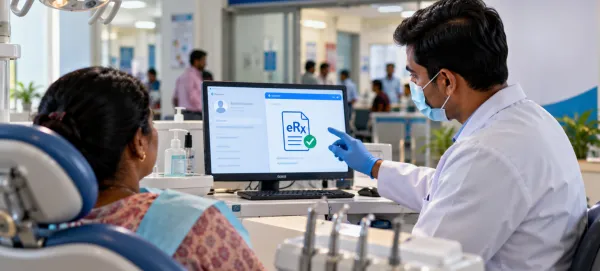
India’s telemedicine sector is no longer a fringe innovation, it has become a central pillar in expanding healthcare access. With the market projected to grow from USD 3.76 billion in 2025 to nearly USD 20 billion by 2034, the scale of transformation is hard to ignore. This surge is being fuelled by widespread smartphone adoption, cheaper data, and a growing comfort with digital interactions in everyday life.
Government-led initiatives have significantly accelerated this shift. Platforms like eSanjeevani have enabled millions of consultations, especially in underserved regions where specialist care is limited. Telemedicine, in this context, is not just about convenience it is about reconfiguring how healthcare reaches populations that have historically remained outside the formal system.
At its best, telemedicine reduces the burden of distance, cost, and time. It allows patients to seek timely medical advice without travelling long distances, making it particularly useful for chronic disease management, routine follow-ups, and early-stage diagnosis. Yet, the optimism surrounding this digital leap often overlooks the deeper structural challenges that shape its real-world impact.
India’s Digital Divide
Behind the rapid expansion of telemedicine lies a persistent and often underestimated obstacle connectivity. While urban centres benefit from stable internet networks, large parts of rural India continue to struggle with unreliable access. Millions remain outside the reach of consistent digital infrastructure, limiting the effectiveness of telemedicine services where they are needed the most.
The impact of poor connectivity goes beyond inconvenience. Interrupted consultations, unclear video feeds, and delayed communication can directly affect diagnosis and treatment decisions. In healthcare, where precision matters, such disruptions weaken the credibility of digital consultations and can discourage repeat usage.
Electricity reliability adds another layer of complexity. In several regions, inconsistent power supply affects both healthcare providers and patients, making digital consultations difficult to sustain. The promise of telemedicine, therefore, often collides with the reality of infrastructure that is not yet equipped to support it at scale.
The People Gap: Skills, Awareness, & Adoption
Technology alone cannot drive healthcare transformation without people who are equipped to use it effectively. India’s healthcare system already faces a shortage of medical professionals, and telemedicine does not automatically resolve this imbalance. Instead, it redistributes demand across a limited pool of providers, sometimes stretching resources further.
A critical challenge lies in the lack of digital training among healthcare professionals. Many doctors are still adapting to teleconsultation platforms, which require different communication styles and diagnostic approaches compared to in-person visits. Without structured training, the quality of care delivered through telemedicine can vary significantly.
On the patient side, digital literacy remains uneven. Navigating apps, booking consultations, and understanding virtual prescriptions can be daunting for many, particularly in rural and older populations. As a result, telemedicine often depends on intermediaries such as community health workers, which, while helpful, introduces additional layers into the care process.
Policy Progress Meets Practical Uncertainty
India has made notable strides in formalising telemedicine through regulatory guidelines, but gaps in implementation continue to create uncertainty. Questions around cross-state medical practice, legal liability, and prescription protocols remain areas where clarity is still evolving.
Insurance coverage further complicates the landscape. While telemedicine is gradually being included in health insurance policies, the lack of uniform reimbursement frameworks affects both affordability for patients and financial viability for providers. This inconsistency limits the integration of telemedicine into mainstream healthcare systems.
Trust is another critical dimension shaped by policy and perception. Concerns around data privacy, security, and the reliability of remote diagnosis influence patient willingness to adopt digital healthcare. In a system where personal interaction has long defined care, building trust in virtual alternatives requires more than regulatory approval it demands consistent, reliable experiences.
Challenges Beyond Technology
Telemedicine is often positioned as a tool to bridge India’s urban-rural healthcare divide, but its adoption tells a more complex story. Urban populations, with better connectivity and higher digital familiarity, have embraced telemedicine more quickly. Rural regions, despite being the primary target, continue to face barriers that limit meaningful adoption.
Language remains a subtle but significant challenge. Many platforms still operate in limited languages, restricting accessibility for diverse populations. Effective healthcare communication depends on clarity and comfort, both of which are compromised when language barriers persist.
Cultural preferences also play a role. For many patients, especially in smaller towns and villages, face-to-face consultations remain the gold standard of care. Telemedicine, in such contexts, is often viewed as a backup rather than a primary option, highlighting the gap between technological availability and behavioural acceptance.
Conclusion
India’s telemedicine journey reflects both ambition and contradiction. On one hand, it represents a powerful shift towards more accessible, technology-driven healthcare. On the other, it exposes the deep-rooted structural challenges that continue to shape how healthcare is delivered across the country.
The path forward is not about expanding telemedicine in isolation but strengthening the ecosystem around it. Reliable digital infrastructure, targeted training for healthcare providers, improved digital literacy, and clearer regulatory frameworks are essential to making telemedicine truly effective. Without these, growth risks becoming superficial wide in reach but uneven in impact.
Telemedicine has already proven its potential. The real question now is whether it can evolve from a promising solution into a dependable system that works across India’s diverse realities. The answer will depend not just on innovation, but on how well policy, infrastructure, and people align to support it.
Stay tuned for more such updates on Digital Health News
Follow us