How are Indian Startups Transforming Medical Imaging with AI?

How are Indian Startups Transforming Medical Imaging with AI?
Advertisement

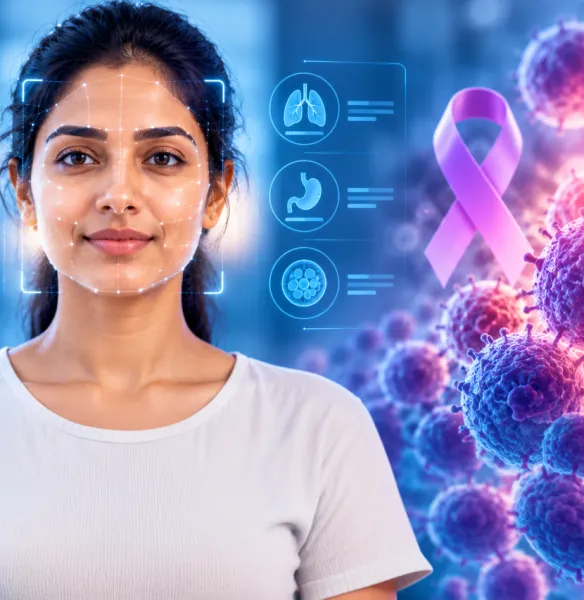
Medical imaging has historically relied on visual interpretation, where expertise has been built through years of clinical exposure. However, variability in interpretation has remained a persistent concern, especially in complex cases such as early-stage cancers or subtle neurological abnormalities. AI systems developed by Indian startups are now being trained not merely to detect patterns, but to contextualize them within clinical workflows.

These systems are increasingly designed as decision-support tools rather than standalone diagnostic engines. Deep learning models, particularly convolutional neural networks, are being trained on annotated datasets that include disease progression, patient demographics, and imaging variations. This allows outputs to be aligned more closely with real-world clinical scenarios rather than isolated image analysis.

Data as Infrastructure

A less visible but critical transformation has been occurring in how medical imaging data is collected, structured, and utilized. Indian startups have been building large-scale annotated datasets, often in collaboration with hospitals, which serve as the backbone of AI models. This process has required not only technical capability but also clinical standardization.

Unlike Western datasets, Indian medical data reflects a different disease burden, a higher prevalence of tuberculosis, advanced-stage cancer presentations, and diverse imaging quality due to heterogeneous infrastructure. AI models trained on such data are inherently more suited to local realities, making them more effective in Indian contexts than imported solutions.

Startups have focused on creating structured datasets across pathology and imaging, enabling cross-modality learning. This means that insights from blood analysis, for instance, can be linked with imaging findings, gradually moving toward a more integrated diagnostic ecosystem.

Redefining Screening Through Low-Cost Innovation

One of the most distinctive contributions of Indian startups lies in rethinking the economics of imaging. Traditional imaging modalities such as MRI and CT scans are capital-intensive and often inaccessible in low-resource settings. AI has been used not just to enhance these technologies but also to create entirely new screening paradigms.

Many startups use thermal imaging combined with AI for breast cancer detection. Instead of relying on expensive radiological infrastructure, temperature variations are analyzed to identify abnormal tissue growth. This approach reduces cost barriers while enabling earlier and more frequent screenings.

Such innovations are particularly relevant in India, where late diagnosis remains a major challenge. By lowering the cost and complexity of screening, AI-driven solutions are shifting healthcare from reactive treatment to proactive detection, especially in underserved populations.

Real-World Deployment

While AI in healthcare is often discussed in experimental terms, Indian startups have moved into large-scale, real-world deployments. Their tools are being integrated into government programs, diagnostic chains, and emergency care systems, where performance is measured not just by accuracy but also by reliability under pressure.

For instance, AI tools for stroke detection in CT scans have been deployed in emergency settings, where minutes can determine patient outcomes. Automated alerts generated by these systems enable faster intervention, particularly in hospitals where specialists may not be immediately available.

Additionally, tuberculosis screening programs have incorporated AI-based chest X-ray analysis to process thousands of images daily. This level of throughput would be difficult to achieve through manual interpretation alone, indicating that scalability, not just intelligence, is a defining feature of these technologies.

Regulatory, Ethical, & Clinical Complexities

The rapid adoption of AI in medical imaging has introduced complex regulatory and ethical considerations. Unlike traditional medical devices, AI systems evolve over time as they are exposed to new data. This raises questions about validation, consistency, and accountability in clinical decision-making.

In India, regulatory frameworks are still adapting to these challenges. Startups are required to balance innovation with compliance, often navigating unclear guidelines around clinical validation and deployment. Ensuring that AI recommendations are explainable has become particularly important, as opaque “black-box” systems can hinder trust among clinicians.

Bias in datasets is another concern. If training data does not adequately represent diverse populations, diagnostic accuracy may vary across regions or demographics. Addressing this requires continuous data auditing and model retraining processes that are resource-intensive but essential for responsible deployment.

Convergence of Imaging & Predictive Medicine

A deeper transformation is beginning to take shape as imaging data is combined with other health data streams. Indian startups are increasingly exploring how imaging can be integrated with electronic health records, genomics, and wearable data to enable predictive analytics.

This convergence allows AI systems to move beyond diagnosis toward risk prediction and disease progression modeling. For instance, subtle imaging markers, when combined with patient history, can help predict the likelihood of chronic conditions or complications. Such capabilities could fundamentally change how healthcare is delivered from episodic care to continuous monitoring.

As this ecosystem evolves, medical imaging is likely to become a central node in a larger data-driven healthcare network. Indian startups, by focusing on affordability and scalability, are uniquely positioned to shape this transition not just within India but across other emerging healthcare markets.

Stay tuned for more such updates on Digital Health News

Follow us

More Articles By This Author


Show All

Sign In / Sign up