



AI in Medical Imaging: Benefits, Use Cases, & Future Scope
AI in medical imaging is often described as “faster diagnosis” or “better accuracy” but that’s only the surface. What’s actually happening is far more transformative. AI is turning medical images into structured, measurable data, allowing doctors to extract information that was never visible before.
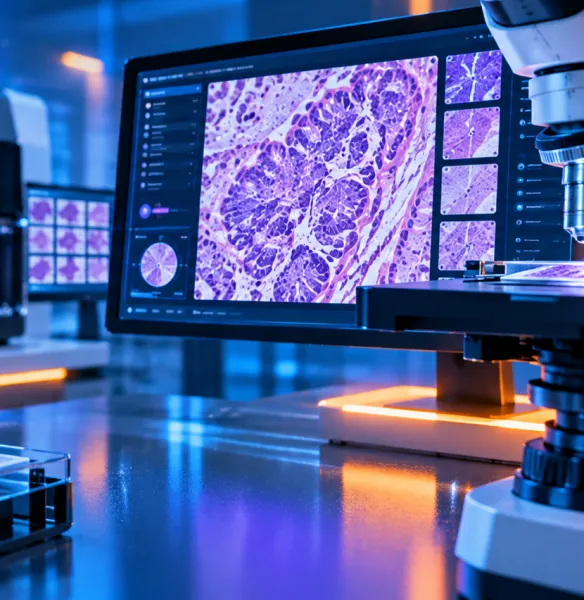
Modern imaging like CT and MRI doesn’t just produce pictures it captures layered biological information. AI systems analyze these layers at a scale no human can match, identifying patterns linked to disease progression, treatment response, and even genetic traits. This shift from visual interpretation to data-driven insights is what makes AI truly powerful.
But alongside the hype, there are real limitations and challenges that most articles ignore. To understand AI in medical imaging properly, you need to look at both its capabilities and its constraints.
How AI Extracts Hidden Data from Images?
Most people think AI simply “detects tumors.” In reality, advanced AI techniques like radiomics go much further. Radiomics converts medical images into hundreds or even thousands of measurable features, such as texture, shape, and intensity that reflect underlying disease biology.
This means AI can pick up subtle changes that even experienced radiologists cannot see. For example, two tumors may look identical visually, but AI can detect micro-patterns that indicate which one is more aggressive or likely to spread. This is especially important in cancers, where early biological differences determine outcomes.
Another major shift is that AI is enabling quantitative imaging. Instead of subjective interpretation (“this looks abnormal”), doctors get measurable insights (“this lesion has a 78% probability of malignancy based on patterns across thousands of cases”). This improves consistency across hospitals and reduces variation between radiologists.
What Actually Improves in Clinical Practice?
AI does improve accuracy but the more meaningful benefit is decision support under pressure. Radiologists often review hundreds of scans daily, increasing the risk of fatigue-related errors. AI acts as a second layer of review, flagging critical findings that might otherwise be missed.
Another overlooked benefit is workflow prioritization. AI doesn’t just analyze images, it decides which cases need urgent attention. For example, scans showing internal bleeding or stroke can be automatically pushed to the top of the queue, reducing treatment delays in emergency settings.
AI also improves consistency across healthcare systems. A major issue in radiology is variability: different doctors may interpret the same scan differently. AI reduces this variation by standardizing analysis based on large datasets, making diagnoses more uniform across institutions.
Where AI is Already Making a Real Impact?
In emergency radiology, AI is being used to detect conditions like brain hemorrhages and pulmonary embolisms within minutes. These systems continuously scan incoming images and alert doctors in real time, significantly reducing response time in critical cases.
In oncology, AI is helping with treatment planning, not just detection. For instance, in MRI scans of brain tumors, AI can map tumor boundaries more precisely than manual methods, helping surgeons plan safer and more targeted procedures.
Another powerful use case is multi-purpose imaging analysis. A single scan can now be used to assess multiple risks. For example, a chest CT done for lung issues can also be analyzed by AI to estimate cardiovascular risk, something that traditionally required separate tests.
The Challenges No One Talks About
One major issue is data bias. AI models are only as good as the data they are trained on. If datasets lack diversity, the model may perform well for some populations but poorly for others. Studies have shown that AI systems can underdiagnose certain demographic groups due to biased training data.
Another challenge is limited and fragmented datasets. Medical imaging data is hard to collect due to privacy concerns and lack of standardization. Many AI models are trained on small, single-institution datasets, which reduces their reliability in real-world settings.
There’s also the issue of reproducibility and trust. AI models often act as “black boxes,” meaning doctors cannot fully understand how decisions are made. This lack of transparency makes it difficult to rely on AI in high-stakes clinical decisions.
The Future
The next phase of AI in medical imaging is not just detection, it’s prediction.
AI models are being developed to predict disease before symptoms appear. By analyzing subtle imaging patterns over time, AI can identify early signs of conditions like cancer, Alzheimer’s, or cardiovascular disease, enabling preventive treatment.
Another major direction is multimodal AI, where imaging data is combined with patient history, lab results, and genetic data. This creates a more complete picture of the patient, allowing for highly personalized treatment plans.
There is also growing interest in federated learning, where AI models are trained across multiple hospitals without sharing raw patient data. This helps overcome privacy issues while improving dataset diversity, one of the biggest current limitations.
Conclusion
AI in medical imaging is far more than a tool for faster diagnosis, it’s reshaping how medical data is understood. By turning images into measurable, predictive insights, AI is moving healthcare toward a more precise and proactive model.
At the same time, challenges like data bias, limited datasets, and lack of transparency cannot be ignored. The future of AI in imaging will depend not just on better algorithms, but on better data, stronger validation, and closer collaboration between clinicians and technologists.
The real shift isn’t AI replacing doctors, it’s AI changing what doctors are able to see.
Stay tuned for more such updates on Digital Health News
Follow us