ABDM & ABHA ID Integration with HMIS, JANANI & eSanjeevani Boost India's Digital Health Ecosystem, Says Health Secy
Several key initiatives were launched, including the Best Practice Compendium on replicable innovations under NHM, the Swasth Bharat Portal, and the JANANI Portal, among others.
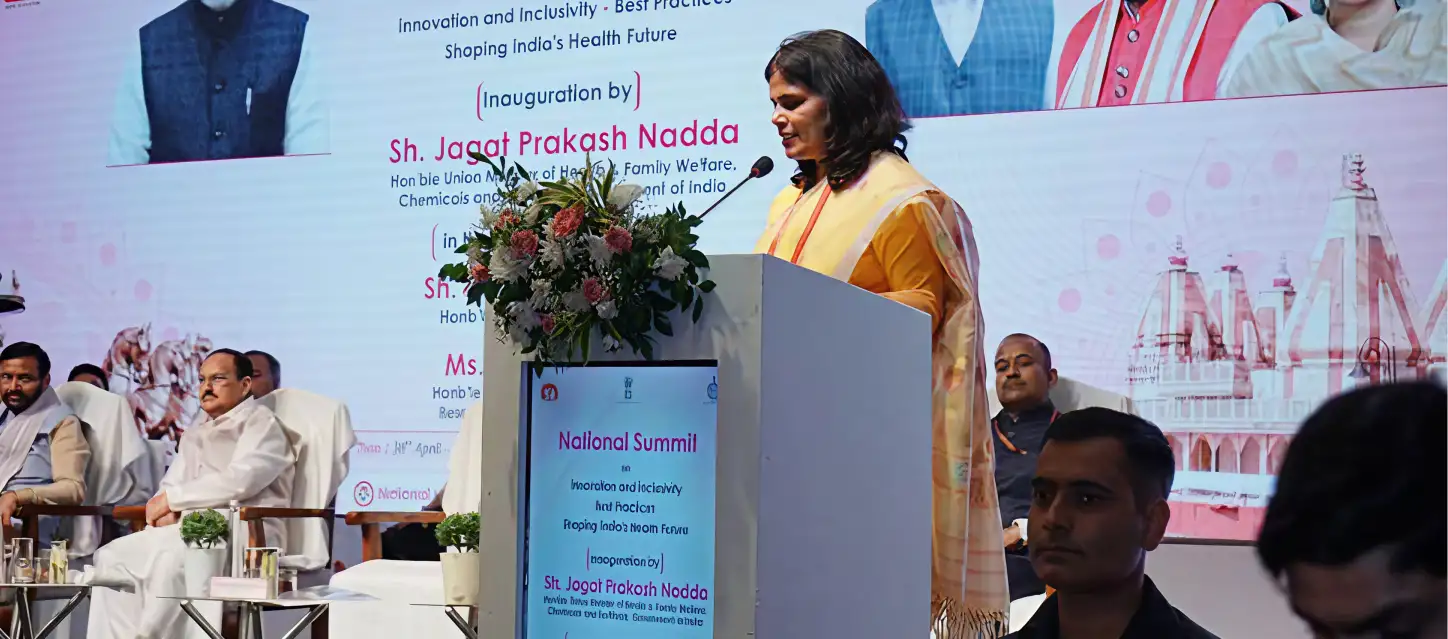
Union Health Secretary, Punya Salila Srivastava, at the National Summit on Innovation and Inclusivity, said Ayushman Bharat Digital Mission, integration of ABHA ID with platforms like HMIS, JANANI and eSanjeevani is integral to strengthening India’s digital health ecosystem.
On the Occasion, several key initiatives were launched, including the Best Practice Compendium on replicable innovations under NHM, the 17th Common Review Mission (CRM) Report, the Swasth Bharat Portal, the JANANI Portal, the Integrated Training Module for Primary Healthcare Teams, and RBSK 2.0 along with a guidance document on Diabetes in Children and Adolescents.
Speaking at the 10th National Summit on Innovation & Inclusivity – Best Practices Shaping India’s Health Future, organized by the Ministry of Health and Family Welfare in Chandigarh, the Union Health Secretary stated that the Compendium of Best Practices serves as a key reference document showcasing evidence-based, context-specific solutions aligned with national priorities.
She also highlighted the transformative role of technology under the Ayushman Bharat Digital Mission, enabling integration of ABHA IDs across platforms like HMIS, JANANI, and eSanjeevani, thereby improving efficiency and supporting data-driven decision-making.
''Under Ayushman Bharat Digital Mission, we are actively working towards integration of ABHA ID with various platforms such as HMIS, JANANI, eSanjeevani and various web portals.''
Further the Minister noted that the Swasth Bharat Portal marks a major step towards convergence by integrating multiple health programmes into a single interoperable platform, while the JANANI platform strengthens maternal and child healthcare through real-time tracking and digital integration.
Highlighting the 17th Common Review Mission report, she emphasized that it offers valuable insights for states to enhance their implementation and promote community participation (Jan Bhagidari).
She also stressed the significance of addressing the rising prevalence of non-communicable diseases. The RBSK 2.0 initiative and the new diabetes guidance for children will aid in early detection and continuity of care.
The Secretary further noted improvements in the quality of care, reporting that there are over 48,000 facilities that meet Indian Public Health Standards (IPHS) and more than 50,000 that are National Quality Assurance Standards (NQAS) certified. She mentioned progress under the TB Mukt Bharat Abhiyan initiative and highlighted strengthened preparedness measures, which include fire safety audits, heatwave response plans, and efforts to combat antimicrobial resistance.
Citing findings from the 80th round of the National Statistical Office (NSO) survey, she mentioned that the median out-of-pocket expenditure for outpatient care in public health facilities is now zero. This reflects the government's commitment to providing free and accessible healthcare services to a substantial portion of the population.
She also highlighted India’s push to strengthen preventive and child healthcare marked a significant milestone at the National Summit on Innovation & Inclusivity – Best Practices Shaping India’s Health Future.
Union Minister of Health and Family Welfare Jagat Prakash Nadda inaugurated the 10th National Summit on Innovation and Inclusivity: Best Practices Shaping India’s Health Future, in the presence of Chief Minister of Haryana Nayab Singh Saini and the Health Minister of Haryana, Arti Singh Rao.
Stay tuned for more such updates on Digital Health News
Follow us