Andhra Pradesh to Build Human-Carrying Drone Ambulance to Enhance Emergency Healthcare

The implementation of a Unified Traffic Management (UTM) system would facilitate real-time tracking, geo-fencing, and automated airspace deconfliction to prevent mid-air conflicts.
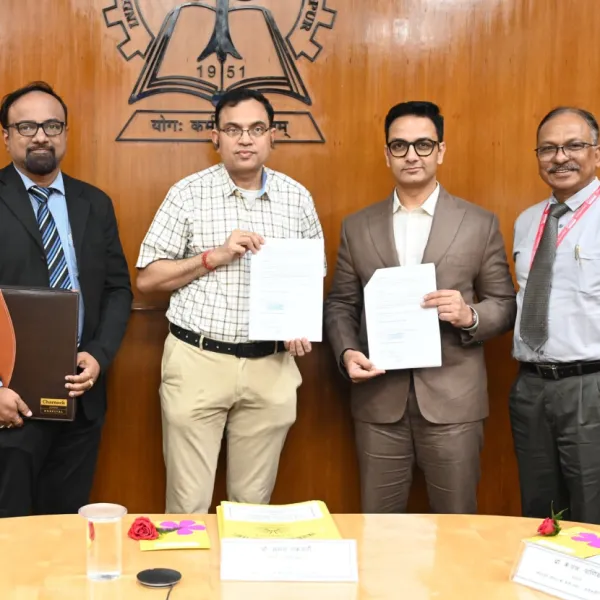
The Andhra Pradesh government has announced a partnership with the Dr Kalam Advanced UAV Research Center (CASR) at Anna University, Chennai, to develop a long‑range drone ambulance that can carry patients and essential medical supplies.
The drone ambulance initiative is designed to provide essential health care services in remote areas to ensure rapid medical response by leveraging advanced aerial vehicle technologies.
The drone ambulance is being developed as part of broader efforts by Chief Minister N. Chandrababu Naidu to modernize emergency healthcare and human transport infrastructure in the state.
The drone ambulance is equipped with a payload capacity of about 150 kg and a flight endurance of up to 90 minutes.
The Initial operations are expected to focus on an unmanned aerial vehicle (UAV) with a range of around 50 kilometres and cruising speeds between 50–60 km/h at altitudes of roughly 1,000–1,200 feet.
Additionally, the drone network is planned to facilitate the rapid delivery of medical supplies, blood units, diagnostic samples, and emergency equipment, besides transporting.
Commenting on the new initiative, Dr. K. Senthil Kumar, Director of the Dr. Kalam Advanced UAV Research Center, said, “This project represents a major step forward in using advanced aerial technology to make emergency medical care more accessible, especially for communities with limited road connectivity.”
“Continuous monitoring, data-logging, and coordination with State emergency services and aviation authorities will allow rapid incident response, risk mitigation, and safe, reliable operations across Andhra Pradesh,” he added.
Dr Senthil Kumar retariated the implementation of a Unified Traffic Management (UTM) system would facilitate real-time tracking, geo-fencing, and automated airspace deconfliction to prevent mid-air conflicts.
The drone ambulance would be equipped with redundant flight systems, fail-safe mechanisms, and autonomous emergency landing capabilities to ensure patient and public safety.
Reportedly, the prototype with minimal payload is scheduled for its first test flight in the first week of May 2026, with a dedicated drone port and operations hub planned for Vijayawada.
Stay tuned for more such updates on Digital Health News
Follow us