Mahatma Gandhi Medical University to Deploy Drone Technology for Healthcare Services
As part of the collaboration, a "Centre of Excellence" related to drone technology will also be jointly established by MGUMST and Magic Myna.
The Mahatma Gandhi University of Medical Sciences and Technology (MGUMST), Jaipur, has announced plans to adopt drone technology through an agreement with Rajasthan-based drone manufacturing company Magic Myna.
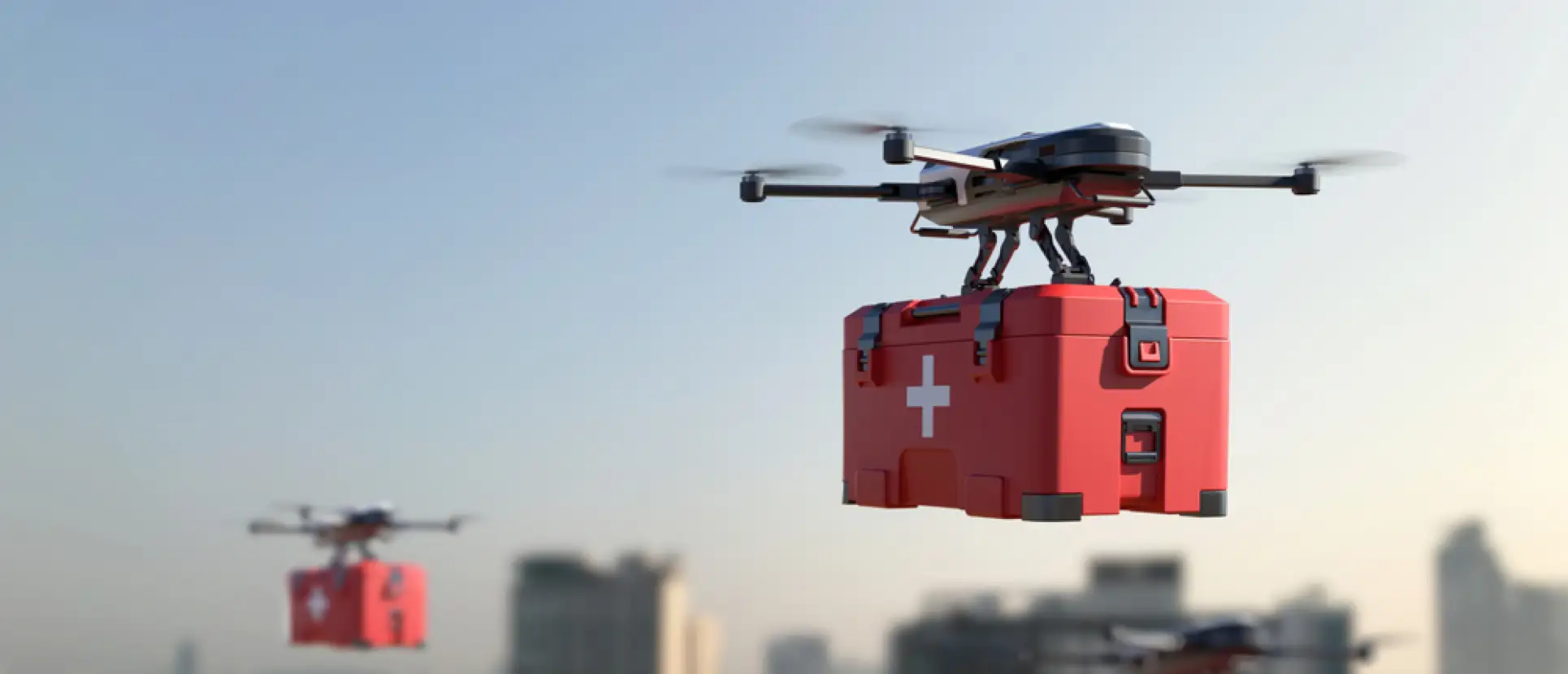
The effort focuses on medical and security applications such as transporting medical supplies, cadaver organs, and laboratory samples, along with surveillance and disaster relief operations.
The collaboration, according to the university, is aimed at incorporating drone technologies in routine and emergency healthcare delivery to help bridge the long-standing time, distance, and access challenges in critical medical situations.
This makes it the first in Rajasthan to implement integrated drone-based operations for healthcare.
Sunil Soman Nair, Director, Magic Myna, and state representative Ghanshyam said that drone technology is already being used with success in the services provided for defence purposes, and that necessary government approvals are being garnered for medical applications.
They added that the collaboration with Mahatma Gandhi University will be the first initiative of its kind in the state.
As part of the collaboration, a "Centre of Excellence" related to drone technology will also be jointly established by MGUMST and Magic Myna.
The proposed centre will work on innovation, training, research, and development of high-end drone-based services targeted at the medical sector, while also enhancing local capabilities in the domain of healthcare-related drone technology.
The leadership of the hospital emphasized organ transplantation as one of the most critical use cases.
Sukant Das, the Chief Operating Officer, and Virendra Pareek, Marketing Director of Mahatma Gandhi Medical University, said that drone technology would especially prove vital in the rapid transportation of cadaver organs. Organ transplantation, they said, is only possible within a very limited timeframe following brain death, and ambulances and administratively created green corridors were used until now for this purpose.
With drones, such problems as traffic congestion, distance, and time constraints could be eliminated, enabling organs to be transported safely from one hospital to another in significantly less time, thereby improving transplant success rates substantially, he added.
With the use of temperature-controlled drone boxes, blood samples, biopsies, and other sensitive specimens can be transported quickly to testing facilities, helping to preserve sample integrity, speed up reporting, and avoid delays in treating patients, Pareek said.
The university said the initiative aligns with the principles of “Vocal for Local” and the broader vision of “Atmanirbhar Bharat,” while positioning Rajasthan as a growing hub for technology-enabled healthcare delivery.
Stay tuned for more such updates on Digital Health News
Follow us