AIIMS Bilaspur Plans Major Capacity Boost to 960-Beds
The institute has also been strengthening its clinical capabilities, particularly in oncology, where oncology services are supported by advanced diagnostics such as PET scans and immunohistochemistry.
AIIMS Bilaspur has outlined plans to scale its hospital capacity to 960 beds and has been evaluating the introduction of an air ambulance service to address critical care needs in remote and mountainous areas.
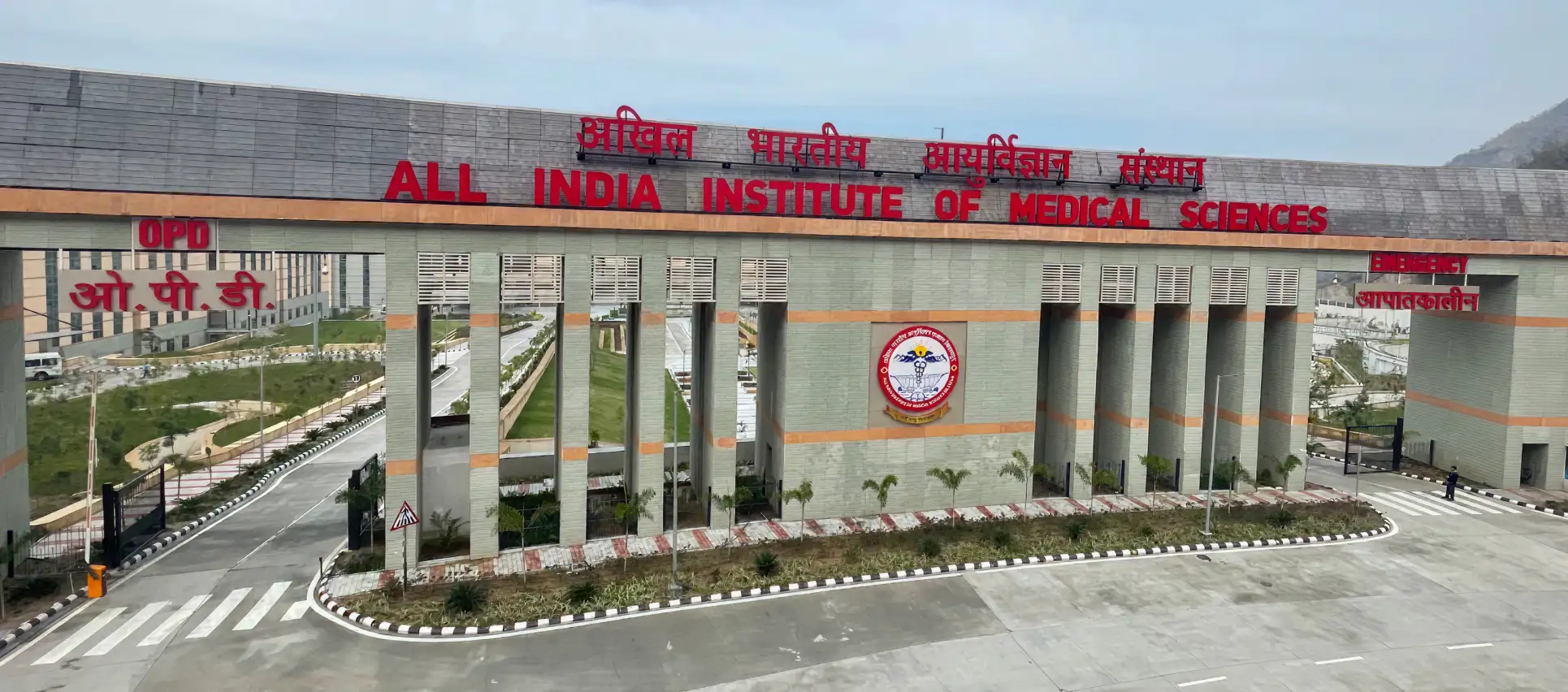
Established in 2017 across nearly 247.48 acres, the institute has been developed with an investment of over INR 1,272.91 Cr in infrastructure and INR 140 Cr in medical equipment.
Conceived as part of a broader push to strengthen tertiary healthcare access in underserved regions, AIIMS Bilaspur has gradually evolved into a key referral centre for Himachal Pradesh and neighbouring states such as Punjab, Haryana, and Jammu & Kashmir.
Currently operating with 750 beds and around 80 per cent occupancy, the hospital manages a daily outpatient load exceeding 1,800 patients, along with 70 to 80 emergency cases. With 41 departments, functional and staffed by 134 doctors, the institute has been bridging gaps between secondary and advanced care while maintaining a patient-first approach.
As Lt Gen (Dr) Daljit Singh (retd), Executive Director of AIIMS-Bilaspur, noted, “Every patient at AIIMS is treated with equal priority based on their clinical conditions and not on their social or economic standing.”
The institute has also been strengthening its clinical capabilities, particularly in oncology, where radiotherapy, medical oncology, and surgical oncology services are supported by advanced diagnostics such as PET scans and immunohistochemistry.
In addition, a bone marrow transplant centre, approved for INR 21.33 Cr, is expected to further enhance cancer care services.
In surgical care, AIIMS Bilaspur has been expanding into complex and high-risk procedures. Specialists have performed advanced interventions including awake brain surgery, complex spine reconstructions, and skull base tumour removals, reflecting the institution’s growing expertise in super-speciality care.
Given the state’s difficult terrain, the proposal for an air ambulance service is gaining significance. With two operational helipads, the institute is positioned to enable rapid evacuation and transfer of critically ill patients.
To meet increasing demand, future expansion plans go beyond 960 beds, with a long-term vision to scale up to 1,500 beds. Additional infrastructure projects, including a standalone trauma centre and mortuary, are already in progress.
Stay tuned for more such updates on Digital Health News
Follow us