Uttar Pradesh Govt to Deploy AI Solutions in Public Healthcare, Partners with Wadhwani AI
AI-driven solutions are expected to address areas such as tuberculosis management, telemedicine, maternal and child health, eye health screening, and digital support for frontline healthcare workers.
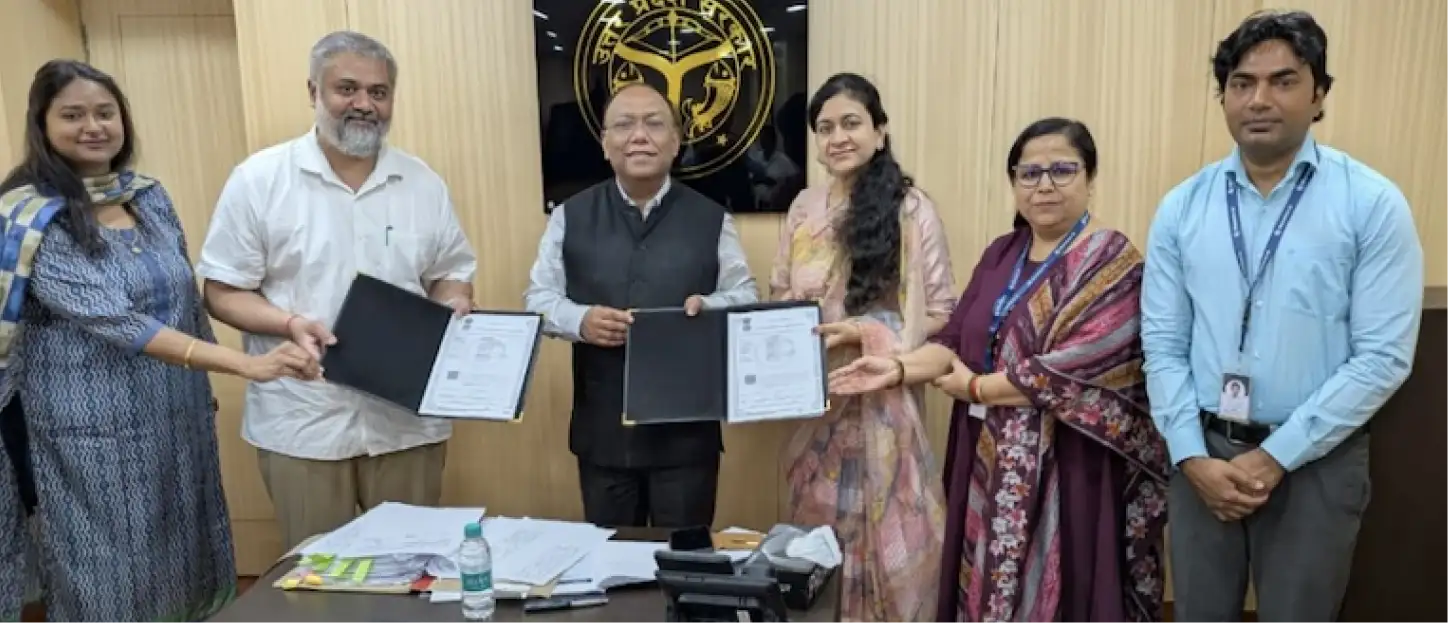
The government of Uttar Pradesh has announced its partnership with Wadhwani AI (LEHS AI Unit) to accelerate the adoption of AI-based solutions across the state's public healthcare system.
The partnership aims to develop an implementation roadmap for deploying AI-enabled tools to improve disease detection, public health management, and healthcare delivery.
The initiative focuses on integrating responsible AI technologies into several priority public health programmes in the state.
In the initial phase, the collaboration will introduce AI-driven solutions addressing areas such as tuberculosis management, telemedicine, maternal and child health, eye health screening, and digital support for frontline healthcare workers.
As a part of the agreement, Wadhwani AI will serve as a technical partner to the state, supporting the deployment of AI-driven tools aligned with the government’s public health priorities.
The collaboration aligns with the UP AI Mission, a three-year initiative launched by the Government of Uttar Pradesh designed to build a state-led AI ecosystem and accelerate the use of AI across sectors, including governance, healthcare, and agriculture.
Among the proposed solutions for tuberculosis care is the Cough Against TB (CATB), a mobile phone-based screening application designed to support the frontline healthcare workers to identify individuals with presumptive pulmonary TB by analyzing cough sounds and accompanying symptoms. The system is expected to enable early detection, including in remote community-based settings.
Complementing this system, Vulnerability Mapping for Tuberculosis (VMTB) will leverage geospatial AI analytics to identify high-risk locations by analyzing TB program data alongside multiple environmental and health indicators, helping health authorities prioritize targeted interventions and active case-finding activities.
Another component of the initiative includes the Prediction of Adverse TB Outcomes (PATO), an AI-powered risk stratification tool designed to detect patients at higher risk of complications during TB treatment.
The system aims to facilitate prompt, targeted, and effective interventions, which are expected to lower mortality rates and prevent drug-resistant TB.
In addition, in the telemedicine segment, the Clinical Decision Support System (CDSS) will assist clinicians by providing structured patient information and AI-assisted differential diagnosis recommendations during consultations.
This system is expected to accelerate the quality and consistency of care delivery across primary healthcare settings.
The collaboration will also include the deployment of Health Vaani, a voice- and text-based knowledge assistant designed to provide frontline health workers with quick access to government-approved health guidelines.
The platform seeks to enable decision-making and more consistent service delivery at the community level.
Further, to address the growing burden of diabetes-related vision complications, the partnership will also introduce the MadhuNetrAI, an AI-enabled screening solution that is designed to analyze retinal images to detect diabetic retinopathy and support early referral for specialist care, particularly in resource-constrained settings where specialist availability may be limited.
Moreover, in the maternal and newborn health sphere, Shishu Maapan, an AI-powered newborn anthropometry tool, will enable frontline health workers to capture accurate newborn measurements using a smartphone during home-based newborn care visits.
The AI solution is designed to estimate baby weight and other anthropometric indicators, which is expected to help identify newborns at risk of growth complications during the critical early weeks after birth and enable timely referral and intervention.
Commenting on the partnership agreement, Amit Kumar Ghosh (IAS), Additional Chief Secretary, Medical Health, Family Welfare, and Medical Education in Uttar Pradesh, said, “The Government of Uttar Pradesh has been undertaking several initiatives to strengthen the public health system and ensure that quality healthcare reaches every citizen, including those in the most remote communities. Through this partnership with Wadhwani AI, we look forward to adopting and deploying AI-driven tools across our health programs and progressively expanding the use of these solutions to further strengthen service delivery and improve health outcomes across the state.”
Reflecting similar thoughts, Dr. Neeraj Agrawal, Chief Program Officer, Wadhwani AI, said, “The solutions being deployed span the continuum of health delivery from identifying high-risk communities to supporting ASHA workers during field visits, to enabling early disease detection through AI-assisted analysis. As the partnership progresses, we look forward to expanding this work and supporting additional AI solutions that can further strengthen health systems and improve outcomes at scale.”
Stay tuned for more such updates on Digital Health News
Follow us