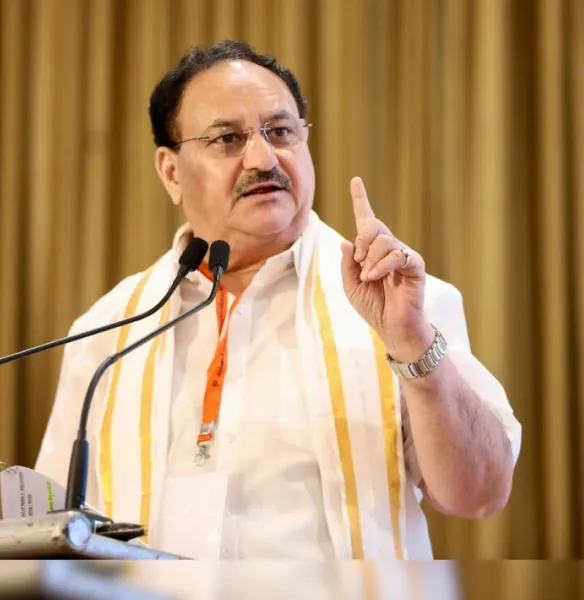
Robust AI-enabled Adjudication to Enhance Efficiency & Programme Integrity Under AB PM-JAY: Dr Sunil Kumar Barnwal
The initiative has been organised by the Ministry of Health and Family Welfare in collaboration with the NHA, IndiaAI Mission, and the IISc.
The National Health Authority has brought together policymakers, AI startups, researchers, insurers, and healthcare technology experts at the AB PM-JAY Auto-Adjudication Hackathon Showcase 2026 to explore how artificial intelligence can strengthen healthcare claims adjudication under Ayushman Bharat Pradhan Mantri Jan Arogya Yojana (AB PM-JAY).
The two-day showcase has highlighted AI-enabled solutions focused on improving transparency, reducing manual workload, accelerating claims processing, and strengthening programme integrity across India’s public health insurance ecosystem.
The initiative has been organised by the Ministry of Health and Family Welfare in collaboration with the National Health Authority, IndiaAI Mission, and the Indian Institute of Science at a time when healthcare systems globally are increasingly adopting AI-led automation for fraud detection, workflow optimisation, and clinical data management.
Under AB PM-JAY, nearly 50,000 claims are processed daily across more than 1,900 treatment packages, creating a large-scale operational environment where automation and intelligent verification systems could significantly improve efficiency and consistency.
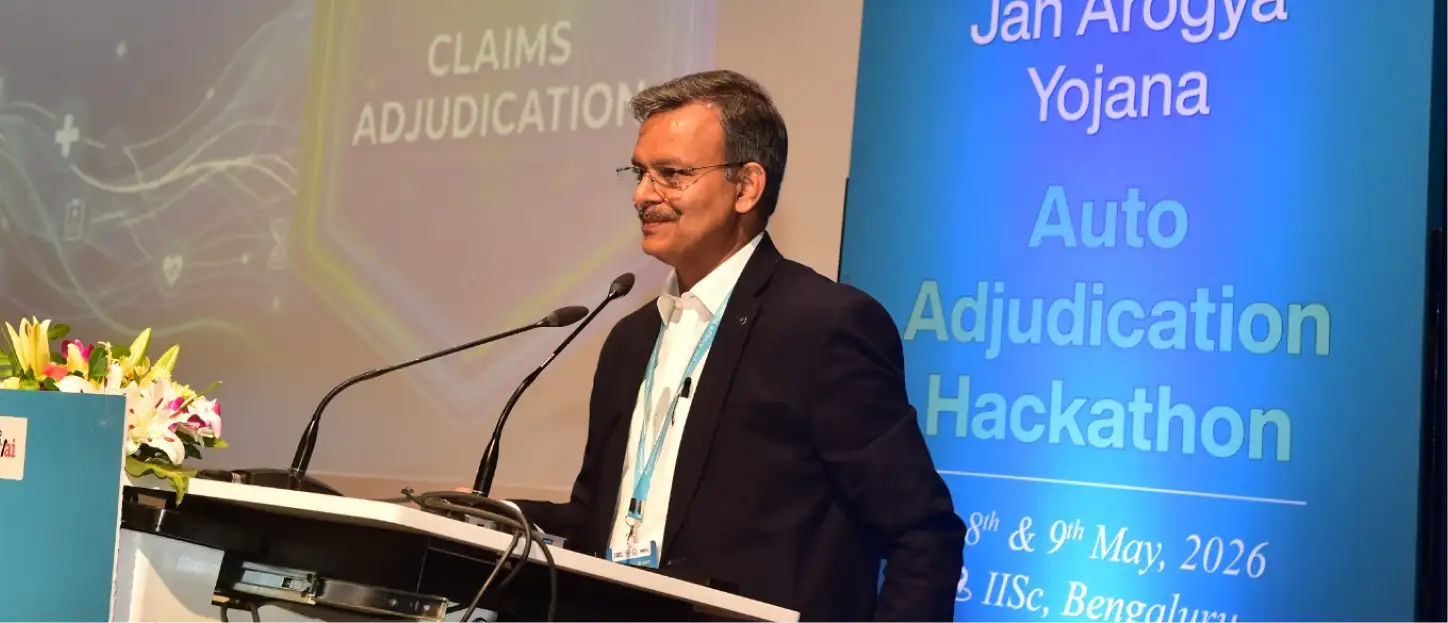
Speaking during the inaugural session, Dr Sunil Kumar Barnwal, CEO, NHA, said, “Robust AI-enabled adjudication to enhance transparency, efficiency and programme integrity under AB PM-JAY”.
He added that India is among the first countries in the Global South to establish a Health AI benchmarking platform through BODH, an open benchmarking and data platform for Health AI developed at IIT Kanpur.
OCR, Multimodal AI & Imaging Analytics
The showcase featured multiple AI and machine learning solutions developed around three major problem statements linked to claims adjudication workflows. One category focused on clinical document classification and compliance with Standard Treatment Guidelines using multilingual OCR systems capable of extracting structured information from low-quality scans and healthcare records.
Several teams also demonstrated systems that could identify institutional stamps, signatures, and missing documentation while generating explainable adjudication outputs aligned with policy requirements. Another key focus area involved radiological image-based condition detection and report correlation.
Participating teams presented AI-assisted systems capable of interpreting X-rays, CT scans, and MRI images to support adjudicators in validating diagnoses, disease staging, and treatment timelines submitted during claims processing.
The event also placed strong emphasis on fraud prevention and programme integrity through AI-driven deepfake and document forgery detection systems.
Demonstrations included tools designed to identify manipulated discharge summaries, synthetic medical reports, ghost beneficiaries, and altered billing records that could potentially lead to fraudulent claims settlements.
Panel discussions during the event also examined the future of AI-assisted claims adjudication, interoperable healthcare infrastructure, responsible AI deployment, privacy safeguards, and scalable implementation pathways for digital public health systems in India.
Stay tuned for more such updates on Digital Health News
Follow us