National Telemedicine Day: Tracing India’s Journey of Bridging Distance through Technology

What if you could get good medical care without having to leave your home? In a country such as India, with a low doctor-patient ratio and where access to healthcare often depends on where you live, the infrastructure, and the resources, telemedicine has emerged as a game-changer.
Telemedicine refers to the use of information and communication technologies (ICT) to provide healthcare services remotely, enabling consultation, diagnosis, treatment, and monitoring without requiring physical presence.
Recognising its potential, the Indian Medical Association recognised 24th March as the National Telemedicine Day, celebrating India’s journey from experimental satellite-based consultations to a strong digital healthcare ecosystem.
In this article, we explore the evolution of telemedicine in India, key government initiatives, the COVID-19 impact, and the present and future trends shaping digital healthcare in India.
The History Behind
India's telemedicine industry is gradually evolving from experimental pilot projects to a crucial component of the nation's healthcare delivery system. What started as an attempt to overcome geographical obstacles has developed into a technology-driven ecosystem that is changing the way that care is received, accessed, and experienced.
The groundwork was established in 2000 when Apollo Hospitals and the Indian Space Research Organization (ISRO) started satellite-based telemedicine programs that linked rural areas with urban super-specialty hospitals. One of the first milestones occurred on March 24, 2000, when a VSAT-enabled link was built at a small hospital in Aragonda, Andhra Pradesh, allowing remote consultations with Apollo Hospital, Chennai. This effort received global recognition when the ISRO-enabled VSAT network was inaugurated by Bill Clinton from Hyderabad, in the presence of the then Chief Minister N. Chandrababu Naidu.
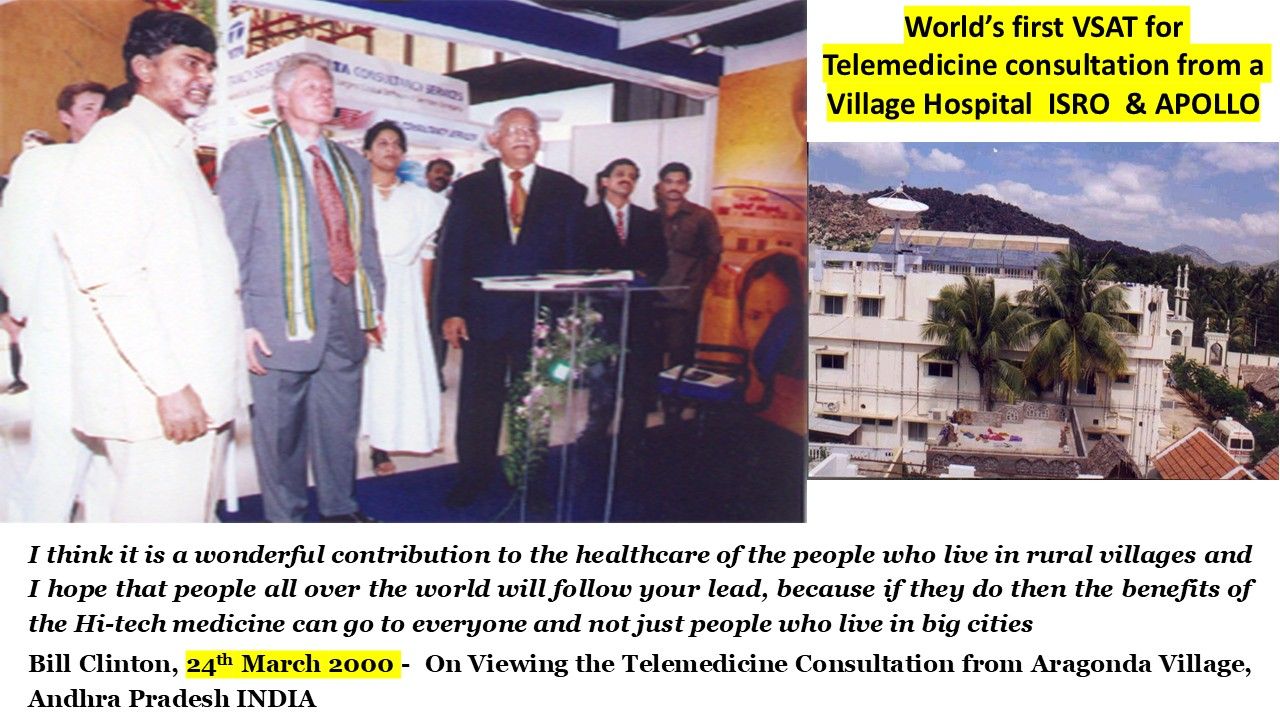
Image Credit: Dr K Ganapathy
The early 2000s also witnessed institutional strengthening of the telemedicine ecosystem with the establishment of the Telemedicine Society of India in 2001, led by the efforts of leading institutions, including All India Institute of Medical Sciences, PGI Chandigarh, and SGPGI Lucknow, at the First National Conference on Telemedicine.
Building on these developments, the Ministry of Health and Family Welfare established the National Task Force on Telemedicine in 2005, which marked a transition from isolated pilot projects to a more structured national approach.
A significant milestone came when the Indian Medical Association officially recognised March 24 as National Telemedicine Day, commemorating the launch of India’s first telemedicine service under the Aragonda initiative.
Reflecting his thoughts on the significance of the National Telemedicine Day, Former TSI President and Former Board of Directors of Apollo Telemedicine Networking Foundation and Apollo Telehealth Services 2000-2024, also widely regarded as the pioneer of telemedicine in India, Dr K. Ganapathy, said, “To me, this is more than a red-letter day. There are 100+ national and world “DAYS” drawing attention to diabetes, hypertension, epilepsy, head injury, etc. These DAYS draw much-needed attention, create awareness, and ensure greater utilisation. In spite of my best efforts, I was only able to persuade two national Presidents of IMA to have an IMA National Telemedicine Day. It was a strand of RNA which finally acted as a Global CTO. The present generation would not know what it was to propagate technology-enabled remote health care in 1998. Apollo Hospitals was truly remarkable in displaying grit, fortitude, courage, and commitment then. Not only was telemedicine conceptualised, but actually implemented 26 years ago.”
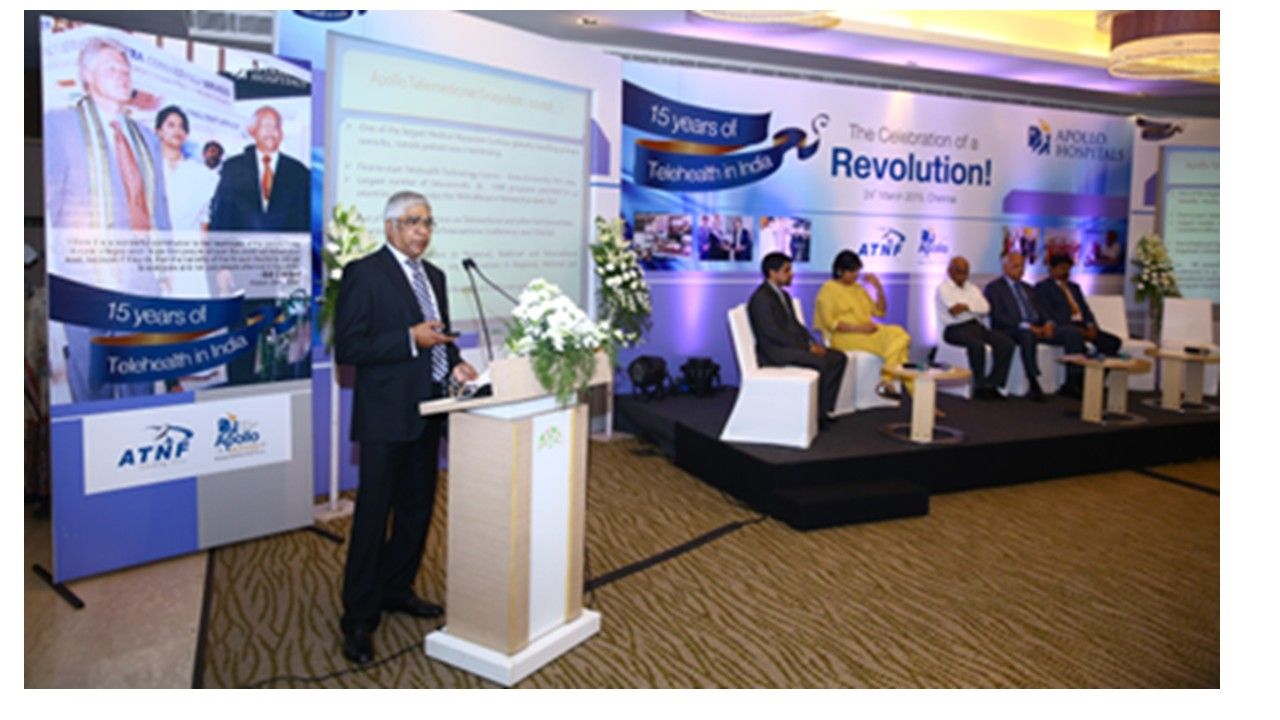
Image Credit: Dr K Ganapathy
These initial efforts demonstrated the potential of technology to overcome the challenges posed by distance, limited infrastructure, and uneven distribution of medical expertise. They laid the groundwork for a digital transformation that would later accelerate dramatically.
Sharing similar thoughts on National Telemedicine Day, Dr Sanjay Sood, Project Director, e-Sanjeevani (National Telemedicine Service) and Head of Digital Health Innovations Division, C-DAC Mohali, stated, “The recognition of National Telemedicine Day by the Indian Medical Association marks a defining moment in India’s healthcare journey. It offers an opportunity to reflect on how telemedicine has evolved from a peripheral idea into a core pillar of healthcare delivery. In a country as vast and diverse as ours, ensuring equitable access has always been a challenge. India was not among the early global pioneers in telemedicine. The historic Aragonda telemedicine project of Apollo Hospitals provided an early proof of concept. However, when the seeds of eSanjeevani, then conceptualised as Sanjeevani, were sown in 1998–1999 by C-DAC Mohali, global experience in this domain remained limited. The foresight of the Ministry of Electronics and IT, Government of India, and the trust placed in our medical fraternity to embrace digital solutions made the difference.”
COVID -19: A Turning Point
The COVID-19 pandemic was a major turning point for telemedicine in India. As a result of nationwide lockdowns, numerous outpatient department services in hospitals were suspended to prevent community transmission of COVID-19, resulting in a substantial service disruption. The vast majority of healthcare services were redirected to meet pandemic needs, and telemedicine became a critical tool to mitigate access issues.
India responded, as did many other countries worldwide, with telemedicine and other digital health technologies. The industry data showed a significant shift: outpatient services declined to 32%, while online consultations rose to 300%, rapidly validating telemedicine’s value. This marked a significant turning point for telemedicine in India. To promote telemedicine services, the Indian government prioritized various initiatives, including the e-Sanjeevani program and the release of telemedicine practice guidelines in March 2020. Additionally, 23 tele-mental health centers were established, with the National Institute of Mental Health and Neurosciences serving as the central hub.
Government Driving the Adoption of Telemedicine in India
The Government of India has been relentlessly taking initiative to embed telemedicine into routine care, supporting broader Health IT adoption in Indian hospitals.
The Ministry of Health and Family Welfare issued Telemedicine Practice Guidelines in 2020, formalizing how telehealth services should be delivered, data privacy managed, and prescriptions issued, boosting clinician confidence and institutional adoption.
In April 2020, the government of India introduced its telemedicine service, e-Sanjeevani, as part of its ‘Digital India’ initiative. Developed by the Center for Development of Advanced Computing (C-DAC) Mohali, under the Ministry of Health and Family Welfare, the platform aims to achieve digital health equity and support Universal Health Coverage (UHC). e-Sanjeevani provides quick, easy access to doctors and medical specialists. It operates on a hub-and-spoke model and offers free service offers video consultations via a smartphone or local health center, connecting doctors with patients. Today, it covers 1,55,000 public health facilities, and as of Feb 2026, it has served more than 460 million patients.
Complementing this, the Ayushman Bharat Digital Mission was launched in 2021 to build a national digital health infrastructure, which further strengthens the rollout of telemedicine in India.
In October 2022, the government also launched Tele-MANAS (the National Tele-Mental Health Programme), establishing nationwide remote counselling centers. The platform provides 24/7 counselling services via phone and video calls. It aims to strengthen mental health outreach across the country, demonstrating the government’s commitment to diverse telemedicine use cases in critical cases, such as mental health, beyond general care.
Commenting on the significance of the e-Sanjeevani initiative, Dr. Sanjay Sood said, “Today, sovereign digital health platforms such as eSanjeevani National Telemedicine Service (launched in April 2020) and Tele-MANAS (National Tele-Mental Health Programme, launched in October 2022), hosted by the Ministry of Health & Family Welfare, Government of India, have transformed healthcare access at scale. eSanjeevani, the world’s largest telemedicine implementation, has facilitated around 460 million remote consultations, while Tele-MANAS has expanded access to mental health support across the country. These platforms demonstrate how technology, aligned with public health priorities, can deliver outcomes anchored in scale, trust, and inclusivity. As we look ahead, India’s healthcare ecosystem will become increasingly technology-enabled, integrating telemedicine, artificial intelligence, and digital health frameworks into a seamless continuum of care. India is setting global benchmarks. On this occasion, I extend my warm greetings to the entire medical community across public and private sectors. I also look forward to eSanjeevani achieving its one billionth consultation milestone.”
Present Scenario
The private sector has also played a crucial role in shaping the current telemedicine ecosystem. Institutions like Apollo Hospitals have been at the forefront, establishing one of the earliest and largest telemedicine networks in South Asia through Apollo TeleHealth. As a pioneer in this space, the network has enabled access to quality healthcare across both rural and urban regions, offering a wide spectrum of services including teleconsultations, tele-ICU, tele-emergency care, tele-radiology, and chronic disease management.
Similarly, leading hospitals such as Fortis Healthcare and Max Healthcare have further expanded their digital health capabilities to include teleconsultations, tele-ICU services, and remote patient monitoring. These developments indicate a shift towards hybrid care models that combine in-person and virtual healthcare delivery.
Complementing these hospital-led efforts, digital health platforms such as Practo, Tata 1mg, and mfine have supported telemedicine adoption by delivering integrated services, including online consultations, diagnostics, and pharmacy support.
This growth has been further enabled by India’s broader digital ecosystem, including increased smartphone penetration and affordable internet access, which have expanded telemedicine services. According to an industry report by IMARC Group, India’s telemedicine market, valued at USD 3.76 billion in 2025, is projected to reach USD 20.02 billion by 2034, reflecting strong growth potential.
Telemedicine is now widely used for primary care consultations, chronic disease management, follow-ups, and mental health services. Insurance providers have increasingly incorporated teleconsultations into their offerings, recognising their role in improving access to care and cost efficiency.
Looking ahead, telemedicine in India is expected to evolve across multiple dimensions, with emerging technologies such as AI, remote monitoring, and interoperable health data systems further enhancing its capabilities. Also, connected devices will allow continuous health monitoring, shifting care delivery from hospitals to homes. At the same time, standardised protocols, data privacy regulations, and interoperability frameworks will further streamline telemedicine practices. The focus is likely to shift towards personalised, continuous, and preventive healthcare models supported by digital platforms. With improved internet penetration and government initiatives, telemedicine is expected to reach deeper into Tier-2, Tier-3, and rural regions.
Telemedicine, while transformative, faces several key challenges that may impact its long-term effectiveness. A major concern is the digital divide, as limited internet access and low digital literacy in rural areas can restrict adoption. Data privacy and cybersecurity risks also remain critical, given the sensitive nature of health information. Addressing these challenges will be essential to ensure telemedicine evolves into a reliable, inclusive, and sustainable healthcare solution.
Highlighting the need for telemedicine and technologies in healthcare, Dr. Umashankar Subramanian, Honorary Secretary, Telemedicine Society of India, noted, “Technology-enabled healthcare in India is not just a policy shift; it is changing how people experience care in their everyday lives. In a country where doctors and hospitals are unevenly distributed, especially between rural and urban areas, digital tools like telemedicine are helping bridge this gap. Today, patients can consult specialists from their homes, saving time, money, and effort. At the same time, technologies such as electronic health records and AI are making healthcare more efficient, enabling quicker decisions and better continuity of care, especially for those living with chronic conditions. The COVID-19 pandemic clearly showed how vital these technologies are in keeping healthcare services running during crises.”
He further added, “Looking ahead, initiatives like the Ayushman Bharat Digital Mission aim to create a connected healthcare system where patient information can flow seamlessly across providers. This will help shift healthcare from treating illness to preventing it. However, to make this future inclusive, we must address challenges like the digital divide, data privacy, public-private collaboration, and trust. With the right balance of innovation, capacity building, and community engagement, India has a real opportunity to lead the world in making healthcare more accessible, affordable, and human-centered.”
Wrapping Up
As India commemorates National Telemedicine Day, it is not just a reflection on past achievements but a call to accelerate the future of healthcare delivery. Telemedicine has already demonstrated its ability to bridge systemic gaps, geographical, infrastructural, and socio-economic, to provide healthcare access in remote areas, including primary care consultations, chronic disease management, follow-ups, and mental health services, but its true potential lies in how it evolves from a convenience-driven service to a core pillar of healthcare systems.
Looking ahead, the next phase of telemedicine in India will be defined by technology integration, intelligence, and inclusivity. With continued support from the government through investments in digital infrastructure, policy evolution, and public-private partnerships, telemedicine is set to become a core pillar of the healthcare ecosystem, providing access to healthcare in remote areas and enhancing support for chronic disease management. The integration of EHRs and interoperable systems will further ensure continuity of care beyond isolated interaction. As technology continues to reduce geographical barriers, the mission of equitable and quality healthcare for all becomes increasingly attainable. Therefore, the National Telemedicine Day is not just a milestone, but the beginning of a more connected and accessible healthcare future in India.
Stay tuned for more such updates on Digital Health News
Follow us