India Targets Global Pharma Leadership with Biosimilars & Innovation Push: J.P. Nadda

He pointed to the INR 10,000 Cr Biopharma Shakti initiative as a key step toward strengthening biopharmaceutical innovation, alongside schemes such as PRIP and PLI aimed at boosting domestic manufacturing and resilient supply chains.
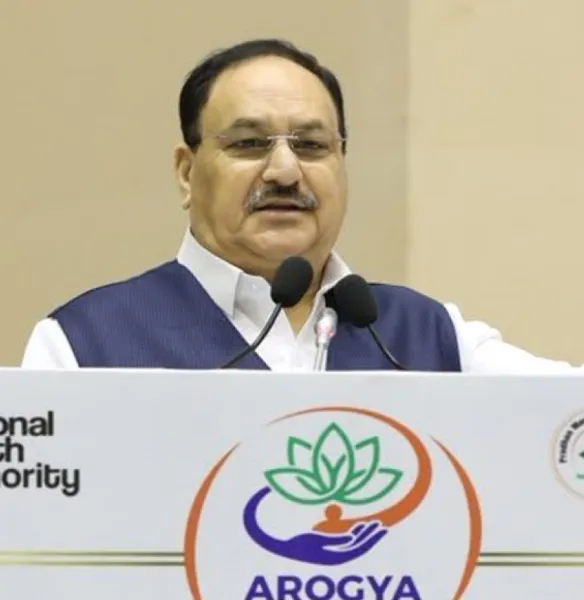
India is positioning itself to take a leading role in the global pharma landscape by accelerating its focus on biosimilars, biologics, and speciality medicines, Union Minister J.P. Nadda said at a recent event, emphasizing innovation, policy backing, and industry collaboration.
India has strengthened its ambition to lead the global pharma landscape by advancing into biosimilars and speciality medicines, supported by targeted policy interventions and growing innovation capabilities, as highlighted by J.P. Nadda.
India has long been known as the “pharmacy of the world,” supplying affordable generics globally, but the sector is now transitioning toward high-value, research-driven segments.
Addressing the event, Nadda noted the global shift toward advanced therapies, stating, “In this evolving environment, India is well positioned not only to adapt but to emerge as a global leader.”
He pointed to the INR 10,000 Cr Biopharma Shakti initiative as a key step toward strengthening biopharmaceutical innovation, alongside schemes such as PRIP, Production Linked Incentives, and bulk drug parks aimed at boosting domestic manufacturing and resilient supply chains.
He also reiterated the government’s commitment to affordable healthcare through the Jan Aushadhi programme.
Minister of State Anupriya Patel underscored the scale of India’s current capabilities, highlighting that the country contributes nearly 20% of global generic medicines and supplies about 70% of global vaccines.
She emphasized that the biosimilars market is expected to reach USD 75 Bn by 2030, while innovative drugs dominate nearly 87% of global market value, making a strong case for India to pivot toward innovation-led growth.
She also pointed to the increasing role of artificial intelligence in drug discovery and the need to strengthen talent pipelines through institutions such as NIPERs and IITs.
Senior officials further emphasized the importance of faster innovation cycles, stronger startup ecosystems, and improved clinical research infrastructure.
Efforts to streamline regulatory processes and make research easier are underway, aiming to reposition India from a volume-driven generics hub to an innovation-driven global leader.
Stay tuned for more such updates on Digital Health News
Follow us