World Brain Day 2026: How Digital Technologies are Solving the Last-Mile Challenge in Brain Health
Advertisement
When a patient experiences a stroke, every minute matters. Yet for many people living in rural and remote regions, specialist neurological care may be hundreds of kilometres away, several hours from reach, and even in some cases entirely unavailable. The challenge exists far beyond stroke. Patients with epilepsy, Parkinson's disease, dementia, traumatic brain injuries, and other neurological conditions often face delayed diagnoses, interrupted treatment, and limited access to rehabilitation services due to geographic barriers and specialist shortages.
This reality makes the theme of World Brain Day 2026, "Brain Health: Access for All", particularly relevant. The World Federation of Neurology (WFN) reported that over 3.4 billion people, more than 40% of the global population, currently live with neurological conditions. This makes brain disorders the leading cause of disability worldwide. While advances in neuroscience continue to improve diagnostic and treatment capabilities, access remains one of the biggest determinants of neurological outcomes.
The question is no longer whether effective neurological interventions exist. The more pressing question is whether these interventions can reach people who need them most. Increasingly, digital health technologies are providing an answer.
On this World Brain Day, let us explore how these technologies are helping overcome the last-mile challenge in neurological care, expanding access to brain health services, and moving healthcare systems closer to the goal of "Brain Health: Access for All."
Technology as the Enabler
Traditionally, neurology has been seen as a speciality reliant on physical infrastructure. Hospitals mostly provided rehabilitation treatments, professional consultations, and brain imaging equipment. Today, distributed neurology, a model in which diagnosis, consultation, monitoring, and rehabilitation occur across interconnected digital networks rather than within a single facility, is being increasingly used by leveraging a growing number of digital technologies.
Tele-neurology platforms allow specialists located in academic medical centres to support physicians in district hospitals. Cloud-based imaging systems enable scans to be reviewed remotely. Digital rehabilitation tools support recovery at home. Remote monitoring platforms provide continuous visibility into patient health between visits. Together, these technologies are transforming neurological care from a location-dependent service into a connected ecosystem.
Tele-Neurology: Extending Expertise Beyond Urban Hospitals
Perhaps tele-neurology is one of the most visible examples of this digital transformation. For rural people, access to neurologists can be limited or nonexistent. Tele-neurology networks bridge this gap by connecting local clinicians with specialists through secure digital platforms. What makes these networks particularly significant is their ability to support both acute and chronic neurological care. When dealing with a complicated seizure problem, a doctor in a district hospital may contact a neurologist. A stroke patient does not have to wait to be transferred to a tertiary facility to undergo specialised examination. Parkinson's disease patients can get follow-up appointments nearer to their homes. The benefits go beyond practicality. Tele-neurology facilitates quicker decision-making, cuts down on delays, and gives local healthcare providers more confidence while managing neurological diseases.
India is already witnessing efforts to expand such capabilities. One of the recent examples includes the Maharashtra health department's proposed “Remote Robotic Neurointervention” project aimed at improving access to timely treatment for stroke patients across the state and strengthening emergency healthcare in rural areas.
AI is Bringing Diagnostics Closer to the Point of Care
Artificial intelligence is often associated with advanced urban hospitals and research centres. However, some of its most transformative impacts may occur in resource-constrained environments. AI-assisted imaging techniques can aid radiologists with heavy workloads, prioritise critical patients, and detect anomalies connected to strokes. Frontline healthcare professionals can identify neurological signs that could otherwise go unnoticed with the use of clinical decision-support technologies. Rather than replacing specialists, these tools help amplify limited expertise and extend neurological capabilities to facilities that may not have dedicated neurology departments.
In areas where the lack of specialists is a systemic problem, AI has the potential to be a significant force multiplier. Several initiatives are already demonstrating this potential in practice. Yatharth Super Speciality Hospital in Greater Noida has introduced RapidAI, an AI platform designed to speed up stroke detection and improve decision-making in neurovascular emergencies, where timely intervention is critical to patient survival and recovery.
Similarly, global health technology company Philips has partnered with Nicolab to leverage Nicolab’s StrokeViewer, the first cloud-based solution in India cleared for CT perfusion (CTP) analysis, which generates instant AI-derived imaging results, aggregates patient data, and enables secure specialist communication.
Beyond imaging, AI is also being applied to neurological screening and early disease detection. India has recently unveiled MANAS 1, an artificial intelligence platform designed to interpret brainwaves and enable earlier detection of neurological and psychiatric disorders.
Preventive Brain Care
Wearable devices and remote monitoring technologies are enabling continuous tracking of health indicators associated with neurological conditions. Even smartphone technologies are being utilised more and more to enhance follow-up treatment, medication adherence, cognitive evaluations, and symptom tracking.
These technologies might help with early identification, individualised therapies, and long-term illness management by monitoring movement patterns, sleep habits, activity levels, and other digital biomarkers.
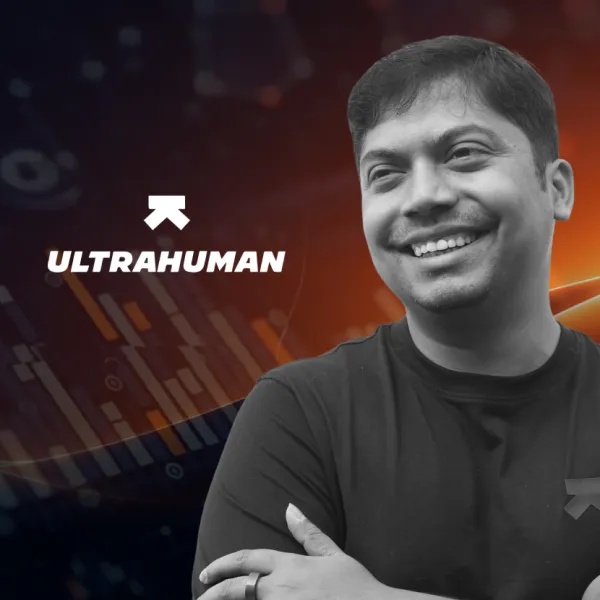
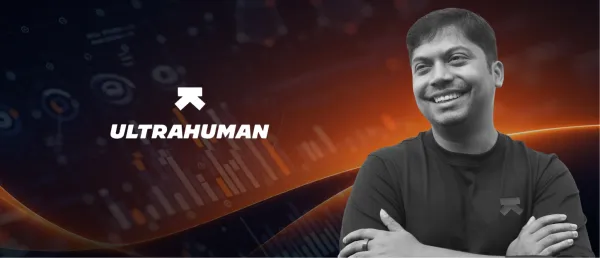
For rural populations, where specialist consultations may be infrequent, such tools could enable earlier intervention and more timely referrals. Several innovations are already demonstrating the potential of preventive brain care. An emerging example is Deepinder Goyal's Temple, a brain health and cognitive monitoring wearable. Even though it is still in its early stages and awaiting wider clinical validation, the technology represents a growing interest in wearable systems that could support early detection of neurological and cerebrovascular risks, potentially enabling more proactive and preventive approaches to brain health management.
In addition, healthtech startup Ivory's AI-powered, neuroscience-based platform provides measurable and trackable cognitive functions, including attention, memory, and executive function, supporting preventive brain health.
Devices such as the Apple Watch or Samsung Galaxy Watch monitor metrics that directly reflect brain health, including heart rate variability (HRV) for stress, deep sleep duration to clear out neurological toxins, and oxygen saturation.
BCI Connecting Minds & Machines
Among the most pathbreaking developments in neuroscience is the emergence of brain-computer interface (BCI) technology, which aims to establish direct communication pathways between the human brain and external devices.
Unlike conventional healthcare technologies that observe or measure brain activity, BCIs interpret neural signals and translate them into actionable commands. This capability is opening new possibilities for individuals affected by paralysis, stroke-related disabilities, spinal cord injuries, and neurodegenerative conditions.
For patients who have lost the ability to communicate or control movement, BCI systems could provide alternative pathways for interaction by converting brain signals into commands for computers, assistive devices, and robotic systems.
Innovation in this space is accelerating globally. Recently, Epia Neuro, a San Francisco-based medtech startup, is developing an intent-driven BCI platform designed to interpret neural activity and translate brain signals into actionable outputs to support neurological recovery and improve patient independence.
China has also achieved a major milestone in the field, completing the world's first implantation of a commercially approved brain-computer interface chip in a patient with a spinal cord injury.
India is also contributing to advancements in this field. Researchers led by Dr. Debasis Samanta at Indian Institute of Technology Kharagpur are developing hands-free, touch-free text-entry systems that use motor imagery captured through EEG devices to help users with special needs
In parallel, Researchers at the Indian Institute of Science are developing indigenous microchip-based BCI systems that combine microelectronics, artificial intelligence, and neural signal processing to support neurorehabilitation and assistive healthcare
While many BCI applications remain in the early stages of development, ongoing advances in neural engineering, artificial intelligence, and signal processing are rapidly expanding their potential.
Non-Invasive Neurotechnology
While early BCI research focused heavily on implanted devices, advances in non-invasive neurotechnology are making brain interfaces more accessible. Key developments include EEG-based brain monitoring systems, Wearable neural sensors, AI-powered neural signal interpretation, and Digital biomarkers for neurological health. The combination of AI and neurotechnology could enable more personalised approaches to diagnosis, rehabilitation, and continuous brain health monitoring.
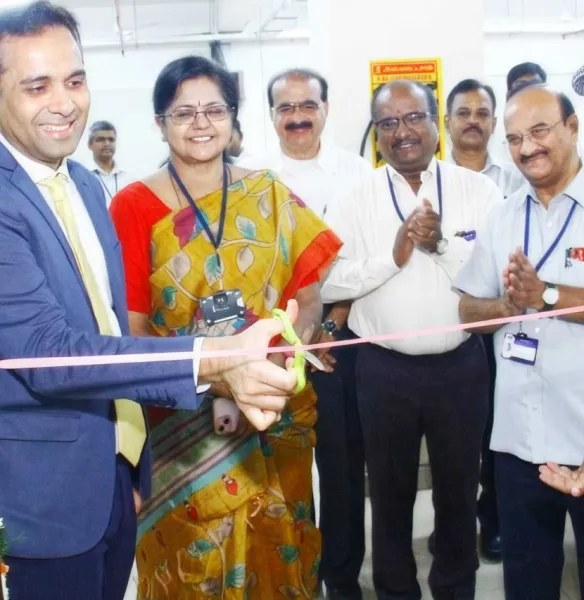
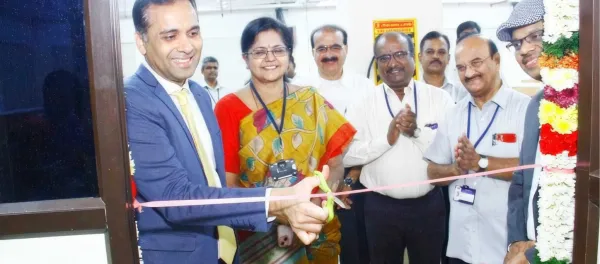
India is already beginning to build capacity in this emerging field. A notable example is the recent launch of a Centre for Excellence in Neurotechnology by Christian Medical College, Vellore, in collaboration with the Vattikuti Foundation to expand access to non-invasive treatment options for movement disorders and address the growing burden of tremor-related neurological conditions in India. A key component of the newly launched Centre is the installation of an MR-guided Focused Ultrasound (MRgFUS) system, which enables incisionless treatment for patients with essential tremors and tremors associated with Parkinson’s disease.
The Most Overlooked Access Challenge
Diagnosis and therapy are frequently discussed in relation to neurological care. However, for a lot of people, the biggest obstacle comes after discharge. Long-term rehabilitation is often necessary for stroke survivors, patients with traumatic brain injuries, and those with neurodegenerative disorders. Due to geographical limitations and a lack of workers, access to rehabilitation programs is still restricted in many areas.
Through guided exercise regimens, home-based therapy options, remote progress tracking, and virtual physiotherapy sessions, digital rehabilitation platforms are assisting in closing this gap.
Further, neural monitoring technologies that monitor brain activity patterns, brain-controlled rehabilitation platforms that support stroke recovery through neural feedback, neural communication systems that enable people with severe paralysis or speech impairments to communicate through brain signals, and assistive devices that allow control of prosthetics, robotic systems, and mobility aids are examples of its emerging applications.
One notable example comes from the Postgraduate Institute of Medical Education and Research Chandigarh’s Stroke Home Care (SHC) application, a web-based platform designed to enable caregivers to provide structured and timely care for stroke survivors at home; specifically, facilitating access to rehabilitation services remains uneven.
Innovation is also advancing neurovascular care and rehabilitation. Recently, Siemens Healthineers and Stryker announced a partnership to develop a robotic system capable of performing both elective and emergency neurovascular procedures, including treatments for stroke and aneurysms.
Together, these innovations are redefining neurological rehabilitation and care, offering new opportunities to improve independence, quality of life, and access to long-term support for people living with neurological conditions.
The Digital Backbone of Neurological Care
The problem of brain health access cannot be resolved by technology alone. Strong digital health infrastructure and trained healthcare personnel are essential for the success of tele-neurology, AI-assisted diagnostics, remote monitoring, and digital rehabilitation.
Delivering neurological care across geographical boundaries requires secure data-sharing systems, cloud-based imaging networks, interoperable health records, and dependable internet access. Healthcare workers must also receive training on how to utilise digital tools efficiently, decipher insights produced by AI, and incorporate virtual care into standard clinical procedures.
Infrastructure, worker development, and digital literacy investments will be equally as crucial as new technology investments as neurological care becomes more and more digital. Even the most advanced inventions can find it difficult to reach the patients who most need them without these underpinnings.
Road Ahead
The next frontier of neurological care may rely more on digitally connected care networks than on independent centers of excellence. Timely access to emergency services and specialised treatment through integrated digital channels can be life-saving for patients with stroke symptoms, where the golden hour can greatly impact outcomes.
As Neurological science continues to advance rapidly, the greatest breakthrough in brain health over the coming decade may not be a new drug, device, or algorithm. It may be the capacity to guarantee that every patient, no matter where they live, receives neurological expertise.
As the theme of World Brain Day 2026 is "Brain Health: Access for All," digital technologies are assisting healthcare systems in achieving this objective.
Because access to brain health is not merely a healthcare issue; it is often the difference between recovery and disability, independence and dependence, opportunity and inequity. The last mile remains the hardest to reach, but it is increasingly becoming the most important frontier in digital health.
Stay tuned for more such updates on Digital Health News