JPM26: AI, Healthtech, and Biotech at the Forefront of Healthcare Transformation

The 2026 J.P. Morgan Healthcare Conference in San Francisco highlighted a pivotal moment for global healthcare. For years, providers, payers, and medtech companies have explored the potential of artificial intelligence, digital platforms, and precision medicine. This year, the focus shifted decisively from theory to action. Healthcare is no longer imagining the future; it is deploying it at scale, transforming patient care, operations, and research.
Generative AI platforms such as ChatGPT Health and Claude for Healthcare are moving beyond pilot projects to enterprise applications. Conference leaders shared concrete examples of AI accelerating clinical workflows, improving revenue cycle management, enhancing patient engagement, and powering research and development. The consensus was clear: innovation alone is no longer enough.
The conference offered a clear message for the next decade. Organizations that succeed will be those that integrate AI into their core strategy, scale digital platforms effectively, and embed innovation across clinical, operational, and financial systems. At JPM26, it became evident that the future of healthcare will be defined not by ideas but by execution and measurable impact.
Health Systems: Integration as Strategic and Operational Imperative
Major nonprofit health systems demonstrated that scale without operational excellence no longer delivers an advantage. Advocate Health reported 1.5 billion in annual operating savings three years post-merger, achieved while adding more than 23,000 jobs. Executives highlighted improvements in vendor contract management, labor throughput, and enterprise-wide clinical standards. Leapfrog safety ratings expanded from five to 24 hospitals, signaling quality improvements alongside efficiency.
Mass General Brigham's For Every Patient initiative emphasized system-wide realignment to eliminate silos and accelerate decision-making, reducing length of stay, improving patient flow, and shortening behavioral health wait times. AdventHealth highlighted consolidation via Epic and Workday platforms and the deployment of over 80 AI use cases, including smart inpatient rooms, enhancing remote care, and patient engagement. Providence reinforced organizational culture through in-office leadership, while Intermountain Healthcare emphasized collaboration and operational innovation with AeroTerra Health, a nationwide medical transport venture supporting care and margin resilience.
As AI becomes more central to operations, executives stress the importance of linking technology to strategy. Feby Abraham, Executive Vice President and Chief Strategy and Innovations Officer at Memorial Hermann Health System, noted the necessity of embedding innovation into core health system priorities. “AI is most powerful when it is directly tied to system priorities. Innovation cannot sit on the sidelines. It has to be embedded in how we deliver care, manage operations, and plan for the future,” Abraham said.
CommonSpirit Health CEO Wright Lassiter outlined new divestiture plans and AI adoption milestones. The $40 billion Catholic health system has executed about half a dozen divestitures since its merger and will announce additional portfolio transitions in the next quarter, focusing on communities and care areas where impact is greatest, particularly ambulatory care and underserved regions. Lassiter highlighted the deployment of 242 AI tools, moving from point solutions to enterprise-scale applications. AI initiatives have generated an estimated 100 million in annual value, including automated clinical notetaking, patient call processing, and neuro emergency triage, reducing door-to-treatment times by over 40% across more than 50 facilities.
AI-enabled sepsis monitoring, active since 2015, contributed to saving 3,655 patients in fiscal year 2025. Lassiter emphasized responsible AI use, urging deployment to benefit both employees and patients, and launched an AI Workforce Readiness Academy to reskill and upskill several thousand employees. He also called for collaboration among providers and insurers to avoid competitive misuse of AI, focusing instead on operational efficiency and patient care.
Artificial Intelligence: From Pilot Projects to Enterprise Platforms
Waystar showcased agentic AI for revenue cycle management, automating workflows and reducing denials. Leveraging 7.5 billion annual transactions and coverage of one-third of U.S. hospital discharges, the system achieved a 98.9 percent first-pass claim acceptance rate and optimized documentation accuracy.
OpenEvidence positioned its platform as a medical superintelligence, used daily by over 40 percent of U.S. physicians, with integrations to the American Medical Association, The New England Journal of Medicine, and JAMA content. The company’s 6 billion valuation reflects strong investor confidence in clinical AI tools.
Anthropic introduced Claude for Healthcare, built for regulated environments with access to CMS coverage databases, ICD-10 coding systems, the NPI Registry, and PubMed. Early adopters include Banner Health, Stanford Healthcare, Sanofi, AbbVie, and Genmab. Claude’s FHIR-integrated Agent Skills enable developers to build compliant healthcare applications.
OpenAI also announced ChatGPT Health, a dedicated health experience with privacy and clinical relevance, connecting securely to medical records and wellness apps. Institutions such as AdventHealth, Boston Children’s Hospital, Cedars-Sinai, HCA Healthcare, and UCSF are piloting ChatGPT for Healthcare to reduce administrative burden and enhance documentation.
UCSF Health and Amgen emphasized disciplined AI deployment across 90 tools, prioritizing high-impact research, development, and clinical initiatives. SSM Health reported revenue cycle improvements driving profitability, while Omada Health demonstrated 50 percent year-over-year revenue growth with nearly 900,000 members, highlighting virtual care adoption.
Scaling AI and Digital Transformation
Amid discussions on AI at scale and enterprise digital transformation, industry leaders highlighted the critical importance of turning strategy into measurable execution.
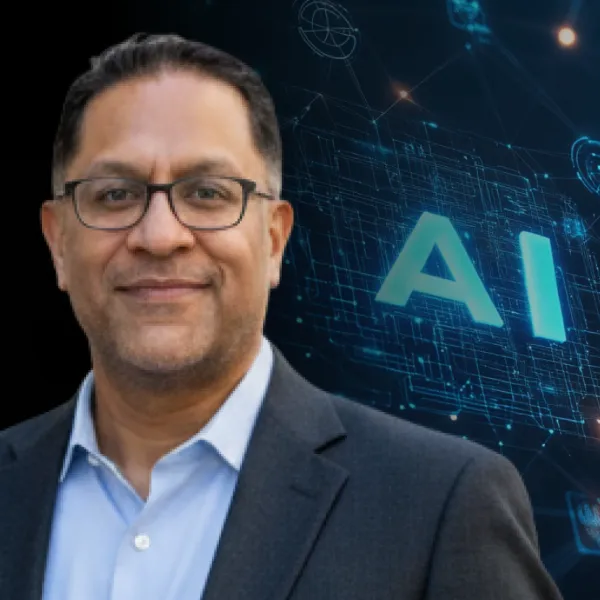
Vishnu Saxena, Founder and CEO of ScaleHealthTech, emphasized the need for execution beyond strategy. “ In my conversation with healthcare leaders, I found the urgency around execution. It’s no longer about what to transform digitally, but how fast and how sustainably those AI transformations can be executed. Healthcare stakeholders are focused on speed, sustainability, and execution at scale” Saxena said.
His insights exemplify the broader trend of enterprise-ready AI and digital partnerships, showing how health systems are moving from pilot projects to scalable system-wide deployment.
Surescripts unveiled Script Corner in collaboration with GoodRx, combining benefit data, medication management, and personalized engagement to reduce abandonment and improve adherence. Teladoc Health outlined a strategy focusing on specialist consultations, continuous glucose monitoring, in-home diagnostics, and AI-enabled patient insights, integrating BetterHelp into insurance markets. Judi Health, evolving from Capital Rx, now provides a unified enterprise claims platform, while Omada Health reinforces chronic care with AI-driven programs.
Policy and Financial Context
CMS leadership outlined priorities in interoperability, price transparency, and accountable care models, introducing programs such as the Long-Term Enhanced ACO Design. Rising uninsured populations and reimbursement uncertainty remain key factors influencing long-term strategy.
Aneesh Chopra -Former CTO of the United States, Chairman of Arcadia Institute and the most respected HealthTech policy expert emphasizes CMS advancing AI, data sharing, and transparency while attracting entrepreneurial talent to improve healthcare. “The highlight for me was hearing from CMS leadership in forums large and small to educate the market on advances in AI, data sharing and consumer transparency, as well as recruiting top market talent to enlist in public service. It reminded me of our DC to VC initiative as part of STARTUP AMERICA to tap the entrepreneurial spirit of the country to move our health system forward,” said Chopra
Organizations like Arcadia are helping health systems connect data strategy, policy compliance, and AI-driven outcomes to achieve scalable results.
Biotech and Medtech Innovation
Tempus expanded precision oncology through collaborations with NYU Langone Health and Northwestern Medicine, integrating genomic testing with AI-driven insights. The company reported 1.27 billion in 2025 revenue, reflecting momentum in data-driven medicine.
Baxter introduced Dynamo Series smart stretchers, combining caregiver ergonomics with EMR integration and workflow efficiency. Women’s health attracted renewed investment focus, with over 100 billion in exits over the past 25 years, demonstrating commercial scale and viability.
Execution Over Aspiration
JPM26 highlighted operational discipline over aspiration. Integration is measured in results, AI in enterprise deployment, and capital in execution.
Healthcare’s next decade will be defined by organizations capable of scaling platforms, deploying AI responsibly, integrating biotech and medtech innovation, and aligning operational execution with policy realities.
Stay tuned for more such updates on Digital Health News
Follow us