Chinese TCM Chain Gushengtang to Build AI-Powered “Internet Hospital” for Traditional Medicine
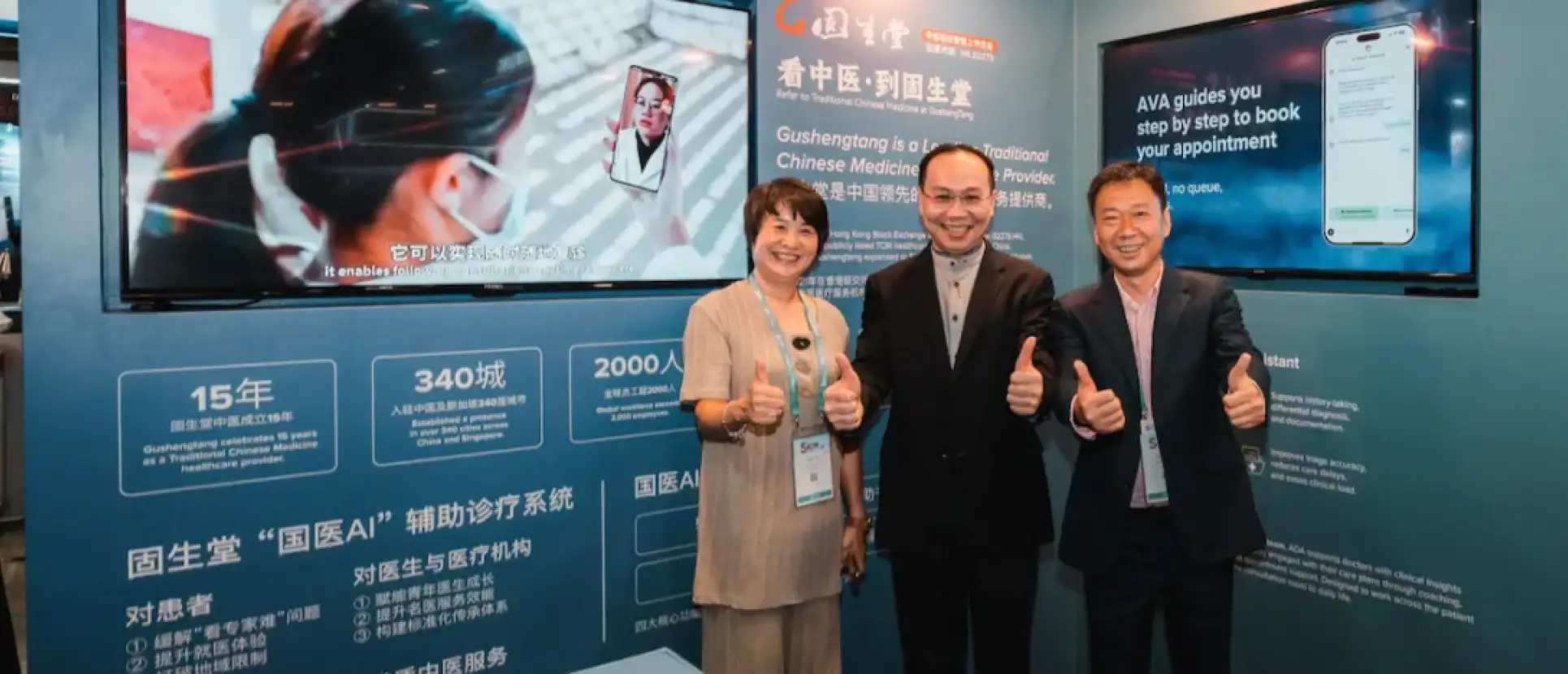
The AI avatar streamlines TCM care across five stages, from symptom collection to post-treatment tracking, mimicking physician workflows to provide accurate, personalized care.
Gushengtang, a Hong Kong-listed chain of traditional Chinese medicine (TCM) clinics and hospitals, has unveiled its plan to build an “AI internet TCM hospital ecosystem” powered by a newly developed foundational artificial-intelligence model.
Currently, the company operates around 80 clinics and hospitals in China and Singapore.
The AI model called “Master TCM AI” is built on 30 years of clinical data from 10 TCM specialists, covering eight core specialties, including oncology, dermatology, and orthopaedics, among others.
By employing a structured pipeline encompassing data collection, cleaning, transformation, synthesis, and quality control, Gushengtang converted vast, multi-source clinical information into standardized and high-quality training data.
"We gathered experts' years of digital and paper data, and through the automated data processing pipeline of 'collection-cleaning-transformation-synthesis-quality control,' converted multi-source heterogeneous data into high-quality, standardised training data," said Gushengtang CTO Hu Zhongkai.
Additionally, the AI development team translates experts’ clinical experience into quantifiable data patterns, identifies consistent and reproducible features, and refines the model through continuous expert feedback in a closed-loop optimization process.
According to Hu, "This is a 'limited intervention' process that ensures the AI's learning direction always remains consistent with the expert's core experience.".
He further noted that the consistency between the AI’s recommendations and expert decisions is achieved by following a comprehensive process that includes data governance, model training, performance evaluation, expert feedback, and engineering optimisation.
"Currently, the Master TCM AI Avatar has achieved over 86% consistency in expert simulation, and both diagnostic accuracy and prescription rationality have been highly praised by the experts themselves," he added.
How the TCM Avatar Works
The avatar mirrors the five key stages of a traditional follow-up workflow. It begins with condition collection, where the AI imitates a physician’s questioning style, using dynamic prompts to clarify and refine symptom details. It then moves to medical record generation, automatically converting patient interactions into structured electronic records, eliminating manual data entry and minimizing errors.
Next, the system performs assisted syndrome differentiation, analysing clinical data to suggest probable diagnoses, syndrome classifications, and corresponding interpretations in Western medical terms.
Based on this, the AI recommends personalized Chinese medicine prescriptions, detailing formulation compatibility and dosage.
Finally, in the post-diagnosis stage, the AI monitors patient progress, issues reminders for follow-ups, and suggests treatment adjustments to ensure continuity of care.
Currently, the company is planning a pilot deployment in Singapore in partnership with iAPPS Health Group’s training arm, 1doc, and intends to onboard more TCM specialists and expand into adjacent fields like gynaecology and paediatrics.
Stay tuned for more such updates on Digital Health News
Follow us