Before the Symptoms Show Up, Machine Learning Already Knows: How ML is Redefining Early Disease Detection
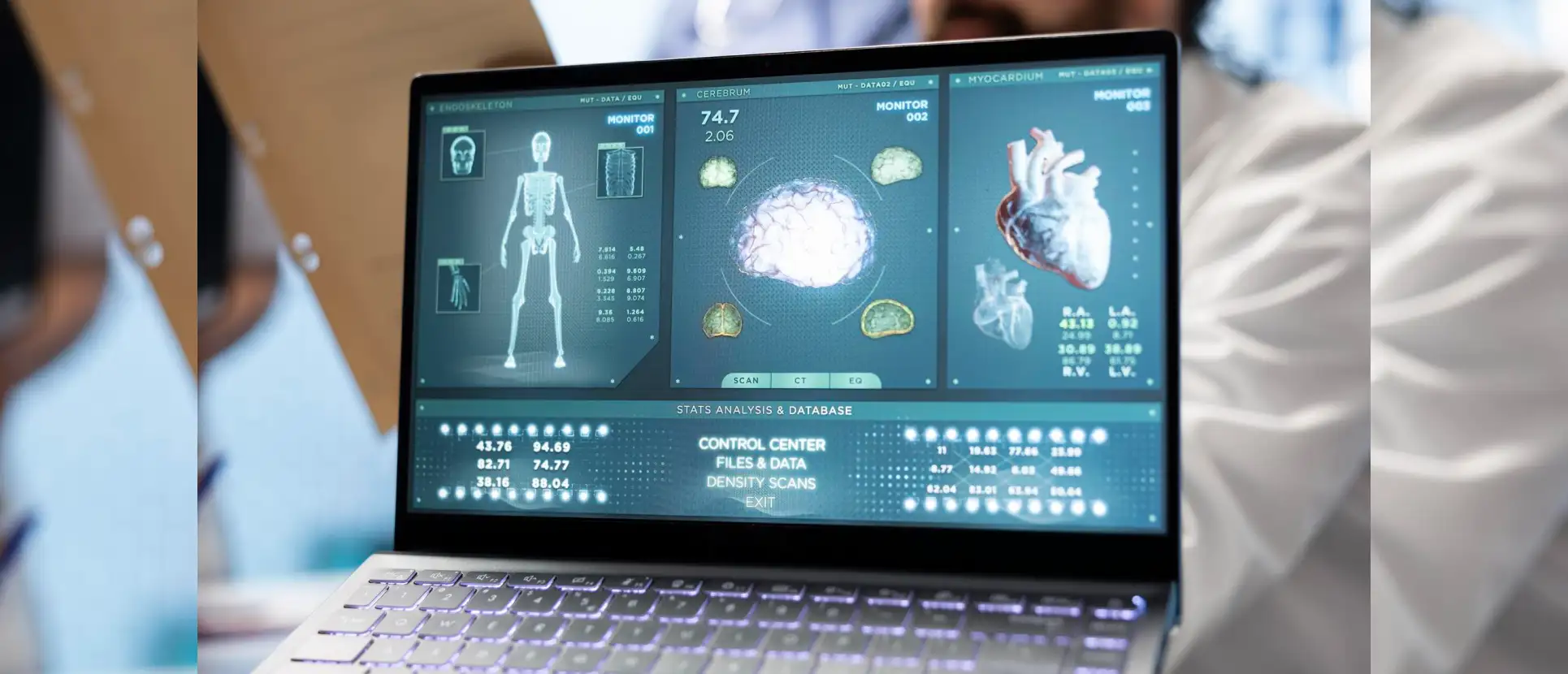
Machine learning is a branch of artificial intelligence (AI) that enables computer systems to analyze data, detect patterns, and make informed decisions with minimal human input.
In healthcare, ML models are trained on large datasets, including electronic health records (EHRs), medical imaging, genomic sequences, and wearable sensor data, to identify disease markers that human clinicians may miss.
Unlike traditional diagnostic tools, ML algorithms can simultaneously process hundreds of variables. These include genetic history and family background, lifestyle and environmental factors, lab results and imaging data, and real-time physiological readings from wearables.
Types of Machine Learning Approaches
Different ML techniques serve different diagnostic purposes, and the choice of algorithm directly impacts detection accuracy. Research shows that model performance can vary from 73% to over 99% depending on the technique used, the disease being targeted, and the quality of the dataset, making the selection of the right approach a clinically critical decision.
The four primary categories are:
Supervised Learning Models trained on labelled datasets (e.g., "disease" vs. "no disease"). Common algorithms include Support Vector Machines (SVM), which are effective for high-dimensional datasets, Decision Trees, which are transparent and interpretable for clinical use, and Random Forests, which combine multiple decision trees to improve accuracy and reduce errors.
Unsupervised Learning: These models find hidden patterns in unlabeled data. K-means and hierarchical clustering identify patient subgroups with similar clinical features, while Principal Component Analysis (PCA) reduces complex data into manageable dimensions for easier pattern detection.
Deep Learning: A subset of ML using multilayered neural networks. Convolutional Neural Networks (CNNs) excel at analyzing medical images such as X-rays, MRIs, and CT scans. Recurrent Neural Networks (RNNs) and Long Short-Term Memory (LSTM) networks process time-series data like ECG signals, while Transformers analyze electronic health records and genomic data for complex pattern recognition.
Reinforcement Learning: An emerging approach where models learn by trial and error. In healthcare, it shows promise for dynamically adjusting diagnostic protocols and optimizing treatment decisions in real time.
Real-World Applications Across Disease Categories
Machine learning is actively being deployed across hospitals, research institutions, and diagnostic startups worldwide. From analyzing microscopic changes in tumor imaging to predicting cardiac events years in advance, ML models are proving their value across virtually every major disease category. The following examples illustrate where this technology is making the most measurable impact.
Cancer Detection
Breast cancer: CNN models analyze mammographic images to detect microcalcifications and other early malignancy markers. Studies using the Wisconsin Diagnostic Breast Cancer dataset report SVM accuracies reaching 97.13%, while deep learning models like LSTM and GRU achieve close to 99% accuracy.
Lung cancer: ML models scan CT images and X-rays to identify nodules and lesions. The Lung Image Database Consortium (LIDC-IDRI) dataset is a key resource for training these models.
Skin cancer: ML algorithms process dermoscopy images to distinguish between benign lesions and melanoma, with majority voting approaches achieving 88.4% accuracy on the ISIC dataset.
Brain tumours: CNN-based models such as VGG16 and VGG19 have achieved accuracies of 92.5% to 97.8% across multiple BraTS datasets.
Cardiovascular Disease (CVD)
CVD remains a leading cause of death worldwide. Despite its prevalence, many cardiac conditions go undetected until a serious event, such as a heart attack or stroke, has already occurred. This is precisely where machine learning is stepping in, offering the ability to identify warning signs far earlier than conventional diagnostic methods allow. ML contributes to early detection through:
ECG signal analysis: Models process electrocardiogram data to detect arrhythmias and ischemia. Madrid-based startup Idoven has trained its algorithm on over 1.2 million hours of ECG data from more than 49,000 patients, detecting 86 different heart conditions with 90% accuracy, comparable to an experienced cardiologist.
Risk stratification: By integrating clinical data, imaging, and biochemical markers, ML models identify high-risk individuals before adverse cardiac events occur.
Heart disease detection using ensemble methods like soft voting classifiers has achieved accuracy rates of 93.44% and 95% on the Cleveland and IEEE DataPort datasets, respectively.
Neurological Disorders
Early diagnosis of progressive neurological conditions is critical because treatment is most effective in the early stages.
Alzheimer's disease: ML models analyze MRI and PET scan data alongside cognitive test results to detect early signs of the disease. Toronto-based company RetiSpec uses AI and retinal scanning to detect amyloid protein buildup, an early Alzheimer's marker, using a standard optometrist camera, making the process far more accessible than PET scans or spinal taps.
Parkinson's disease: Voice recordings, gait analysis, and motor function data are processed by ML models to identify minute early-stage changes that precede clinical diagnosis.
Infectious Diseases
The COVID-19 pandemic demonstrated the urgency of rapid diagnostic tools.
COVID-19: CNN models analyzing chest CT scans have achieved accuracy rates between 86% and 98.5% across various studies. A hybrid CNN-LSTM model developed using data from Israel's Ministry of Health reached 96.34% accuracy.
Tuberculosis: ML methods analyze chest X-rays and sputum test data, automating a process that previously caused significant diagnostic delays in under-resourced health systems.
Diabetes and Kidney Disease
Diabetes: CatBoost, an ensemble ML algorithm, achieved 95.4% accuracy and an AUC-ROC of 0.99 on the Kaggle Diabetes dataset. Deep learning models using LSTM and GRU networks achieved 97% accuracy on the world's largest diabetic dataset, comprising 14,000 patients.
Chronic Kidney Disease (CKD): XGBoost classifiers achieved 98.3% accuracy with an F1-score of 0.98. Multi-layer perceptron models reported 100% accuracy on a 400-patient dataset.
Challenges Facing ML in Early Disease Detection
Despite its promise, widespread clinical adoption of ML faces several significant hurdles. First, Clinical datasets are often incomplete or heavily skewed toward healthy cases. This imbalance leads to biased models that struggle to accurately detect rare but critical conditions, the very diseases where early detection matters most. Many deep learning models cannot explain how they arrive at a diagnosis. This lack of transparency, commonly referred to as the "black box" problem, makes it difficult for clinicians to trust or act on the model's output in a real-world setting. Highly sensitive algorithms can also flag findings that are technically abnormal but clinically harmless, a problem known as overdiagnosis. This leads to patient anxiety, unnecessary follow-up tests, and potential overtreatment of conditions that pose no real threat to the patient. Handling sensitive patient data brings its own set of challenges. Strict compliance with regulations like HIPAA and GDPR is required, and any misuse of data raises serious ethical and legal concerns that can slow down research and deployment.
The Road Ahead: Emerging Trends in AI-Driven Diagnostics
Explainable AI (XAI) is one of the most actively pursued areas of research. It focuses on making ML model decisions transparent and interpretable, so clinicians can understand why a prediction was made and act on it with confidence rather than uncertainty.
Federated Learning is addressing one of the field's biggest barriers, data privacy. It allows ML models to be trained across multiple institutions using decentralized data, without any patient information ever leaving its source. This approach also strengthens models by exposing them to far more diverse datasets.
Multimodal Learning takes diagnostic intelligence a step further by combining clinical text, medical imaging, genomic data, and wearable device readings into a single unified model. Rather than relying on one data type, these systems build a more complete and accurate picture of a patient's health.
Edge AI is bringing ML directly to wearable devices, enabling continuous, real-time health monitoring without the need for cloud connectivity. For patients managing chronic conditions or in emergencies, this means faster alerts and faster interventions.
Large Language Models (LLMs) are opening up a new frontier in diagnostics by processing unstructured data, clinical notes, patient histories, and medical literature, to surface early warning signs that structured data alone might miss. Their ability to understand context and language makes them particularly valuable in identifying subtle risk patterns across conditions like cancer, cardiovascular disease, and neurological disorders.
Quantum Machine Learning, while still in its early stages, holds significant long-term potential. Quantum computing could dramatically accelerate the training of complex ML models on massive clinical datasets, uncovering patterns that are simply beyond the computational reach of today's technology.
Machine learning is equipping clinicians with tools to see what was previously invisible. The evidence across cancer, heart disease, diabetes, neurological disorders, and infectious diseases consistently points to one conclusion: when data science and clinical expertise work together, earlier and more accurate diagnosis becomes possible at scale. The integration of ML into healthcare is not a distant future; it is an active, measurable, and rapidly accelerating present.
Stay tuned for more such updates on Digital Health News
Follow us