Union Health Minister Nadda Launches Aarogya Setu 2.0 & New Digital Health Initiatives
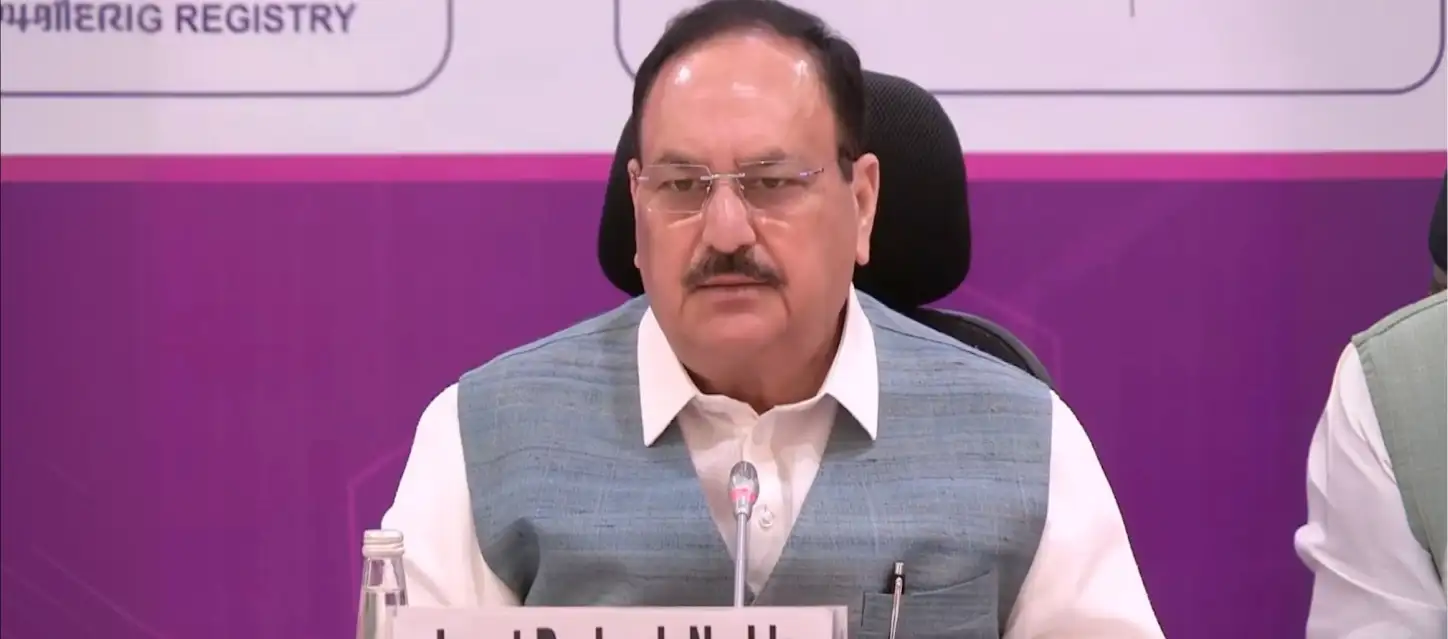
The updated version will offer citizens a single digital gateway to access health services, manage their personal health records, and support the wider adoption of the Ayushman Bharat Digital Mission (ABDM) service.
In a move to strengthen India’s digital health ecosystem, the Central government has launched Aarogya Setu 2.0 alongside a series of digital health initiatives.
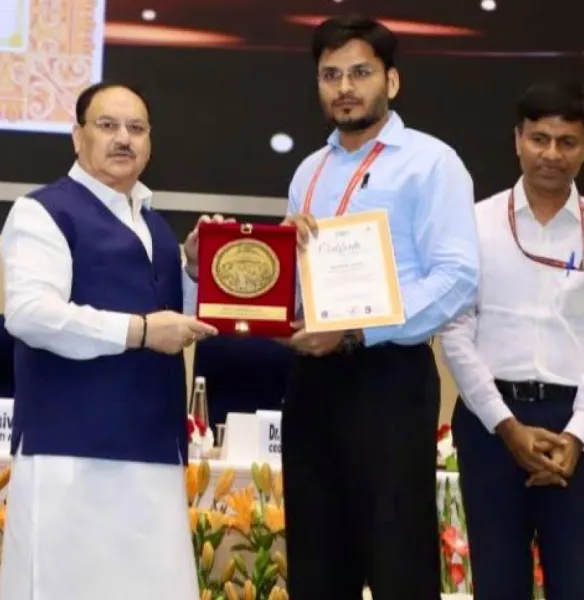
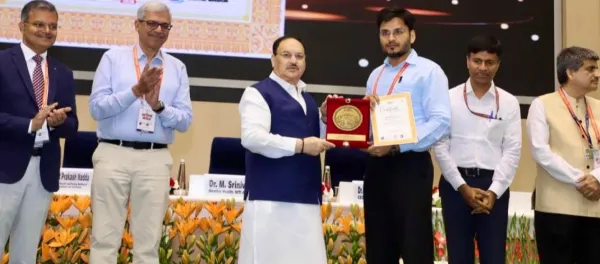
The initiatives unveiled by the Union Minister of Health, Jagat Prakash Nadda, are developed by the National Health Authority (NHA) in collaboration with the National Resource Center for EHR Standards (NRCeS).
The initiatives are aimed at expanding access to healthcare services and strengthening interoperability, while accelerating the adoption of Digital Public Infrastructure for Health across the country.
Addressing the event, the Union Health Minister described the occasion as “a significant milestone in India's journey towards building a healthier nation through digital innovation.”
Highlighting the progress of the Ayushman Bharat Digital Mission, Nadda said, "With over 90 crore ABHA accounts created and more than 100 crore health records linked, India today has one of the world's largest digital health ecosystems”
A key highlight among the initiatives is the Aarogya Setu 2.0, a revamped version of the platform designed to serve as a comprehensive Personal Health Record Application (PHR) for citizens.
Initially launched as a COVID-19 contact-tracing platform, the updated version will offer citizens a single digital gateway to access health services, manage their personal health records, and support the wider adoption of the Ayushman Bharat Digital Mission (ABDM) service.
The application is designed to facilitate the creation and management of ABHA (Ayushman Bharat Health Account), access to and sharing of digital health records, consent-based health information exchange, AI-powered health insights and smart health reports, wearable device integration, OPD registration through Scan & Register, hospital payments through Scan & Pay, medication reminders, and family health management.
It also enables users to locate healthcare facilities and doctors, ambulance services, blood banks with blood unit availability, and Jan Aushadhi Kendras.
In addition, the application integrates PM-JAY services, including PM-JAY empanelled hospitals search, access to AB PM-JAY wallet, and Ayushman CAPF policy details, along with other healthcare services.
The enhanced Ayushman App will act as a dedicated one-stop digital platform for beneficiaries of the Ayushman Bharat Pradhan Mantri Jan Arogya Yojana (AB PM-JAY).
As per the announcement, it will enable beneficiaries to access essential scheme-related services, including eligibility verification, Ayushman Card services, treatment history, hospital discovery, grievance redressal, and beneficiary support.
Emphasising that digitisation is now a strategic necessity, the Union Minister stated The newly launched citizen-centric, connected and proactive digital platforms bring previously fragmented health services onto a single integrated platform.
He further noted, "The revamped Aarogya Setu application will enable people of all age groups, from mothers and children to youth, the elderly and those living with chronic illnesses, to seamlessly access a wide range of health services"
Another key initiative is Ayushman Sarathi, a WhatsApp chatbot for beneficiaries of Ayushman Bharat PM-JAY.
Designed to deliver PM-JAY services through a simple conversational interface, Ayushman Sarathi is expected to enable citizens to access key scheme-related services, thereby improving accessibility and strengthening last-mile service delivery.
Alongside the mobile applications, the government also introduced digital health and interoperability initiatives aimed at strengthening healthcare delivery, claims processing, standardization, and innovation across the healthcare ecosystem.
The National Health Claims Exchange (NHCX) is designed to facilitate the standardized exchange of health claims among stakeholders.
To further strengthen interoperability within the health claims ecosystem, NHA introduces a utility that converts payers' insurance plans into standardised FHIR bundles.
Besides this, the Unified Health Interface (UHI) will be dedicated to the nation. Built as a common interoperable framework, UHI enables digital applications to connect citizens with healthcare service providers, which is expected to scale discovery and access to healthcare services.
In addition, to accelerate the adoption of digital health technologies at the provider level, E-Sushrut Clinic has been introduced as a plug-and-play clinic management solution, which is expected to enable healthcare providers to digitise clinical workflows while maintaining electronic health records and seamlessly integrating with the Ayushman Bharat Digital Mission ecosystem.
Further, the Drug Registry will be launched to standardize medicine-related information across the healthcare ecosystem by enabling uniform coding of medicines across digital health applications. The registry will strengthen prescribing, dispensing, and healthcare data exchange while improving interoperability across healthcare systems.
The Government has also launched the Common LOINC Codes for India (CLCI), a nationally curated subset of international laboratory standards tailored for Indian healthcare needs, developed by NRCeS.
Furthermore, the Bharat Health Terminology Service (BHTS) will be unveiled to provide standardised healthcare terminologies, code systems, and value sets, supporting semantic interoperability and enabling consistent interpretation and exchange of health information across digital health systems.
The initiatives were launched in the presence of Ministers of State for Health and Family Welfare of India, Anupriya Patel and Prataprao Jadhav, Union Health Secretary, Punya Salila Srivastava, and NHA CEO Dr Sunil Kumar Barnwal.
Stay tuned for more such updates on Digital Health News
Follow us