Oxford Researchers Unveil Ultrasound Helmet for Neurological Disorders
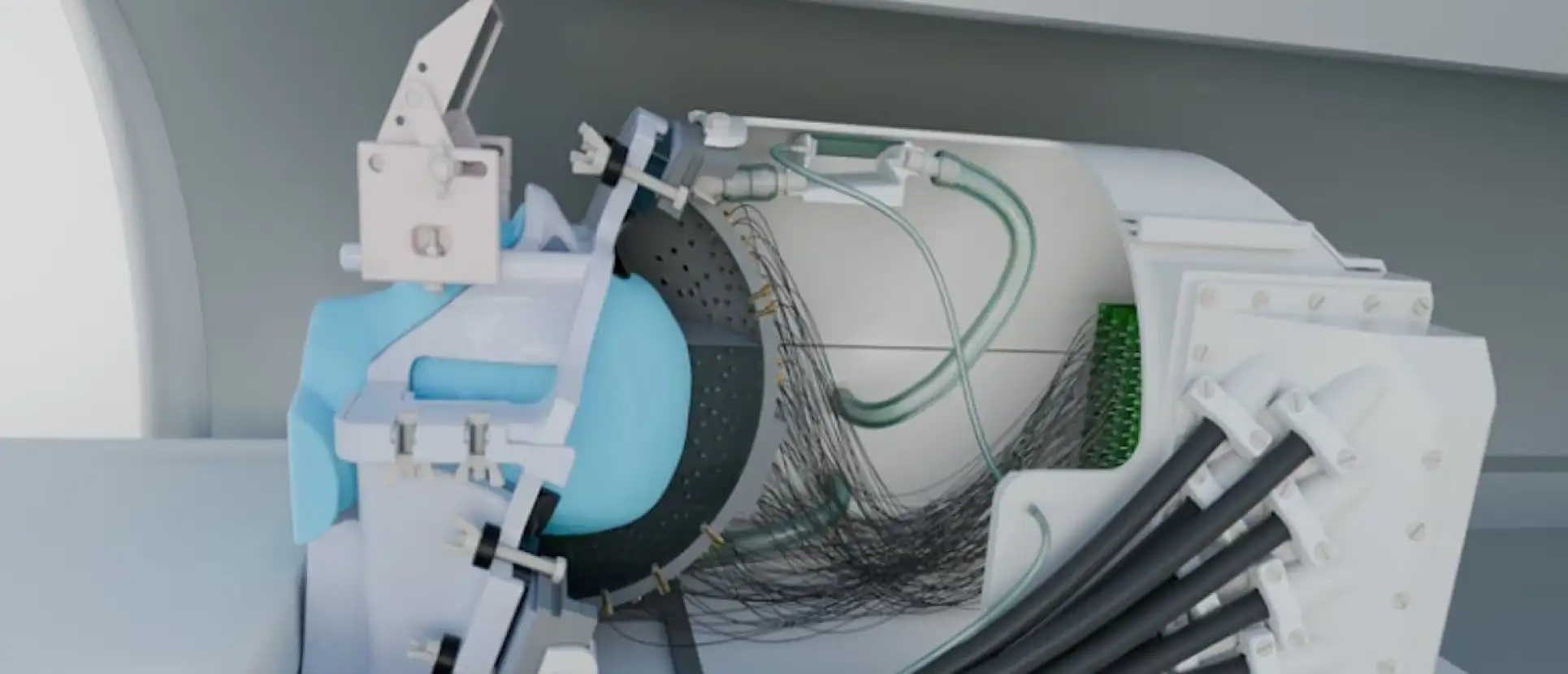
UCL and Oxford researchers unveil a breakthrough ultrasound device that can precisely target deep brain structures without surgery, opening doors for treating Parkinson’s, epilepsy, depression, and more.
Researchers at University College London (UCL) and the University of Oxford’s Nuffield Department of Clinical Neurosciences have developed an ultrasound helmet capable of stimulating deep brain structures with unprecedented precision without the need for surgery.
Reportedly, the device helps in treating Parkinson’s disease, epilepsy, cluster headaches, depression, and schizophrenia, offering a safe, reversible, and repeatable method of neuromodulation.
The ultrasound helmet aims to transform clinical approaches by offering a non-invasive alternative to DBS surgery. Allowing clinicians to test therapeutic brain regions before surgery.
The project was backed by the Engineering and Physical Sciences Research Council (EPSRC), Wellcome, and the NIHR Oxford Health Biomedical Research Centre.
How the Technology Works
The helmet is equipped with 256 ultrasound elements that deliver highly focused beams to specific brain regions. A soft plastic face mask keeps the head still, ensuring accurate targeting.
Unlike traditional deep brain stimulation (DBS), which requires invasive electrode implantation, the ultrasound helmet can target areas about 1,000 times smaller than conventional technology and is 30 times more precise than other ultrasound-based deep brain therapies.
Early Human Trials
In initial tests on seven volunteers, the team targeted the lateral geniculate nucleus (LGN), a part of the thalamus that processes visual information.
Experiment 1: fMRI scans revealed increased visual cortex activity during ultrasound stimulation while participants viewed a flashing checkerboard.
Experiment 2: Visual cortex activity showed lasting decreases for 40 minutes post-stimulation, demonstrating the device’s ability to induce long-term changes in brain function.
Although participants did not report conscious changes in vision, brain scans confirmed significant and lasting modulation of neural activity.
Researchers caution that further studies are required to fully understand the mechanisms of transcranial ultrasound stimulation (TUS). However, the breakthrough marks a milestone in neuromodulation research and therapy.
Stay tuned for more such updates on Digital Health News
Follow us