



India Eyes Biotech-Driven Industrial Revolution as Dr Jitendra Singh Calls for Greater Industry Participation
He also noted that the country's biotechnology startup ecosystem had expanded from around 50-60 startups to more than 11,000.
India has the potential to lead the next biotech-driven industrial revolution, Union Minister Dr Jitendra Singh has said, calling for stronger collaboration between scientific institutions and greater industry participation.
He highlighted advances in biotechnology, AI, genomics and biomanufacturing as areas that could shape India's next phase of industrial growth.
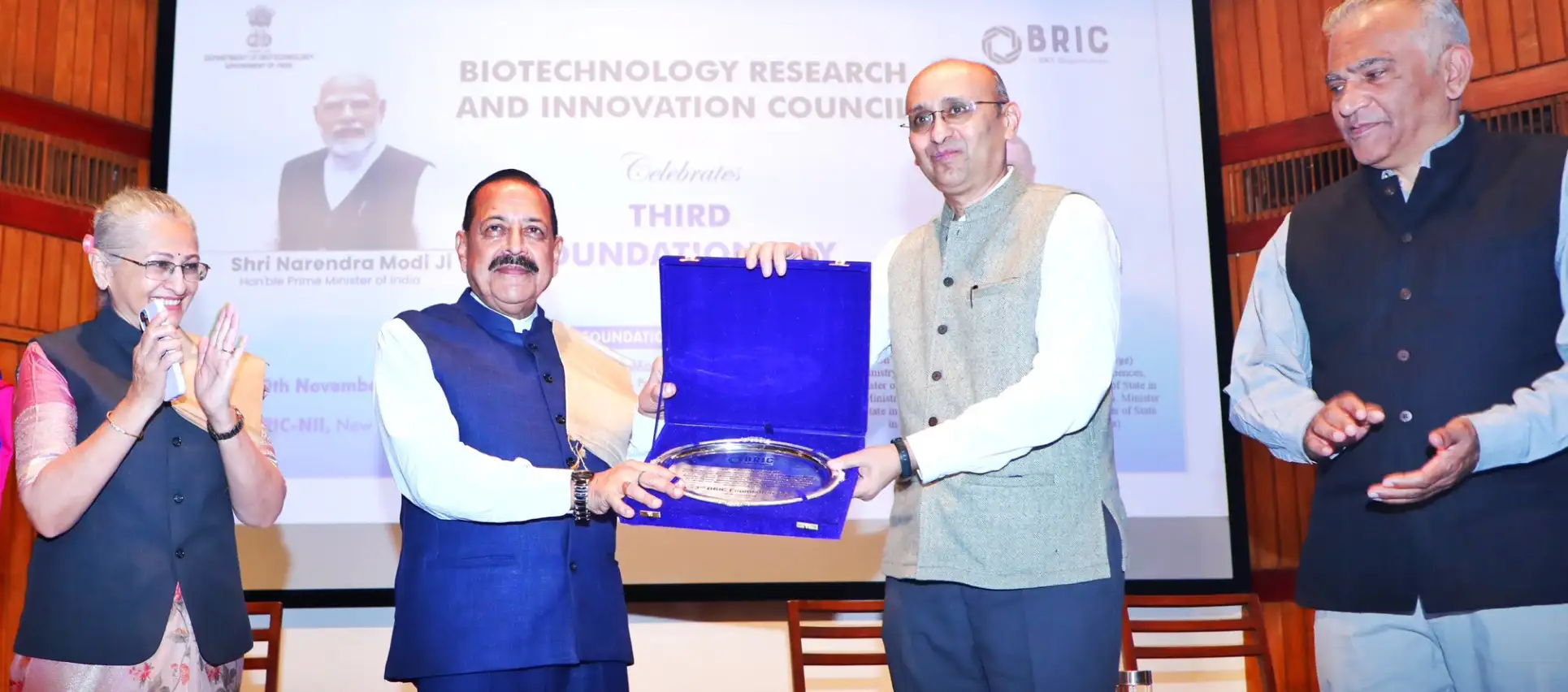
Addressing the event at the Biotechnology Research and Innovation Council (BRIC)-National Institute of Immunology (NII), Dr Jitendra Singh said India's bioeconomy had grown from approximately $10 Bn when the government took office to more than $195 Bn.
He also noted that the country's biotechnology startup ecosystem had expanded from around 50-60 startups to more than 11,000.
The minister highlighted the government's efforts to strengthen coordination across scientific institutions through BRIC, which brings together research organisations while allowing them to retain their individual identities and autonomy.
He described the arrangement as a "joint family" that pools resources, improves collaboration and reduces procedural delays associated with multiple administrative structures.
Dr Singh also pointed to the development of biomanufacturing hubs and biofoundries, alongside efforts to integrate AI into manufacturing processes.
He identified hubs in Mohali, Hyderabad, Pune and Thiruvananthapuram, while noting that international partnerships could support further progress.
Genomics was another key area discussed at the event. According to Dr Singh, the Genomics Centre of Excellence has attracted interest from medical institutions, including AIIMS.
He said genomics could support the adoption of precision medicine, an approach that uses information about an individual's biological characteristics to inform healthcare decisions.
Calling for greater private-sector involvement in science and research, Dr Singh referred to initiatives such as the Research, Development and Innovation Fund, the Anusandhan National Research Foundation and BIRAC.
The Foundation Day event also saw the Wellcome Trust announce a grant of up to INR 21.7 Cr for a five-year immersion training programme for more than 250 iBRIC+ PhD scholars.
BRIC and the UK's Centre for Process Innovation signed a Letter of Intent to strengthen bilateral cooperation in biomanufacturing and support biofoundry development.
BRIC Director General Dr Rajesh S. Gokhale said the council aims to connect 13 biotechnology institutions across 11 cities through a decentralised national network, seeking to bridge laboratory research and market applications while supporting innovation, health security and India's biotechnology capabilities.
Stay tuned for more such updates on Digital Health News
Follow us