HKUST’s AI Pathology System Seeks Regulatory Approval in Hong Kong and China
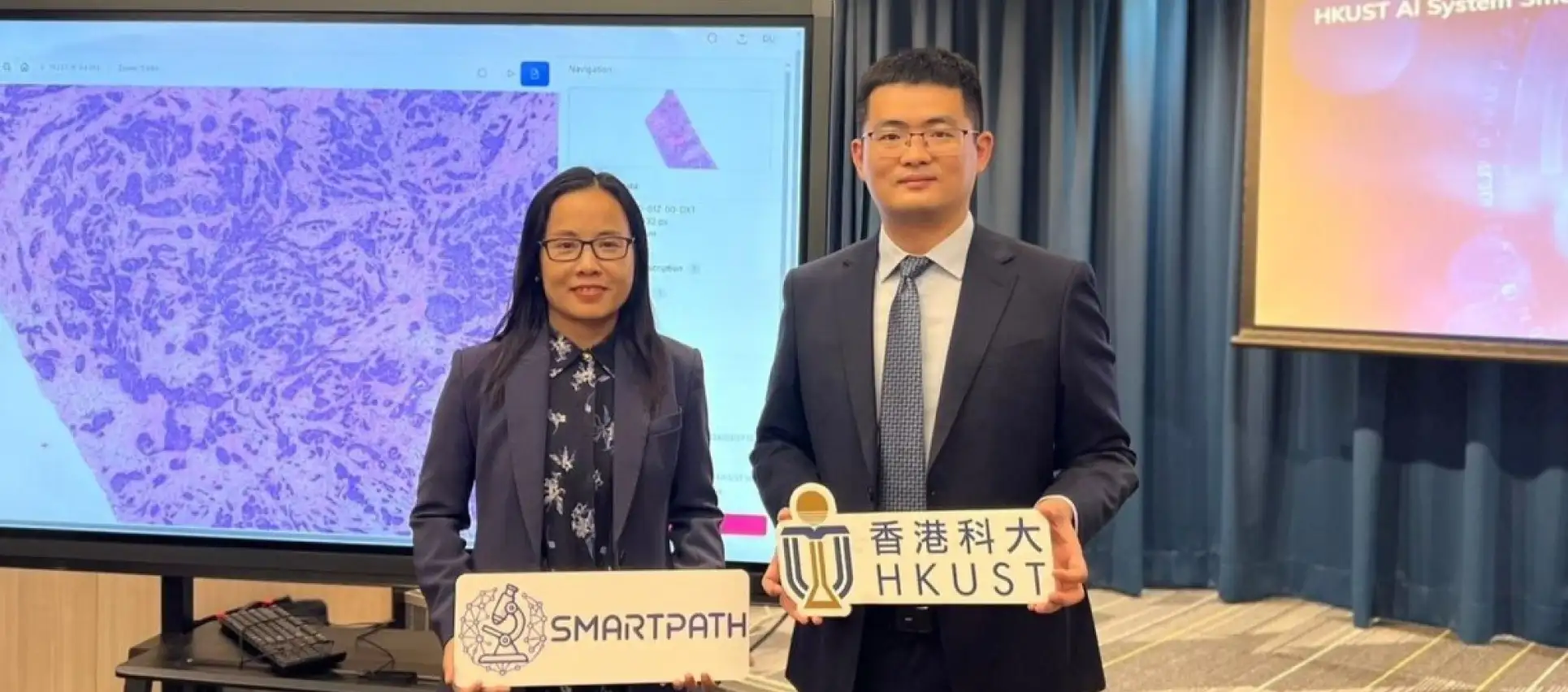
The system automates the pathology workflow, analyzing slides and generating reports for at least 34 cancer types, including lung, breast, colorectal, and gastric cancers.
The Hong Kong University of Science and Technology (HKUST) has submitted its AI-based pathology platform, SmartPath, for regulatory review in both Hong Kong and mainland China.
The system automates the pathology workflow, analyzing slides and generating reports for at least 34 cancer types, including lung, breast, colorectal, and gastric cancers.
SmartPath is built on two AI models: the Generalizable Pathology Foundation Model, which identifies tumors, subtypes of cancers, quantifies biomarkers, predicts patient survival, and evaluates likely treatment response; and the Whole-slide Pathology Foundation Model, mSTAR, which integrates diverse pathology data to generate detailed reports automatically and answer queries.
Dr. Chen Hao, assistant professor at HKUST, explained, "Combining this dataset with knowledge from existing models enhances the system’s generalisation capability, or its ability to maintain accuracy across new data, cancer types, and patient populations."
Clinical validation and performance
The AI platform has been validated across multiple hospitals in Hong Kong and mainland China, covering a wide range of patient populations. It assists with over 100 clinical tasks, including cancer classification, subtyping, biomarker quantification, treatment response assessment, survival prediction, and prognostic follow-up.
Dr. Hao emphasized, "This isn't a static tool; it's a continuously evolving system that grows smarter with every clinical application."
In a blinded, prospective study at Nanfang Hospital in Guangzhou, SmartPath achieved over 95% accuracy in diagnosing cancer types, predicting survival rates, and generating reports rapidly. Professor Liang Li, director of the Department of Pathology at Nanfang Hospital, said, "SmartPath has demonstrated a remarkable ability to improve the accuracy of malignancy identification and provide reliable prognostic predictions. The system's rapid generation of extensive preliminary reports has proven to cut down our diagnostic turnaround time significantly – a crucial factor in managing time-sensitive cancer cases."
Future development and approvals
HKUST researchers are developing additional capabilities to cover rarer and genetically complex cancers. Dr. Hao noted, "We are in the process of seeking the necessary regulatory approvals for SmartPath's extensive deployment. This includes engaging with relevant regulatory bodies in both mainland China and the Hong Kong SAR. Specific submissions are underway."
SmartPath is designed to accelerate diagnostic turnaround and support more precise cancer treatment planning, enabling pathologists to focus on complex cases while the AI handles routine analysis and reporting.
Stay tuned for more such updates on Digital Health News
Follow us