Exploring India’s Digital Health Initiatives: Impact on the Current Healthcare Scenario

India has been working to improve healthcare by using digital technology. A major step in this direction is the Ayushman Bharat Digital Mission (ABDM), launched in 2021. Its goal is to create a connected digital health system where patients, doctors, hospitals, and insurers can share information easily.
The need for such a system comes from a long-standing problem in India’s healthcare sector, where data is often scattered. Hospitals keep separate records, many of them on paper. This makes it difficult for doctors to access a patient’s full medical history, especially if the patient visits different hospitals.
Digital health initiatives aim to solve this by creating a unified system. They use existing digital infrastructure, such as mobile networks and digital identity systems, to build a more organised and accessible healthcare system across the country.
Key Components of the Digital Health System
One of the central features of India’s digital health system is the ABHA (Ayushman Bharat Health Account). It is a unique health ID that allows individuals to store and access their medical records digitally. This includes prescriptions, test reports, and hospital visits.
Another important component is the creation of digital registries. These include lists of verified doctors, hospitals, clinics, and pharmacies. These registries act as a trusted source of information and help patients find reliable healthcare providers.
The system also supports interoperability, which means different healthcare systems can communicate with each other. For example, a patient’s records from one hospital can be shared with another, with the patient’s consent. This ensures continuity of care and reduces repeated tests.
How is Digital Health Changing Access to Care?
India’s digital health ecosystem is supported by several key initiatives that are making healthcare more accessible, faster, and more efficient across the country. These initiatives are not just improving systems but are directly impacting how patients experience healthcare services.
- The Ayushman Bharat Digital Mission (ABDM) is building a nationwide digital healthcare network that connects patients, doctors, hospitals, labs, and insurers on a single platform. This integration allows seamless and secure sharing of health data with patient consent. As a result, doctors can access accurate medical histories quickly, leading to better diagnosis and treatment while reducing duplication of tests.
- The ABHA Health ID plays a crucial role by giving every individual a unique digital health identity. It allows people to store, manage, and access their medical records anytime through their phones or other devices. This not only eliminates the need to carry physical files but also ensures that critical health information is available instantly during emergencies or hospital visits.
- Telemedicine services like eSanjeevani are transforming healthcare delivery, especially in rural and underserved areas. Patients can now consult qualified doctors through video calls without traveling long distances. This reduces both time and cost, and also helps in early diagnosis and regular follow-ups, which were earlier difficult for people living far from healthcare facilities.
- Digital hospital systems such as eHospital are simplifying hospital processes by enabling online registration, appointment booking, and digital queue management. Patients can book appointments in advance, receive digital tokens, and avoid long waiting lines at hospitals. This improves overall patient experience and helps hospitals manage large crowds more efficiently.
- Advanced hospital management solutions like eSushrut support electronic medical records (EMR) and integrated hospital operations. These systems help doctors access patient data quickly, track treatment history, and make informed decisions. It also improves coordination between departments within hospitals, leading to faster and more accurate care.
- The Integrated Health Information Platform (IHIP) strengthens public health systems by enabling real-time disease surveillance and reporting. It helps government authorities track outbreaks, monitor trends, and respond quickly to health emergencies. This proactive approach improves overall healthcare preparedness and response.
- Platforms like CoWIN Platform have demonstrated how digital systems can operate at a massive scale. CoWIN enabled citizens to register for vaccines, book slots, and download digital certificates, making the COVID-19 vaccination drive more organized and transparent. It also increased public trust in digital healthcare platforms.
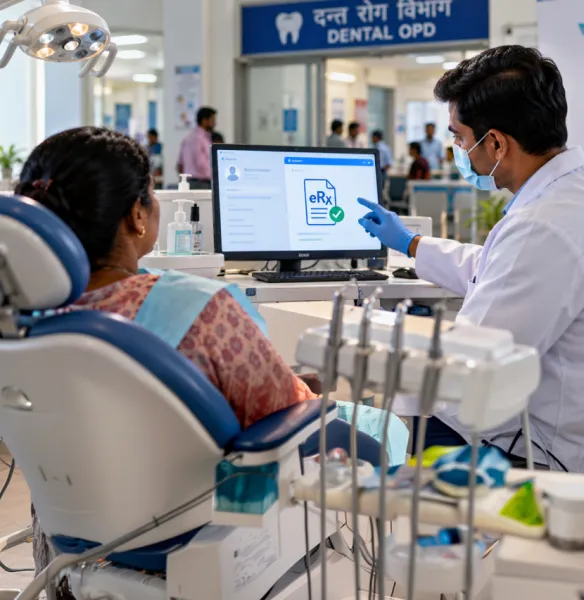
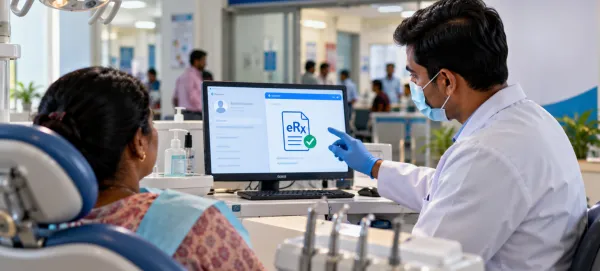
- Digital integration of pharmacies within the healthcare ecosystem is making access to medicines easier and more efficient. Through e-prescriptions and online pharmacy systems, patients can order medicines digitally and ensure accurate dispensing. This reduces errors, improves convenience, and supports better medication management.
Digitalisation & its Impact on Quality of Healthcare
Digital systems improve efficiency by reducing paperwork and manual errors. Hospitals can manage patient data more easily, and doctors can quickly access important information. This makes the overall process faster and more reliable.
They also improve the quality of care. When doctors have access to complete medical histories, they can make better decisions. This reduces the chances of incorrect diagnosis or repeated treatments.
At a larger level, digital health data helps the government plan better. By analyzing trends, authorities can identify disease patterns, allocate resources, and design targeted health programs. This supports better public health management.
Roadblocks in Digital Health Implementation
Despite its benefits, digital health also faces several challenges. One major concern is data privacy and security. Health data is sensitive, and any misuse or data breach can harm patients. There are ongoing discussions about how to protect this data effectively.
Another challenge is digital literacy. Many people, especially in rural areas, may not be familiar with digital tools. This can limit their ability to use digital health services fully.
Infrastructure is also a concern. Issues like poor internet connectivity, lack of devices, and system integration problems can affect the implementation of digital health systems. In many places, healthcare data is still fragmented and difficult to standardize.
Conclusion
India’s digital health initiatives are gradually transforming the healthcare system. They aim to make healthcare more accessible, efficient, and patient-centered by using technology to connect different parts of the system.
These initiatives reduce paperwork, improve access to medical records, and support better decision-making by doctors and policymakers. They also help in expanding healthcare services to remote areas through digital platforms.
However, challenges like data security, infrastructure gaps, and digital awareness need to be addressed for long-term success. With careful implementation and continuous improvement, digital health systems can play an important role in improving healthcare outcomes in India.
Stay tuned for more such updates on Digital Health News
Follow us