Digital Twins in Healthcare: Hype or Reality?
Artificial Intelligence (AI), big data analytics, genomics, and connected medical devices are all driving a significant digital revolution in healthcare. The idea of the "digital twin," a dynamic, virtual representation of a physical entity that is updated continuously using real-time data, is one of the most ambitious inventions to come out of this shift.
By simulating disease progression and treatment outcomes before real-world intervention, digital twins are positioned as a breakthrough technology. However, questions remain: Are digital twins truly ready for clinical scale, or are they still largely experimental?
In this article, we shall explore whether digital twins in healthcare are still mostly experimental or technologically advanced enough for widespread clinical application.
Understanding the Concept
A digital twin in healthcare is a dynamic virtual model that replicates a real-time physical entity. An individual patient, a particular organ like the heart, a medical gadget, or even a whole hospital system could be this entity. Digital twins, in contrast to static predictive technologies, are always changing as new information comes in from wearable technology, imaging systems, laboratory results, and electronic health records (EHRs).
Usually, the model consists of three main components, which include the patient or system's physical counterpart, the digital duplicate, and a layer for analytics and data integration that updates the twin.
Before putting treatments into practice in real life, clinicians can evaluate treatment plans, forecast the course of diseases, and identify dangers through modelling and simulation. As a result, healthcare becomes more proactive, data-driven, and individualised.
Several convergent technologies support the feasibility of digital twins. The foundation of analysis is made up of machine learning and artificial intelligence, which process enormous datasets to produce predictive insights. The virtual model is kept up-to-date by the continuous streams of physiological data from wearables and remote monitoring devices provided through the Internet of Medical Things (IoMT).
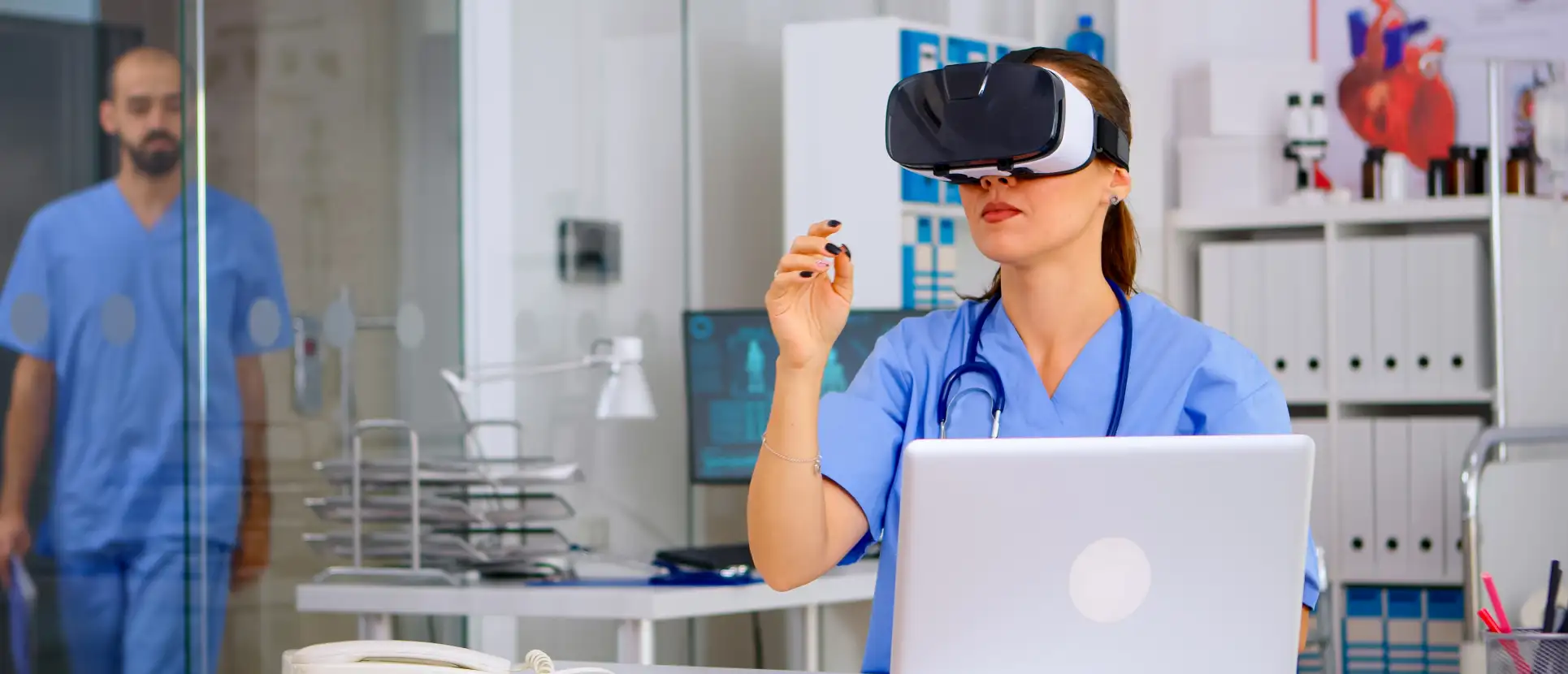
Additionally, cloud computing and high-performance computing infrastructure ensure the scalability needed for intricate simulations, while cutting-edge imaging technologies like MRI and CT scans help in building the anatomically accurate 3D models of organs. Also, Virtual reality creates immersive simulations that help in advancing surgical planning.
Furthermore, the integration of genomes and multi-omics improves biological precision, especially in the treatment of uncommon diseases and oncology.
Since the efficacy of any digital twin system depends on dependable and consistent data sharing, interoperable digital health ecosystems are equally important.
Key Areas of Application
Digital twins are increasingly being explored across multiple healthcare domains, which include-
1. Personalized Therapy Scheduling
Digital twins lessen the need for trial-and-error methods and enhance clinical results by modelling how a single patient would react to particular drugs or treatments.
2. Planning and Simulating Surgery
Surgeons can practice difficult procedures, foresee problems, and improve accuracy with patient-specific digital replicas.
3. Management of Chronic Illnesses
Chronic ailments, including diabetes, heart disease, and respiratory disorders, can be continuously monitored by digital twins, allowing for early deterioration identification and prompt care.
4. Clinical Trials and Drug Development
Virtual patient models can be used by pharmaceutical companies to enhance trial design, mimic drug reactions, and cut costs and development schedules.
5. Optimization of Hospital Operations
Digital twins can mimic hospital workflows, resource allocation, and patient flow in addition to specific patients to increase operational effectiveness and crisis readiness.
Role of Digital Twin in Indian Healthcare
In the healthcare industry, digital twins are at the nexus of potential and reality. The technology is still developing toward broad clinical integration, despite showing notable advancements in cardiology, cancer, and surgical planning. The transformational promise of digital twins justifies the excitement surrounding them; yet, data interoperability, regulatory control, ethical safeguards, and consistent investment in digital infrastructure are necessary for their realization.
In India, given the increasing prevalence of non-communicable diseases and unequal access to specialized care, digital twins may improve precise treatment planning, remote monitoring, and early diagnosis, especially in underprivileged areas. They might also ease the burden on tertiary care facilities and encourage the growth of telemedicine.
But there are still several obstacles. Serious obstacles include fragmented health records, low adoption of EHRs, worries about data privacy, disparities in digital infrastructure between urban and rural areas, expensive implementation costs, and a lack of defined interoperability frameworks. Strong data governance laws, clear regulations for AI-based clinical tools, public-private cooperation, and investments in digital health infrastructure are all necessary for widespread adoption in India.
If used carefully and inclusively, digital twins could hasten the transition to accessible, preventive, and precise healthcare in India and other rising nations.
As a result, digital twins are a potential innovation in transition, steadily progressing from experimental notion to clinical feasibility. They are neither just hype nor a fully developed reality.
Stay tuned for more such updates on Digital Health News
Follow us