Digital Health, Digital Twins & 44,000 Goldilocks days towards Longevity

Digital Health, Digital Twins & 44,000 Goldilocks days towards Longevity

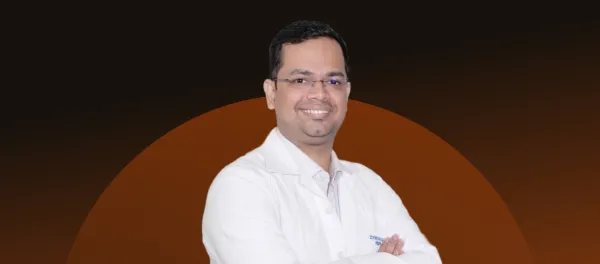
By - Dr. Suresh Munuswamy, Dean and Professor, School of Digital Health Sciences and Technology, Malla Reddy Vishwavidyapeeth, Hyderabad, India

The average life expectancy in India is about 72.5 years or about 26,500 days. In the next couple of decades, life expectancy is expected to increase to about 80-100 years or about 29,000 to 36,500 days according to different estimates. These are average numbers, and if we consider a 20%, plus or minus variation, as a real lifetime, we need to consider an upper range of 120 years or 44,000 days.

In comparison, our average life expectancy in the early 20th century was only about 30 years. How does one live a healthy, happy, and productive life for 44,000 days? Is this even possible?

Goldilocks Day

The concept of "Goldilocks days" originates from the classic fairy tale "Goldilocks and the Three Bears," where the imaginary character Goldilocks seeks things that are "just right", not too hot, not too cold; not too big, not too small. Initially, this phrase started as a whimsical way to describe optimal conditions in everyday life, but it is now beginning to take root to describe an optimal 24-hour, specifically composed and customised time to improve health outcomes. 

Research now shows that both too few and too many activities of daily life, occupational activities, can be detrimental. Identifying the "Goldilocks zone" on a daily basis may be the key to extending life, managing ageing, and maximizing longevity benefits.

Ageing to Longevity

Aging, so far, has been considered a normal biological process that results in a progressive and irreversible decline in physical function across all organ systems that is induced by the accumulation of damage in response to a variety of stressors.

In 1925, research revealed that light intensity could impact the growth rate and lifespan of Drosophila. This finding attracted a considerable amount of research interest in the aging area; it captured the curiosity and imagination of the public with regard to reversing aging and aspiring for longevity.

The focus of Longevity

There is a growing understanding through evidence-led research that biological systems thrive, not at extremes, but within dynamic ranges that might differ person to person; from one location ecosystem to another location ecosystem, influenced by a variety of determinants of life and across the life span. 

The ongoing United Nations Decade of Healthy Ageing (2021–2030), with the World Health Organization leading a collective of Governments, international and regional organizations, civil society, the private sector, academia, and the media, focuses on four action areas:

(1) combating ageing; (2) creating age-friendly environments; (3) providing integrated care; (4) access to long-term care.

The perception of ageing is progressing towards achieving longer and healthier lifespans, not simply by treating or avoiding.

Prevention across Lifespan

Consequently, the practice of ‘prevention’, usually meant to describe a range of interventions that contribute to minimising the period of life spent in ill health or disability, is also going through an exponential transformation.

New innovations with intelligent automation are emerging in areas of comprehensive health screening across the life course, as well as clinical examinations, biochemical tests, radiological imaging, genomics, full-body diagnostics, hormone optimization, cellular therapies, sleep coaching, personalized nutrition, aesthetic interventions that boost confidence, perceived youthfulness, and much more. 

This multi-faceted approach has the potential to enable highly comprehensive, customised, contextual, and continuous interventions that are just right, maximising their effectiveness.

Exposomes & determinants

Agent, host, and environment are long known as the epidemiological triad, and the interaction between them is known to result in wellness or disease. As much research is happening to understand the host in detail, research is also expanding into areas to understand the environment better. The role of combined environmental factors has a definite impact on delayed or accelerated aging. 

However, as of now, there is limited research that has considered combined biobehavioural protective and risk factors in association with accelerated and delayed aging; geographic diversity in terms of locations and income levels; or physical, social, and sociopolitical factors, which in combination are termed as “exposome”.

Some of the components of exposomes are: Psychological affects; Diet pattern; Physical activity Gut behavior; Sexual activity; Motor Vehicle and mobility behaviour; Gender identity; Military Service; Citizenship Status, state of the democracy; Race and ethnicity; Social Status; Culture and tradition; Social connectedness; Early childhood education and development; Discrimination; Work Conditions; Genetic; Body Structure; Body Function; Health Literacy; Quality of healthcare; Access to healthcare; Pollution; Allergens; Exposure to firearms; Location.

Longevity with Digital Twins

A digital twin human is a virtual replica of a physical human, based on data of several indicators, or determinants, mentioned above, from various sources. It involves creating a digital representation to mimic a human in the present and predict how a human would respond in the future in different situations and to different determinants.

Digital twins for longevity use comprehensive, real-time personal health data from multiple indicators, as mentioned above, to create dynamic virtual models of an individual's body, enabling personalized health management, predictive analytics, and tailored interventions to extend healthy lifespan.

These "longevity digital twins" can potentially model chronic conditions, predict future risks, simulate treatment outcomes, and guide lifestyle changes, shifting healthcare from a reactive to a proactive and personalized model to improve individual and population health.

Weissmann & Comprehensiv as examples

A couple of research initiatives are described here for reference and to highlight work-in-progress concepts. A new digital twin AI model is being developed at the Weizmann Institute of Science that could potentially predict future health and change it based on the Human Phenotype Project (HPP), a large-scale deep-phenotype prospective cohort. 

Beyond phenotype data, the project now includes exosome indicators sourced from wearables, smartphone-based data sourcing, self-reported questionnaires, and others. COMPREHENISV is a language neutral icon led head to toe, house ecosystem, larger living ecosystem imaging concept that is working on creating a digital twin, with data collated from about half a million participants.

Digital Health for 44,000 Goldilocks Days

Health care is undergoing a digital transformation along with all other services. The advantage of digitization or digital health is the fact that, potentially, there is a possibility of aggregating data from a variety of sources on a variety of indicators, including disease determinants and exosomes, on one singular platform. 

Although challenges remain with regard to standardization, structuring, sequencing, and several others, the potential is undeniable and the purpose in longevity. Assuming the challenges are addressed with the advancement of technology, along with the advancement in socio-behavioural changes of adopting digital-first services, a deluge of data is inevitable, and an everyday optimised living plan for 44,000 goldilocks days is also potentially possible.

Bibliography:

  • Vindiš, J., Pelclová, J., Jašková, P. and Hron, K., 2025. The goldilocks days represent optimal time-use to prevent obesity, low physical performance, risk and fear of falling in older adults. Scientific Reports, 15(1), p.24729.
  • Hernandez, H., Santamaria-Garcia, H., Moguilner, S., Farina, F.R., Legaz, A., Prado, P., Cuadros, J., Gonzalez, L., Gonzalez-Gomez, R., Migeot, J. and Coronel-Oliveros, C., 2025. The exposome of healthy and accelerated aging across 40 countries. Nature medicine, pp.1-12.
  • https://www.decadeofhealthyageing.org 
  • https://www.goinvo.com/features/determinants-of-health/ 
  • https://www.jpost.com/business-and-innovation/article-863709 
  • https://hirapidlab.com/concept/COMPREHENSIV 
  • Sadée, C., Testa, S., Barba, T., Hartmann, K., Schuessler, M., Thieme, A., Church, G.M., Okoye, I., Hernandez-Boussard, T., Hood, L. and Shmulevich, I., 2025. Medical digital twins: enabling precision medicine and medical artificial intelligence. The Lancet Digital Health.

[Disclaimer: This is an authored article, DHN is not liable for the claims made in the same]

Stay tuned for more such updates on Digital Health News

Follow us

More Articles By This Author


Show All

Sign In / Sign up