Designing Digital Hospitals Where Care Leads: The Aakash Healthcare Perspective

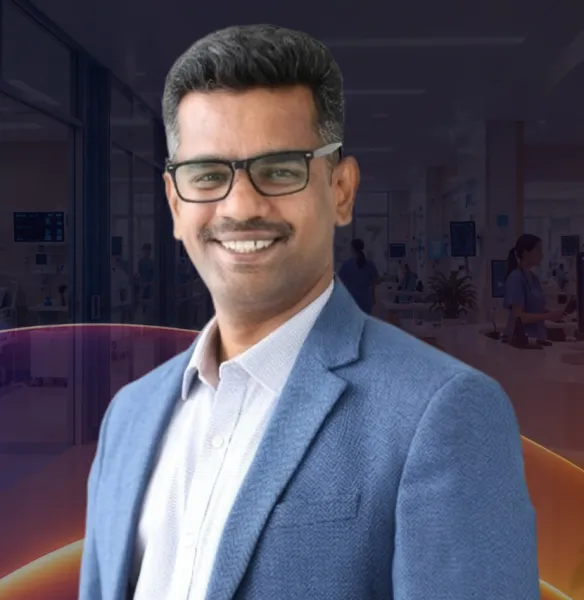
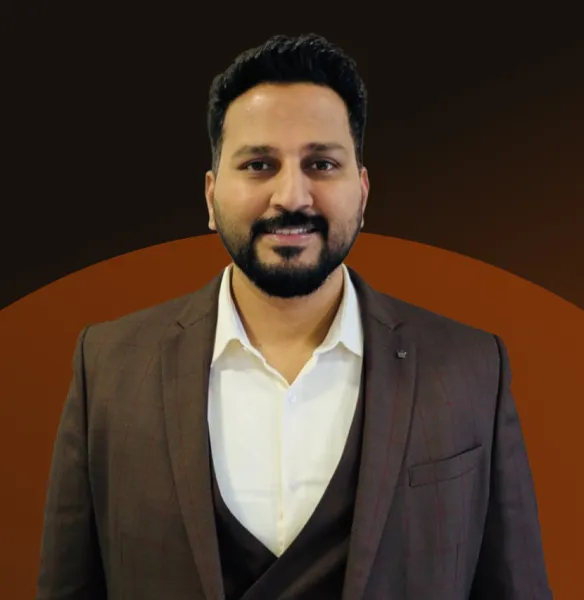
In an era where technology increasingly defines the contours of healthcare delivery, the conversation around digital hospitals has moved beyond gadgets and software to focus on meaningful impact, improved patient outcomes, streamlined workflows, and enhanced care accessibility. In an exclusive discussion with Dr. Aashish Chaudhry, Managing Director of Aakash Healthcare Pvt. Ltd., we explore how Aakash Healthcare is leveraging advanced digital systems, intelligent integration, and patient-centric innovations to create hospitals where care, not just technology, leads.
From robotic surgeries and unified Hospital Information Systems to telemedicine and inclusive digital strategies, Dr. Chaudhry shares his insights on building a connected, efficient, and equitable healthcare ecosystem for today and the future.
1. Aakash Healthcare has deployed high-end technologies and robust Hospital Information Systems. From your experience, how have these digital systems contributed to improved care coordination, clinical efficiency, and patient convenience?
At Aakash Healthcare, our approach to digital adoption has been very deliberate. Technology is not deployed for its own sake, but to meaningfully enhance clinical outcomes, care coordination, and the overall patient experience.
On the clinical front, we have invested in advanced technologies such as the da Vinci robotic surgical system, neuro-navigation platforms, Q-SAR, modern electrocautery, and laser systems. These innovations enable greater surgical precision, reduced operative time, minimal blood loss, and faster patient recovery. Robotic-assisted surgery, in particular, has taken us well beyond conventional laparoscopy by allowing complex procedures to be performed with enhanced accuracy and consistency, ultimately translating into better patient outcomes and shorter hospital stays.
Equally important is our focus on digital integration and information flow. Our robust Hospital Information System (HIS), supported by platforms such as Triotree, provides clinicians with a unified, real-time view of patient data, from diagnostics and treatment plans to progress notes accessible securely even when they are on the move. This has significantly improved decision-making, reduced delays, and strengthened interdisciplinary collaboration.
We have also implemented intelligent alert mechanisms within our digital ecosystem. Any critical laboratory or radiology value is automatically flagged and escalated to the concerned clinician in real time, enabling prompt intervention and enhancing patient safety. This proactive approach has been a key contributor to improved clinical efficiency and reduced response times in critical situations.
From a patient-convenience and operational standpoint, CRM and call-centre management systems allow us to track patient interactions, appointments, and follow-ups seamlessly. Our patient portal empowers individuals to access reports, appointments, and care updates with ease, reducing anxiety and improving transparency. Additionally, a Salesforce-based platform supports dashboards that monitor abnormal lab values, digital outreach initiatives, and overall performance across both clinical and non-clinical processes.
In essence, these digital systems have helped us move towards a more connected, precise, and patient-centric model of care, one where technology reduces the burden on healthcare teams while ensuring that patients receive timely, coordinated, and high-quality care. Technology will continue to evolve, but at Aakash Healthcare, it remains firmly anchored to our core belief: better systems should ultimately lead to better healing experiences for patients.
2. As both a clinician and hospital leader, how do you approach the integration of digital tools in a way that supports doctors and care teams without adding to their administrative or cognitive burden?
Balancing the roles of a clinician and a hospital leader gives me a very clear lens on digital adoption. My approach has always been guided by one fundamental principle: technology should simplify clinical work, not complicate it.
At Aakash Healthcare, every digital tool is evaluated through two critical perspectives: the doctor as the end user and the patient as the end beneficiary. If a system does not reduce response time, streamline decision-making, or meaningfully improve patient outcomes, it does not justify its place in the clinical workflow. We are conscious that clinicians already operate in high-pressure environments, and adding unnecessary administrative or cognitive load can be counterproductive.
Our focus, therefore, is on intelligent integration rather than excessive digitisation. Digital solutions are selected and designed to enable faster access to relevant patient information, facilitate seamless documentation, and reduce repetitive manual tasks. The aim is to allow doctors and care teams to spend more time on clinical judgment and patient interaction, and less time navigating complex interfaces or fragmented systems.
Importantly, we also recognize that not every new technological innovation is clinically relevant. Adoption decisions are taken after careful validation, does it save time, reduce costs, improve workflow efficiency, and support faster, safer recovery for patients? Only tools that meet these criteria are implemented.
Whether it is our HIS upgrades, CRM and Salesforce platforms, or enhancements to the patient application, the objective remains consistent: to support clinicians in delivering high-quality care while quietly working in the background. When digital tools function as enablers rather than obstacles, they not only improve efficiency but also help preserve the human connection at the heart of healthcare.
3. Many hospitals are adopting smart digital systems, yet outcomes vary widely. In your view, what differentiates meaningful digital transformation from technology adoption in name alone?
The real differentiator between meaningful digital transformation and technology adoption in name alone lies in impact, not intent. True digital transformation is measured by what changes on the ground—better patient outcomes, smoother clinical workflows, and reduced administrative burden for care teams.
Any digital solution, whether hardware or software, that does not demonstrably improve clinical outcomes or ease the daily workload of clinicians is unlikely to be sustainable in the long run. Technology cannot become an additional layer of complexity; it must actively remove friction from the healthcare delivery process.
For digital systems to be effective, they need to be simple to understand, easy to integrate into existing workflows, and practical to execute for both clinicians and patients. Beyond adoption, they must deliver measurable improvements in key areas such as clinical efficiency, turnaround times, coordination of care, administrative processes, and support services.
At Aakash Healthcare, these principles form the foundation of our technology selection process. Every digital initiative undergoes careful evaluation, with its advantages and limitations clearly assessed before implementation. We consciously avoid technologies that exist only as labels or showcase innovations, without real-world usability or tangible benefits.
In essence, meaningful digital transformation occurs when technology works quietly in the background, empowering clinicians, improving patient experiences, and delivering measurable value, rather than merely adding another system to manage.
4. With India’s digital health ecosystem continuing to evolve, how do you see private hospitals aligning with national digital health initiatives while safeguarding data security and patient trust?
As India’s digital health ecosystem continues to evolve, national initiatives such as the National Digital Health Mission have the potential to strengthen care continuity, accessibility, and outcomes fundamentally. For private hospitals, the key lies in thoughtful alignment rather than hurried adoption.
At Aakash Healthcare, our digital architecture has been designed to be compliant with global and international standards, which positions us well for seamless integration with national digital health platforms. Such alignment enables secure and efficient exchange of patient information across care settings, reducing duplication, improving continuity of care, and supporting more informed clinical decision-making.
However, as interoperability increases, data security and patient trust become non-negotiable priorities. We firmly believe that digital progress cannot come at the cost of privacy. To address this, we have implemented robust cybersecurity frameworks, including advanced firewalls, access controls, encryption protocols, and continuous system monitoring to safeguard patient data at every level.
Equally important is governance, clear policies on data access, role-based permissions, and accountability, ensuring that sensitive health information is used responsibly and ethically. Even as we integrate with national platforms, our commitment remains unchanged: to maintain a secure, transparent, and trusted digital environment for both patients and clinicians.
Ultimately, the success of India’s digital health journey will depend on building systems that are not only interoperable but also secure, patient-centric, and trust-driven. Private hospitals have a critical role to play in setting these standards by aligning with national initiatives while placing patient confidence at the centre of digital transformation.
5. Your vision of Vishwa Chikitsalaya @2047 emphasizes equitable and affordable healthcare. What role do you see digital health playing in bridging access gaps while ensuring inclusivity in care delivery?
Digital health will be a cornerstone in realising the vision of Vishwa Chikitsalaya @2047, particularly in making healthcare more equitable, inclusive, and affordable. In a country as vast and diverse as India, one of our biggest challenges remains the uneven distribution of healthcare professionals and advanced medical infrastructure, especially between metropolitan centres and rural or underserved regions.
Digital health technologies, such as telemedicine, remote consultations, and continuous patient monitoring, have the potential to bridge this gap by extending medical expertise beyond physical boundaries. Through these platforms, patients in Tier 2, 3, and 4 cities, hilly terrains, and remote communities can access timely, specialist-led care that was previously limited to urban centres.
Looking ahead, more advanced applications such as robot-assisted and digitally guided procedures can further decentralise specialised care. Complex interventions, expert-guided surgeries, and even the remote monitoring of OPDs and ICUs can be supported through secure digital systems, ensuring quality care without the need for patients to travel long distances.
Importantly, inclusivity must remain central to this transformation. Digital health solutions need to be affordable, intuitive, and adaptable to varying levels of digital literacy. When implemented thoughtfully, these tools can reduce costs, optimise resources, and bring consistent standards of care to every corner of the country.
As India approaches the centenary of its independence, I believe digital health will enable a more connected and compassionate healthcare ecosystem, one where geography no longer determines the quality of care. This is the essence of Vishwa Chikitsalaya @2047: a healthcare system that is accessible, equitable, and truly patient-centric for all.
Stay tuned for more such updates on Digital Health News
Follow us