Building Digital-First Hospitals in Tier-2 India: Lessons from Srishti Hospital

Building Digital-First Hospitals in Tier-2 India: Lessons from Srishti Hospital

As digital health steadily reshapes hospital operations across India, its real impact is increasingly being measured not by technology adoption alone, but by how deeply it integrates into everyday clinical and administrative workflows. In tier-2 cities like Jaipur, where patient expectations, operational realities, and cost sensitivities differ from metro markets, hospital leaders are taking a more pragmatic, outcome-driven approach to digital transformation.

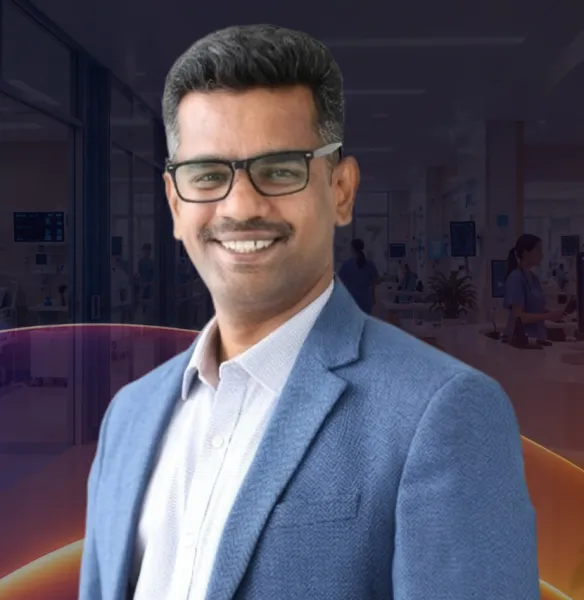
In this exclusive interaction, Deepak Guupta, CEO of Srishti Hospital, shares how digital health at his organization extends beyond software deployment to influence clinical decision-making, patient experience, accreditation, and long-term hospital strategy. He also reflects on Jaipur’s evolving digital health ecosystem, the role of national frameworks like ABDM and NABH, and the leadership mindset required to drive meaningful, people-centric digital adoption in emerging healthcare hubs.

As CEO of Srishti Hospital, how do you define digital health transformation beyond technology deployment, particularly in everyday hospital workflows and clinical decision-making?

As CEO of Srishti Hospital, I strongly believe that digital health is not limited to software or server deployment. It represents a long-term transformation in how healthcare is delivered, monitored, and governed. Digital health is the future, and it is already improving clinical outcomes, strengthening disease management, and enabling data-driven policymaking for governments.

From a clinical standpoint, digital systems support better decision-making, continuity of care, and outcome tracking. On the non-clinical side, they improve patient appointments, discharge processes, billing efficiency, and revenue cycle management. Digital health also plays a critical role in hospital strategy and marketing by providing clear insights into patient needs, service gaps, and performance outcomes.

I am proud to share that Srishti Hospital is the first hospital in Rajasthan to fully adopt the Ayushman Bharat Digital Mission (ABDM). This milestone was acknowledged by Rizwan Koita, Chairperson of NABH.

We adopted ABDM from the very first day of our operations in October 2024. This reflects our clear commitment to digital health and our belief that technology, when integrated thoughtfully, can deliver efficient, transparent, and patient-centric healthcare.

Which digital health initiatives at Srishti Hospital have delivered the most tangible operational or clinical outcomes so far?

I strongly believe that digital health is not optional; it is essential for delivering efficient and patient-centered care. My international exposure helped me understand early how the right digital tools can improve both clinical outcomes and hospital operations.

From day one of our operations, we implemented digital systems across the hospital. This includes patient management and queue management, electronic medical and health records, e-prescriptions, and digital patient feedback systems. We also use digital information displays to improve communication and transparency for patients.

These systems have helped us achieve faster patient flow, better coordination between doctors, diagnostics, and pharmacy, and more efficient utilization of diagnostic and pharmacy services. Discharge times have reduced significantly, and data is available in real time across departments.

At a leadership level, I personally review digital dashboards that track patient demographics, service utilization, and marketing performance. This allows us to take data-driven decisions and focus on targeted healthcare delivery.

Overall, our digital health journey has resulted in higher patient satisfaction, improved operational efficiency, and better accessibility of information, which directly supports quality care.

From your experience, which operational or patient-care challenges in Indian hospitals are most effectively addressed through digital health solutions today?

Drawing from more than 18 years of experience across different international healthcare systems, I have seen that successful digital health adoption does not begin with complex technology. It starts with simple, high-impact use cases that improve daily hospital operations.

In the early stages, hospitals should focus on digital patient registration, appointment scheduling, and queue management. These areas immediately reduce waiting times and improve patient experience. A basic Hospital Information System covering OPD, IPD, billing, and discharge is the next critical step, as it creates a single operational backbone.

Electronic prescriptions integrated with pharmacy and diagnostics are another strong starting point. They improve medication safety, reduce errors, and bring cost control from the beginning. Alongside this, introducing basic electronic medical records—focused on clinical notes, reports, and discharge summaries—helps clinicians access reliable patient information without disrupting workflows.

Digital billing and revenue tracking are equally important in the initial phase. Transparent and accurate billing builds trust with patients and ensures financial stability for the hospital. Simple patient communication tools, such as digital feedback systems and appointment reminders, further strengthen engagement and service quality.

Most importantly, digital health adoption must go hand in hand with staff training and change management. Technology succeeds only when it supports clinicians and operational teams in their daily work.

When hospitals start small, focus on usability, and scale gradually, digital health becomes a strong foundation for better clinical outcomes, efficient operations, and long-term sustainability.

Jaipur is emerging as a competitive healthcare hub. What types of digital health solutions, clinical, operational, or patient-facing, are gaining traction in the Jaipur healthcare ecosystem?

Jaipur is clearly moving toward becoming a strong healthcare hub, and digital health is playing an important role in this transition. As far as I can see, the city is slowly and steadily adopting digital health tools, while also creating space for artificial intelligence to support better patient care and improved clinical outcomes.

On the clinical side, hospitals are implementing electronic medical records, e-prescriptions, teleconsultations, and digital integration of diagnostics. These systems are helping clinicians with better information access, continuity of care, and more consistent decision-making. At the same time, AI is beginning to support diagnostics, early disease detection, and clinical decision support in a controlled and practical manner.

From an operational perspective, solutions such as hospital information systems, patient and queue management, digital billing, inventory control, and revenue cycle management are gaining traction. These tools are enabling hospitals to manage growing patient volumes more efficiently, reduce administrative burden, and improve resource utilization.

On the patient-facing side, digital appointments, feedback systems, cashless and digital payments, and telemedicine follow-ups are becoming more common. Patients in Jaipur are increasingly aware and expect convenience, transparency, and timely care, similar to metro cities.

Overall, Jaipur’s approach to digital health adoption is gradual and outcome-focused. Hospitals are prioritizing technologies that deliver real improvements in efficiency, patient experience, and clinical quality, rather than adopting technology for its own sake

How do regional patient expectations in cities like Jaipur influence the design and adoption of digital health tools compared to metro markets?

As CEO of Srishti Hospital, I see that regional patient expectations in cities like Jaipur strongly influence how digital health tools are designed and adopted, especially when compared to metro markets.

Patients in Jaipur expect digital solutions to make their hospital experience simpler, not more complicated. They value reduced waiting time, clear communication, and transparency in billing and clinical processes. Because of this, we focus on tools such as online appointments, queue management, digital reports, and structured follow-ups rather than complex, self-driven platforms.

Trust and human connection remain very important. Unlike metro markets, where patients may be comfortable navigating digital systems independently, many patients in Jaipur prefer assisted digital models. This means technology must support doctors and staff, not replace them. Language flexibility and staff-guided use of digital systems are critical for acceptance.

Cost sensitivity also plays a role. Digital health tools must demonstrate clear value—either by saving time, reducing repeat visits, or improving clinical outcomes. At Srishti Hospital, our approach is to adopt digital health in a practical and phased manner, ensuring that every solution directly improves patient experience, clinical quality, or operational efficiency.

Overall, digital health adoption in Jaipur is shaped by patient-centric expectations, where simplicity, trust, and measurable benefits matter more than advanced features seen in metro markets.

How do accreditation frameworks such as NABH integrate with digital systems and data-driven quality monitoring in your organization?

I see accreditation frameworks such as NABH not as documentation exercises, but as structured systems that align closely with digital health and data-driven quality monitoring.

At Srishti Hospital, our commitment to quality care is reflected in the fact that we achieved NABH accreditation within the first year of operations. This was possible because quality and patient safety were embedded into our digital systems from day one. Our hospital information system and electronic medical records support standardized clinical documentation, consent management, medication safety, and continuity of care, making processes consistent, traceable, and auditable.

Digital tools also enable real-time monitoring of key quality indicators such as infection control, patient safety events, turnaround times, and patient feedback. These dashboards allow teams to review performance regularly and take corrective action early, rather than preparing only for periodic audits.

During the accreditation process, NABH assessors specifically appreciated our use of digital health tools, noting how they strengthened transparency, compliance, and clinical governance. Training records, incident reporting, internal audits, and corrective action tracking are all managed digitally, improving accountability across departments.

Overall, at Srishti Hospital, NABH integration with digital systems has helped us move beyond compliance toward continuous quality improvement, ensuring safe, reliable, and patient-centred care on an ongoing basis

Looking ahead, which digital health capabilities do you believe will be critical for hospitals in tier-2 cities over the next 2–3 years?

I believe that over the next 2–3 years, digital health capabilities in tier-2 cities will need to focus on stability, outcomes, and scalability rather than experimentation.

The first priority will be strong core digital systems such as hospital information systems, electronic medical records, e-prescriptions, and integrated diagnostics. These form the foundation for safe clinical practice, operational efficiency, and regulatory compliance.

The second critical area is data-driven quality and performance monitoring. Hospitals will increasingly rely on real-time dashboards to track clinical outcomes, patient safety indicators, infection control, and accreditation standards. This shift supports continuous improvement rather than periodic review.

Patient access and engagement will also be essential. Tools such as online appointments, queue management, teleconsultations, digital payments, and structured follow-ups will become standard expectations, even in tier-2 cities.

In addition, the practical and responsible use of artificial intelligence will gain importance. AI will support clinical decision-making, diagnostics, and resource optimization, but always under clinical supervision and with clear value to patient outcomes.

Finally, interoperability with national digital health frameworks and insurance systems will be critical to ensure seamless care continuity and smoother reimbursement processes.

Overall, hospitals that invest in these focused, outcome-driven digital capabilities will be better positioned to deliver high-quality, patient-centred care in tier-2 cities like Jaipur.

From a leadership perspective, what mindset and change-management approach are essential to successfully drive digital adoption among clinicians and hospital teams?

I believe successful digital adoption begins with the right leadership mindset. Digital transformation should never be viewed as an IT initiative alone, but as a strategic step to improve patient care, safety, and operational effectiveness.

From a change-management perspective, clinician involvement is critical. Doctors, nurses, and frontline teams must be engaged early so that digital tools align with real clinical workflows. When teams see that technology genuinely supports their work, resistance reduces and adoption improves.

Clear and consistent communication is essential. Leadership must explain the purpose of each digital initiative, set realistic expectations, and implement changes in a phased manner. Sudden or forced transitions often create stress and undermine confidence.

Training and continuous support play a major role. Digital adoption is an ongoing process, not a one-time rollout. Regular training sessions, hands-on support, and feedback loops help teams gain confidence and take ownership of systems.

Finally, leadership must lead by example. When senior management and clinicians actively use digital tools and support their teams, it reinforces trust and commitment. At Srishti Hospital, this people-centric and outcome-focused approach has been central to driving sustainable digital adoption across the organization.


Stay tuned for more such updates on Digital Health News

Follow us

More Articles By This Author


Show All

Sign In / Sign up