AI in Gujarat Hospitals: A COO’s Roadmap for Trust-Led Adoption

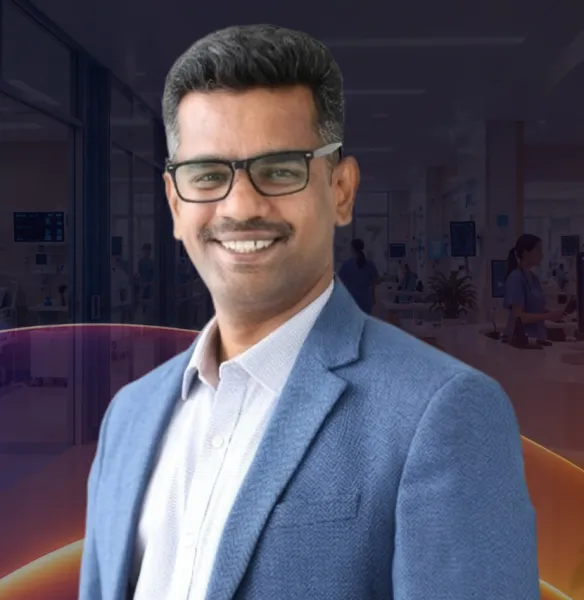
By - Dr Vipul Nimavat, COO, Aashka Hospital, Gandhinagar, Gujarat.
Artificial Intelligence (AI) has quietly and confidently transformed almost every major industry over the last decade, including banking, retail, manufacturing, logistics, and even governance. Healthcare, however, has remained cautious.
This hesitation is not due to a lack of technological capability, but rather because healthcare operates on a fundamentally different foundation: “Trust, Transparency and Human Judgment.” Decisions in healthcare directly affect human lives, making skepticism not only natural but necessary.
Having spent over 15 years across clinical practice, hospital operations, hospital administration and healthcare finance, I have observed this hesitation from every angle. The question, therefore, is not whether healthcare should adopt AI, but how it should do so responsibly & ethically.
Understanding the Trust Deficit in Healthcare AI
Unlike other sectors, healthcare faces a persistent confidence gap when it comes to technology adoption. This gap is amplified by:
- Misinformation across social and digital platforms
- Fear of eroding the doctor–patient relationship
- Concerns around accountability, bias, and explainability
Yet, if we look at the historical trajectory of healthcare innovation, skepticism has always preceded acceptance.
There was a time when Laparoscopic surgery was considered risky, Electronic medical records (EMRs) were seen as a risk to patient confidentiality, and digital payment gateways were viewed as unsafe. Each of these technologies faced resistance until evidence, outcomes, and experience reshaped trust.
History consistently demonstrates a powerful truth: Responsible adaptation to technology has always led to better outcomes for society. AI stands at a similar inflection point today.
AI in Healthcare: No Longer a Futuristic Concept
AI has matured significantly. It is no longer an experimental or aspirational tool; it is ready for real-world clinical and operational impact, provided its application is well-designed.
The core objectives of AI in healthcare should remain clear:
- Augmenting clinical accuracy and precision, not replacing clinician judgment.
- Reducing non-productive cognitive and administrative burden on clinicians, allowing greater focus on patient care.
- Improving turnaround times, consistency and error reduction across non-clinical hospital operations.
A Practical Framework: The “Circle of Confidence” for AI Adoption
One of the most common reasons AI initiatives fail in hospitals is starting at the wrong point. I advocate a phased adoption framework that I describe as the Circle of Confidence, with Patient Outcomes and Financial Sustainability at its centre.
Layer 1: Administrative and Experience Workflows
The first and safest entry point for AI lies in administrative domains such as:
- Appointment scheduling and patient communication
- Tele-calling and care coordination
- Ward management and patient experience analytics
These applications deliver quick wins, improve efficiency, and help institutions build confidence in AI systems.
Layer 2: Diagnostics, Finance, and Operational Intelligence
The second layer involves structured, data-rich domains, including:
- Radiology and pathology support systems
- Billing, insurance, and revenue cycle management
- Quality metrics, compliance, and patient safety monitoring
At this stage, AI begins to demonstrate measurable ROI while improving accuracy and standardization.
Layer 3: Clinical Decision Support (Last, Not First)
The final layer should involve clinical decision support, always positioned as an assistant under clinician supervision. Use cases include:
- Early prediction of complications
- Diagnostic support and risk stratification
- Prescription rationalization & optimization
- Medical & Surgical treatment planning assistance
By this stage, institutions already possess cleaner datasets, reduced bias, and higher AI acceptance among clinicians, making adoption safer and more effective.
Early Use Cases in Gujarat
Gujarat’s healthcare ecosystem, marked by a mix of large tertiary hospitals, mid-sized institutions, and rapidly evolving private setups, offers an ideal environment for context-aware AI adoption.
As we move deeper into 2026, Gujarat stands at a crossroads of Innovation and Impact. AI’s early success stories in patient engagement, operational intelligence, and administrative automation are clear proof points that healthcare operations can be transformed for the better.
Early AI Use Cases Taking Shape in Gujarat
Below are emerging examples from the region that every healthcare leader should know:
1. AI-Powered Patient Support and Engagement
One of the most locally visible innovations is the launch of an AI-powered oncology chatbot at SSG Hospital in Vadodara, the first of its kind in the state. This digital assistant provides reliable, multilingual guidance on cancer care, symptom management, and follow-up instructions, helping patients and caregivers navigate complex treatment journeys without unnecessary anxiety or confusion.
2. Predictive & Operational Intelligence in Patient Flow
One of the most promising yet under-appreciated applications of AI is in capacity planning and patient-flow prediction. Models trained on historical data, such as hospital admissions, weather reports, local events, and seasonal trends, can forecast OPD and emergency traffic with surprising accuracy. This helps hospitals optimize bed allocation and staffing, prevent revenue leakage, and improve throughput.
In Gujarat’s larger hospitals, where crowds and chronic disease burdens create fluctuating demand, these predictive tools reduce wait times and help administrators make resource decisions before bottlenecks occur.
3. Virtual Assistants and Automated Documentation
Across India, leading medical networks are investing in AI solutions that support documentation automation, turning clinician speech into structured medical records, generating discharge summaries, and handling claims coding. These are essential defences against clinician burnout and record-keeping backlogs. For operations leaders in Gujarat, integrating AI scribing and voice-to-text tools will streamline workflows and let physicians spend more of their energy with patients.
4. Administrative Efficiency & Automation
AI’s role in streamlining appointments, billing, claims processing, and interoperability cannot be overstated. Smart automation systems cut down manual errors, reduce turnaround times for insurance claims, and improve accuracy across departments.
For example, smart scheduling algorithms can reduce no-shows and balance patient appointments more intelligently. Automated billing systems flag discrepancies before they become costly compliance issues. These operational AI applications generate immediate ROI by improving financial health while also increasing patient satisfaction.
5. State Government AI Strategy and Support
Gujarat’s government has already acknowledged the transformative potential of AI across sectors, including healthcare, through a five-year AI Action Plan focusing on data infrastructure, R&D, and pilot projects. This official direction encourages hospitals and startups alike to build AI use cases with confidence and regulatory support.
Such policy momentum not only improves access to digital tools but also signals to investors, innovators, and healthcare leaders that now is the time to integrate AI into strategic planning.
Closing Message
AI in Healthcare is no longer a futuristic concept relegated to academic papers. It has evolved into a suite of practical tools that improve real-world outcomes, reduce friction in daily operations, enrich patient experience, and empower healthcare professionals to deliver care at scale. I believe 2026 is shaping up as a pivotal year for AI-driven transformation of healthcare operations. AI will not replace clinicians. It will, however, reshape how care is delivered, decisions are supported, and systems are sustained. The future of healthcare AI lies not in disruption for its own sake, but in thoughtful integration that respects trust, preserves human judgment, and delivers measurable impact.
About the Author
Dr Vipul Nimavat is a C-suite Healthcare Leader and Stanford-certified Specialist in AI-in-healthcare with around 15 years of cross-functional experience and deep understanding across clinical, operational, and healthcare financial domains. His work centres on translating AI from Algorithms to measurable impact within the real-world healthcare domain.
Disclaimer: This is an authored article; DHN is not liable for the claims made in the same.
Stay tuned for more such updates on Digital Health News
Follow us