An Insider’s View on India’s Digital Health Journey & Interoperability Standards

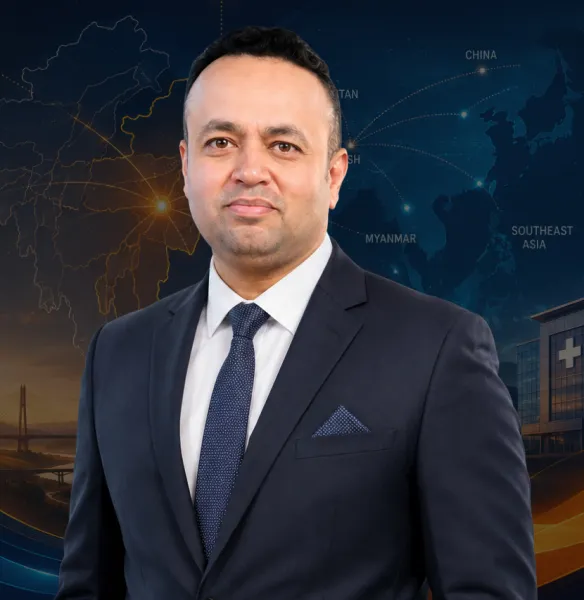
By - Surjeet Thakur, CIO, Sri Shankara Cancer Hospital & Research Centre & Co-Founder and CEO of TrioTree Technologies
India’s digital health journey over the past few years has been nothing short of transformative. What began as piecemeal digitization of certain healthcare services has evolved into a national movement to build an integrated digital health ecosystem, one grounded in interoperability, citizen-centricity, and standardized data. For those who have been watching from close quarters, the gains are real, yet the challenges are formidable. This is a look behind the scenes: how far India has come, which decisions have shaped the road, and what still lies ahead.
Healthcare in India has long suffered from fragmentation, different hospitals, clinics, diagnostic labs, and local health programs operating independently, often maintaining paper records or proprietary digital systems that cannot talk to each other. The absence of common data definitions, varying formats for clinical records, and uneven adoption of digital tools meant that even when digital records existed, their utility was limited. For patients, that meant carrying physical documents; for doctors, wasted effort; for policymakers, missed insights.
At the state and central levels, digital health initiatives were being piloted—telemedicine, electronic health record (EHR) systems in large hospitals, health data portals, etc.—but with limited scale and minimal interoperability. From this, two truths became evident: technological change was inevitable, and without standards ensuring data can be shared meaningfully and securely, the change would be slow, costly, and fragmented.
The Shift: National Blueprint, Building Blocks, Identity, and Standards
A turning point was the adoption of a coherent national framework that laid out not just what to build, but how. Several building blocks have been central to this:
- Unique Health Identifier (Health ID / ABHA): One of the foundational moves was to give every citizen a digital health ID. This provides a way to link medical records across providers and enables longitudinal health records—ones that follow the patient over time.
- Health Facility and Health Professional Registries: Maintaining standardized registries of all health facilities and licensed professionals to improve transparency and accountability, and to serve as reference architectures for interoperable systems.
- Health Information Exchange & Consent Manager (HIE-CM): Critical to making data sharing possible, this component focuses not just on moving data, but on ensuring that it is accessed with users’ informed consent, in a way that preserves privacy and security.
On the standards side:
- Metadata & Data Standards (MDDS) for the health domain were notified to ensure commonly accepted definitions and code directories to help different systems speak a common “data language”.
- Adopting global standards like FHIR (Fast Healthcare Interoperability Resources), especially FHIR Release 4, for structuring and exchanging clinical records, terminology and content artefacts.
- Specifying both syntactic interoperability (how data is structured/formatted) and semantic interoperability (what the pieces of data actually mean, so that one system’s “BP” or “blood pressure” is understood in the same way by another).
Implementation: Progress and Pain Points
With these architectural decisions made, implementation across India has moved ahead—but unevenly.
Progress:
- Large numbers of people have obtained Health IDs. Medical facilities across various regions are getting onboarded to link records.
- The notification of EHR standards under the national mission provides guidelines for digital health applications, mobile-health apps, and patient health record apps, helping them meet minimum criteria for privacy, security, and data protection.
- Federated architectures are being favored: core registries may be centrally managed, but health records themselves are stored and managed in a distributed fashion (at state or regional centres or by service providers) to balance scale, resilience, and local control.
Challenges:
- Digital divide & infrastructure gaps: Many primary and rural health facilities still lack reliable internet, sufficient computing infrastructure, and trained personnel to use digital tools effectively. Without basic enabling infrastructure, standards alone don’t suffice.
- Awareness, trust, and user behavior: Patients and some providers are still cautious about submitting or sharing health records digitally, often because of concerns about privacy, data misuse, or simply a lack of familiarity.
- Fragmented adoption among private providers: Not all private clinics, labs, or diagnostic centres are yet integrated; the pace of interoperable deployment varies by geography, institution size, and resource levels.
- Syntactic-semantic gaps: Even when systems adopt standard formats (syntax), meaning (semantic) alignment remains tricky—terminologies, clinical artefacts, value sets, code mapping sometimes lag behind. For example, when developing open source EHR systems, studies show different levels of match between those systems’ metadata and what the national minimum dataset requires.
- Policy, regulatory, and governance issues: Ensuring privacy, defining consent processes, implementing sandbox environments, and app validations are all necessary but complex. Also, harmonizing between national and state-level regulations and between public and private players takes time.
Looking Ahead: What Needs to Come Next
From inside, the sense is that the foundation is in place—but there are key levers to pull to accelerate the journey toward a truly interoperable, citizen-empowered health ecosystem.
- Strengthening capacity across the board: More investment in digital infrastructure (connectivity, hardware, secure cloud or local storage), training of personnel (especially clinical staff and data managers), and incentives for smaller providers to adopt standard-compliant systems.
- Further refining standards and expanding artefacts: As medical science evolves, new data types (genomics, imaging, wearable sensor data) are becoming relevant; establishing extensions (or optional modules) to core data standards will be important. Also, improving semantic interoperability (terminologies, mappings) needs sustained attention.
- User-centric design and trust: Ensuring that digital health tools are easy to use, protect privacy, give users control over their data, and are transparent about who can access which record. Building trust is critical for adoption.
- Robust regulatory and governance frameworks: Laws and policies around data privacy, security, liability, and workforce practices must keep up with technological changes. Oversight, audit, compliance, and enforcement matter.
- Bridging the rural-urban divide: Both in terms of service availability, connectivity, affordability, and digital literacy. Special models—mobile units, offline capability, simplified user interfaces—may help.
- Sustainability and scale: Interoperability architecture must be resilient (scalable, secure) and financially sustainable, avoiding dependence on one-time projects. Encouraging open standards, open protocols, and modular architecture helps.
Wrapping it up
India’s digital health journey is evolving from aspirational frameworks to concrete, scalable systems. The strategic choices made—building unified identifiers, adopting interoperable standards, emphasizing privacy and consent, and pushing for a distributed yet connected architecture—are strong steps toward an inclusive digital health future. But turning standards and policies into seamless experiences for patients and providers everywhere is the real test.
From an insider’s view: the roadmap is clear, and the momentum is building. What remains is sustained execution, adaptation in real-world settings, and keeping the patient at the centre of every design decision. If those align, India could well become a global exemplar in leveraging digital health for universal, equitable, high-quality care.
Stay tuned for more such updates on Digital Health News
Follow us