C-CAMP Partners with Imperial for New Indo-UK Biotech Innovation Hub
The corridor aims to establish and nurture a sustained vision for enhanced bilateral innovation, along with a common framework for exchanging talent, including researchers, innovators, and startups.
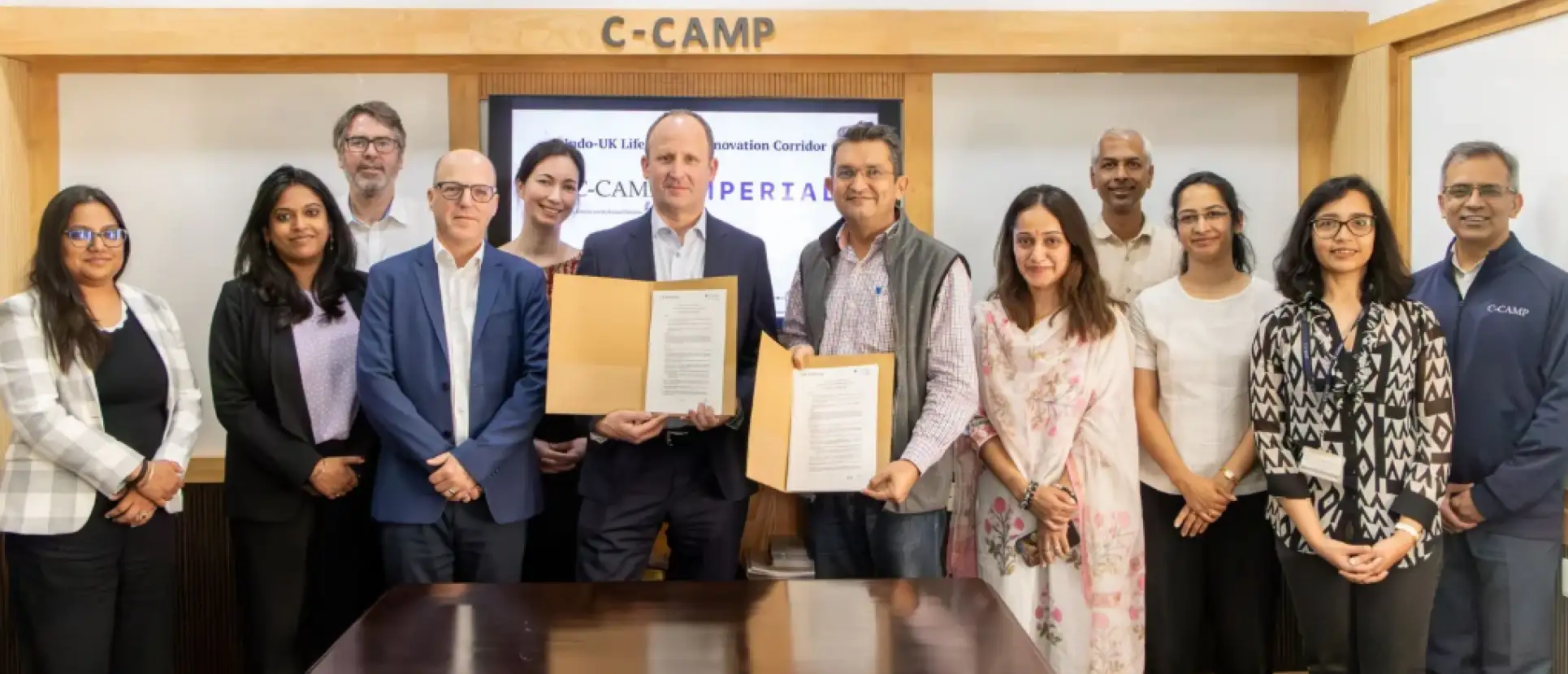
The Bengaluru-based Centre for Cellular and Molecular Platforms (C-CAMP) has signed a Memorandum of Understanding (MoU) with Imperial College London, thereby instituting a cross-border innovation collaboration between India and the UK that has leveraged mutual research and entrepreneurial ecosystems to deepen India-UK ties in the life sciences sector.
The corridor aims to establish and nurture a sustained vision for enhanced bilateral innovation, along with a common framework for exchanging talent, including researchers, innovators, and startups.
It will also serve as a formal channel for bidirectional knowledge and evidence exchange on priority challenges, innovation readiness, and ecosystem efforts that drive problem-solving for shared biological issues.
Professor Hugh Brady, President of Imperial College London, and Dr. Taslimarif Saiyed, Director-CEO of C-CAMP, have signed the partnership agreement at C-CAMP's premises in Bengaluru, where it was officially announced.
One key initiative planned for the corridor is a two-way exchange program, allowing UK-based teams to evaluate deployment readiness in India and India-based teams to explore deployment opportunities in the UK and potentially Europe leveraging shared contextual factors.
The Corridor will also pursue joint fundraising and partnership opportunities to secure the program's sustainability and scalability, delivering positive change and enduring impact.
Months back, Wysa secured GBP 5.3 Mn to adapt and evaluate an AI mental health tool for adolescent girls in rural India, in partnership with Imperial College London and Indian academic and community organisations.
The clinically validated chatbot, delivered via Wysa's "phygital AI" platform combining automated conversations with human coaching, addresses anxiety and low mood amid barriers like tech access and stigma.
Stay tuned for more such updates on Digital Health News
Follow us