Why is Interoperability Important in Healthcare for Building Integrated and Patient-Centered Care?
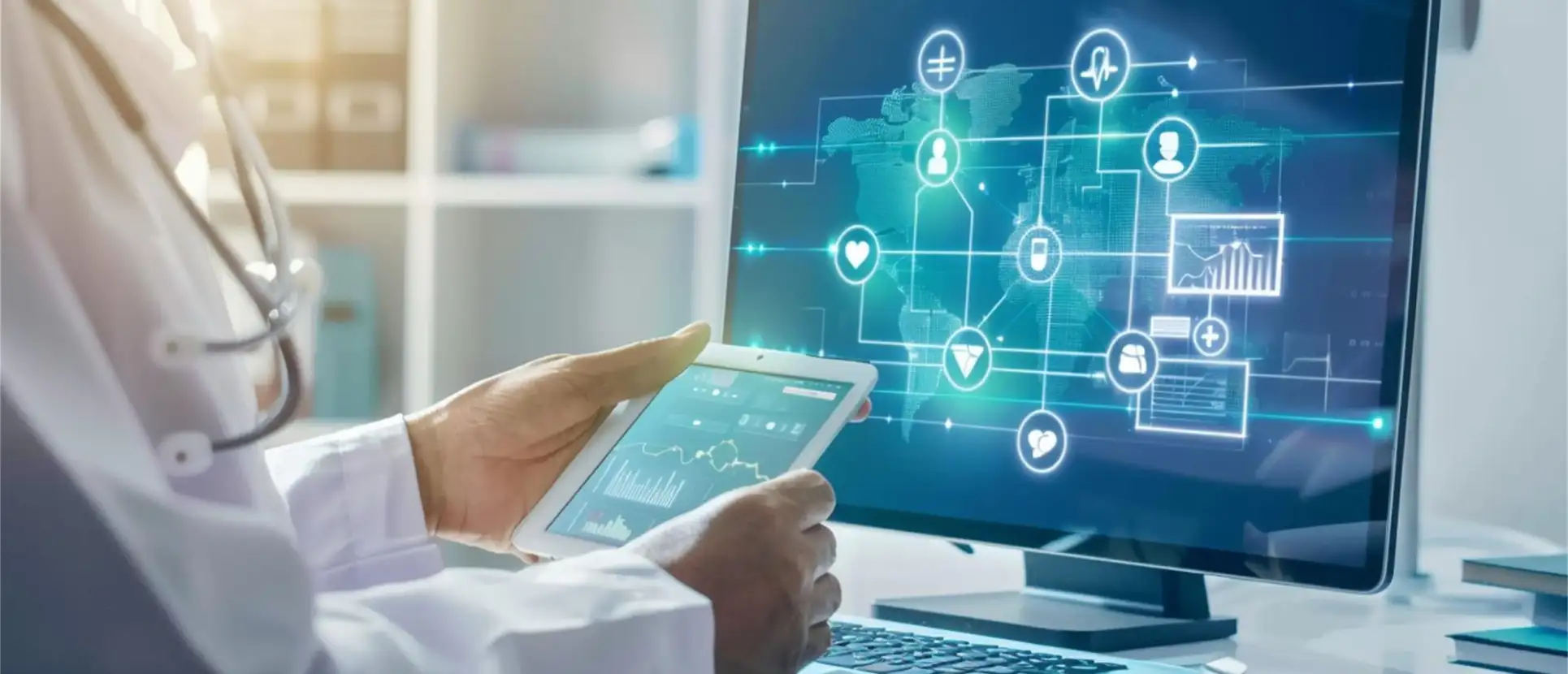
Healthcare today is becoming increasingly digital, with electronic medical records (EMRs), hospital information systems (HIS), telemedicine platforms, and diagnostic tools forming the backbone of modern care.
Interoperability enables diverse systems and applications to exchange, interpret, and use patient health data effectively. It is essential for creating a connected, integrated, and patient-centered healthcare ecosystem, where accurate information is available at the right time for better decision-making.
Why is Interoperability Important in Healthcare?
Interoperability is crucial because patient care is rarely confined to a single provider or system. Individuals often receive care across hospitals, clinics, laboratories, pharmacies, and specialist providers. Without interoperability, patient data can remain fragmented, which can lead to incomplete clinical information, duplicate tests, treatment delays, and potential medical errors.
By enabling secure and meaningful data sharing, interoperability allows clinicians to access more comprehensive and up-to-date patient information. This can improve care coordination, enhance patient safety, support informed decision-making, and strengthen public health monitoring.
It can also help health systems streamline workflows, optimise resources, reduce administrative duplication, and use healthcare data for research, analytics, and policymaking.
For patients, interoperability can create a more connected healthcare experience by reducing the need to repeatedly provide the same medical information when moving between different healthcare providers.
What are the Key Types of Interoperability in Healthcare?
Interoperability in healthcare can be understood through four key levels, each addressing a different aspect of information exchange.
1. Foundational Interoperability:
Foundational interoperability allows one system to send and receive data from another system, without necessarily requiring the receiving system to interpret or use the information.
Examples include sharing documents electronically through email or PDFs. This level establishes the basic technical connectivity required for systems to communicate.
2. Structural Interoperability
Structural interoperability ensures that data is formatted, organised, and coded consistently so that it can be processed across different systems.
Standardised formats, identifiers, and syntax allow information such as laboratory results, prescriptions, and discharge summaries to be transmitted and processed reliably.
For example, healthcare systems can use standards such as Health Level Seven (HL7) and Fast Healthcare Interoperability Resources (FHIR) to support structured health information exchange.
3. Semantic Interoperability
Semantic interoperability ensures that the meaning of health information is preserved and understood consistently across different systems.
Standardised terminologies and coding systems such as ICD-10 and SNOMED CT can enable healthcare systems to interpret clinical information consistently for patient care, reporting, and research.
4. Organisational Interoperability
Organisational interoperability covers the policies, legal frameworks, governance structures, and workflows that enable secure, responsible, and compliant data sharing across institutions.
It includes areas such as privacy, consent management, data governance, security, and regulatory compliance.
Together, these levels help ensure that health information can be exchanged, understood, and used effectively across different healthcare systems and organisations.
How Does Interoperability Work in Healthcare?
- Data Standardisation: Health data is structured using recognised formats and terminologies such as HL7, FHIR, ICD-10, or SNOMED CT, helping maintain consistency across systems.
- Integration Tools: APIs and middleware can connect EMRs, HIS, laboratories, telemedicine platforms, and other healthcare applications to facilitate data exchange.
- Secure Data Exchange: Information can be exchanged through Health Information Exchanges (HIEs), secure networks, or encrypted channels, with appropriate safeguards for privacy and security.
- Verification and Authorised Access: Appropriate authentication and access controls help ensure that only authorised users or systems can access relevant health information.
- Data Use: Once information is exchanged and interpreted, authorised healthcare professionals can integrate relevant information into their clinical workflows to support faster and more informed decisions.
How is Interoperability Shaping the Future of Healthcare?
As healthcare becomes increasingly digital, interoperability is moving from being a technical requirement to becoming a foundation for connected healthcare delivery.
The growth of electronic health records, telemedicine, remote patient monitoring, connected medical devices, artificial intelligence, and digital health platforms is increasing the volume of health information generated across different systems.
Without interoperability, these technologies can create additional data silos rather than a genuinely connected healthcare ecosystem.
With effective interoperability, healthcare organisations can bring together information from multiple sources to support more coordinated care, better clinical decision-making, population health management, and data-driven innovation.
In India, initiatives such as the Ayushman Bharat Digital Mission (ABDM) further highlight the importance of interoperable digital health infrastructure by supporting connections between healthcare stakeholders and enabling consent-based health information exchange.
Conclusion
Interoperability is a cornerstone of effective, patient-centered, and data-driven healthcare systems. The importance of interoperability in Healthcare lies in its ability to connect fragmented digital ecosystems into a cohesive network that supports clinical excellence, operational efficiency, and population health goals.
As healthcare systems continue to digitalize, strengthening interoperability will be essential to realizing the full potential of health information technology and ensuring long-term system resilience.
The future of digital healthcare will not depend only on adopting more technologies, but also on how effectively those technologies can communicate with one another and use health information in a secure, meaningful, and responsible manner.
Stay tuned for more such updates on Digital Health News
Follow us