The Missing Middle: Strengthening Hospital Infrastructure for India’s Digital Health Ambitions

The Missing Middle: Strengthening Hospital Infrastructure for India’s Digital Health Ambitions

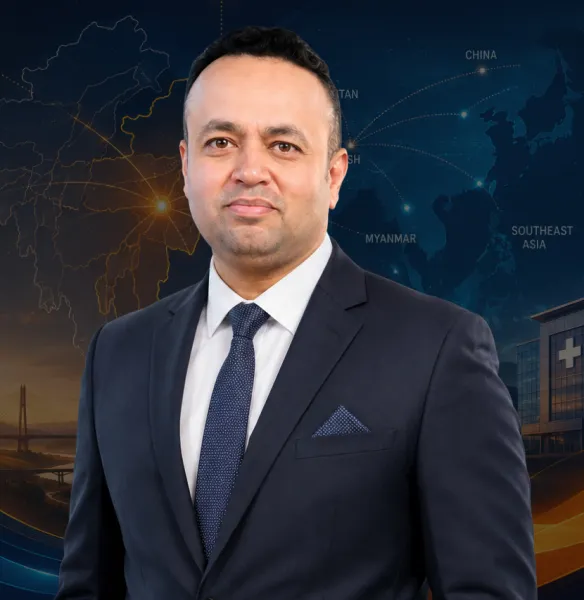
By - Suraj Sujathan, C00, SRM Institutes for Medical Sciences, Chennai.

India is experiencing a powerful wave of digital transformation in healthcare. Innovation is abundant, ranging from the growing reach of teleconsultations to the promise of a unified health ID. Hospitals, startups and policymakers are all working towards a common goal: making healthcare more connected and patient-friendly.

However, a layer often overlooked lies between technology and policy. It is this space between national vision and primary care delivery that I refer to as the “missing middle”. This is where the day-to-day systems within hospitals either enable or limit the success of digital health.

When Big Vision Meets Ground Realities

In many hospitals, especially beyond metro cities, the reality is more complex than it appears on a dashboard. Even in large tertiary institutions, the introduction of new technology often collides with older workflows, siloed departments or a lack of internal readiness.

Take something as simple as a digital discharge system. Even the most advanced technology struggles to make an impact if the network is patchy, staff lack proper training or records remain handwritten.

The challenge is not resistance; it’s readiness.

Understanding the Middle Layer

Hospital infrastructure is not just about hardware or software licenses. It includes:

• A unified hospital information system that works across departments

• People who are trained to operate and troubleshoot digital tools

• Doctors and nurses who are comfortable navigating digital systems

• Secure data environments and clear-cut protocols

• Integration across platforms to avoid repetitive tasks and improve time utilization

• User-friendly innovations like speech-to-text that simplify documentation

It is imperative that technology must be designed and deployed with empathy. When it accounts for both the clinical workforce’s workflow and the patient’s lived experience, it becomes more than just a tool, it becomes an enabler. Simplicity is not a compromise. In healthcare, it is often the most effective form of innovation. It creates space for better decisions, better care and a more human connection.

This is the invisible scaffolding that supports any successful healthtech initiative. Without it, the most promising innovations remain isolated or underutilized.

What Hospitals Actually Need: An Operational View

At SIMS and across many hospitals I have worked with, we focus not on what’s trending but on what’s truly useful. Does it improve the workday for our nurses? Will it reduce wait times for our patients? Can it smoothly integrate into what we already have?

Sometimes, the most meaningful improvements come from quieter shifts like refining how patient discharge summaries are generated or streamlining appointment scheduling. These might not be headline making changes, but they have lasting value. Digital change is not about doing everything at once. It is about building thoughtfully, layer by layer.

A Note to Startups and Policymakers

If you’re building solutions for healthcare, walk the corridors. Observe how care is delivered. Understand the time pressures, the handoffs and the silences.

Hospitals are not looking for one-size-fits-all answers. We’re looking for tools that are respectful of our complexity and designed to evolve with us and enable us to serve better. When solutions are developed collaboratively instead of being predefined, the results are far more successful.

On the policy side, the national digital health movement is of course a strong step forward to build a comprehensive digital infrastructure for healthcare across the nation. But alongside essential initiatives like digital health IDs and registries, equal focus must be placed on strengthening hospital-level infrastructure through training, technology upgrades and sustainable long-term planning.

If the government can build incentive structures that support hospitals, doctors and the clinical workforce not just in adoption but in implementation and training, it can unlock significantly broader participation and faster community level execution. Support at this level sends a clear message: transformation is not only welcome, it is shared.

Change That Lasts Lives in the Middle

The future of healthcare will no doubt be digital. But for this future to be accessible and effective, we need to pay attention to the systems that lie between innovation and implementation.

In the quiet but crucial spaces like network cables, patient handoff protocols, discharge schedules and staff orientation is where the promise of digital health becomes real.

Let’s invest in those spaces. Let’s make the middle stronger, together.

[Disclaimer: This is an authored article, DHN is not liable for the claims made in the same.]

Stay tuned for more such updates on Digital Health News

Follow us

More Articles By This Author


Show All

Sign In / Sign up