Radiology AI Market Size, Growth, Share & Trends Analysis

Radiology AI Market Size, Growth, Share & Trends Analysis
Advertisement

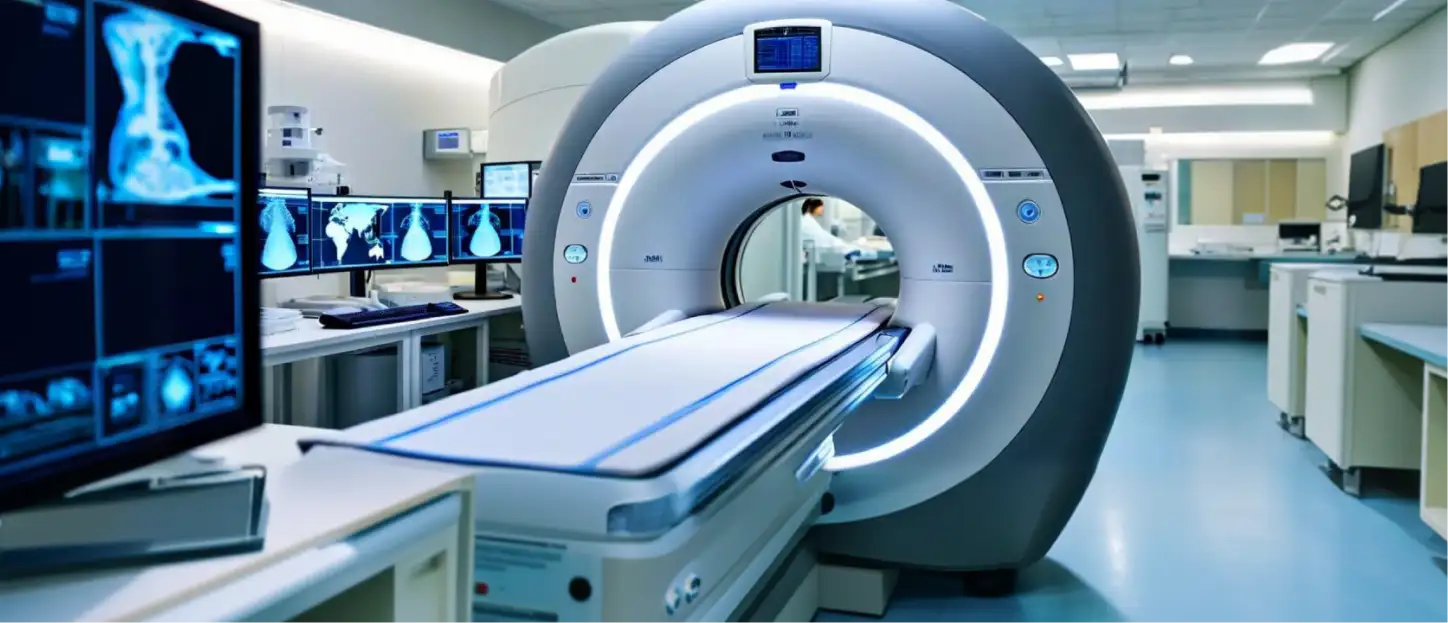
The radiology AI market is rapidly transforming the healthcare industry by combining medical imaging with advanced artificial intelligence technologies. This market focuses on using AI algorithms to analyze X-rays, CT scans, MRIs, and other imaging data more efficiently and accurately than traditional methods.

As of recent estimates, the global radiology AI market has shown impressive growth. Some reports suggest the market was valued at around USD 0.7–0.8 billion in 2025 and is expected to grow significantly in the coming years. Other broader estimates, including AI in radiology solutions, place the market even higher, reaching over USD 14 billion in 2025 with strong future projections.

This variation in numbers reflects how quickly the market is evolving and how different segments (software, devices, and platforms) are expanding at different speeds. What is clear is that radiology AI is no longer a niche technology it is becoming a core part of modern diagnostics.

From small diagnostic centers to large hospitals, healthcare providers are increasingly adopting AI tools. For example, AI systems can now automatically detect abnormalities like tumors or fractures, helping radiologists save time and reduce errors.

Key Growth Drivers of the Market

One of the biggest drivers of the radiology AI market is the growing demand for early and accurate disease detection. Conditions such as cancer, cardiovascular diseases, and neurological disorders require precise imaging analysis. AI helps identify subtle patterns that may be missed by the human eye, leading to earlier diagnoses.

Another major factor is the rising volume of medical imaging. Hospitals today handle thousands of scans daily, creating a heavy workload for radiologists. AI-powered tools can prioritize urgent cases, automate routine tasks, and significantly reduce reporting time. This improves both efficiency and patient outcomes.

The shortage of skilled radiologists is also accelerating adoption. In many regions, especially developing countries, there are not enough specialists to meet demand. AI acts as a support system, assisting doctors in making faster and more consistent decisions.

Government support and regulatory approvals are further boosting growth. Many countries are encouraging the use of AI in healthcare through funding programs and faster approval processes. This has led to increased innovation and faster commercialization of AI solutions.

Market Segmentation & Share Analysis

The radiology AI market can be segmented based on components, technology, application, and end users. Among these, AI-enabled devices and software platforms dominate the market, with devices accounting for a significant share in recent years.

In terms of technology, machine learning and deep learning algorithms are leading the market. These technologies enable systems to learn from large datasets and improve accuracy over time. For example, deep learning models are widely used in image recognition tasks such as detecting lung nodules or breast cancer.

Application-wise, image analysis holds the largest market share. AI tools are extensively used to analyze imaging data, detect abnormalities, and assist in diagnosis. Workflow optimization is another fast-growing segment, where AI helps streamline scheduling, reporting, and data management processes.

When it comes to end users, hospitals dominate the market due to their high patient volume and need for advanced diagnostic tools. However, diagnostic imaging centers are emerging as a fast-growing segment, as they adopt AI to improve efficiency and remain competitive.

Regional Insights & Emerging Markets

Regionally, North America currently leads the radiology AI market, holding the largest share due to advanced healthcare infrastructure, high adoption of digital technologies, and strong regulatory support.

However, the Asia-Pacific region is expected to witness the fastest growth in the coming years. Countries like India and China are investing heavily in healthcare technology and expanding their diagnostic capabilities. For instance, India’s radiology AI market is projected to grow at an impressive CAGR of over 40%, highlighting massive growth potential.

Europe is also showing steady growth, driven by increasing investments in healthcare innovation and collaborations between technology companies and medical institutions.

Emerging markets present significant opportunities due to rising healthcare awareness, increasing disease burden, and the need for cost-effective diagnostic solutions. AI can play a crucial role in bridging the gap between demand and available healthcare resources in these regions.

Key Trends Shaping the Future

One of the most important trends in the radiology AI market is the integration of AI into clinical workflows. Instead of being standalone tools, AI solutions are now being embedded into existing systems like PACS (Picture Archiving and Communication Systems) and EMR (Electronic Medical Records). This makes adoption smoother and more practical.

Another major trend is the rise of cloud-based AI solutions. Cloud platforms allow healthcare providers to access powerful AI tools without heavy infrastructure investment. This is especially beneficial for smaller clinics and rural healthcare centers.

Collaboration between technology companies and healthcare providers is also increasing. Partnerships are driving innovation and enabling the development of more advanced and specialized AI solutions.

Additionally, there is a growing focus on explainable AI. Doctors need to understand how AI systems arrive at their conclusions. Transparent and interpretable models are becoming essential for building trust and ensuring regulatory compliance.

Finally, AI is shifting from just detection to prediction. Future systems will not only identify diseases but also predict patient outcomes and suggest personalized treatment plans, making healthcare more proactive.

Conclusion

The radiology AI market is on a strong growth trajectory, driven by technological advancements, increasing healthcare demands, and the need for faster and more accurate diagnostics. With projections showing exponential growth in the coming years, AI is set to become an indispensable tool in radiology.

While challenges such as data privacy, regulatory concerns, and integration issues remain, the overall outlook is highly positive. Radiology AI is not replacing radiologists it is empowering them to deliver better, faster, and more efficient care.

In simple terms, this market represents the future of medical imaging, where human expertise and artificial intelligence work together to improve patient outcomes on a global scale.

Stay tuned for more such updates on Digital Health News

Follow us

More Articles By This Author


Show All

Sign In / Sign up