




PM Narendra Modi Launches IIT Madras Brain Centre’s Mission for Digital 3D Mapping of 100+ Human Brains
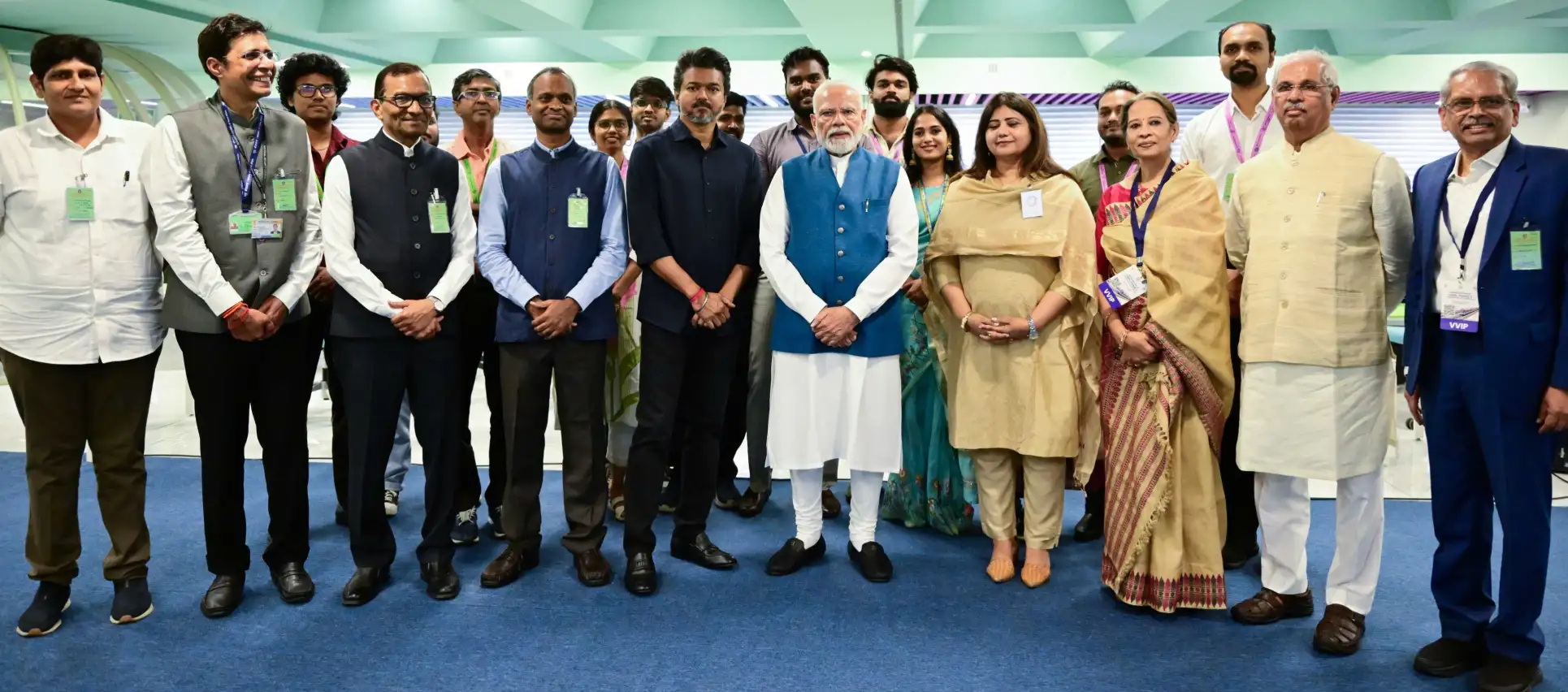
Modi also released C-STROKE, described by the Centre as the world’s first human ischemic stroke atlas, containing more than 1,000 annotated brain sections from a stroke-affected brain.
Prime Minister Narendra Modi has launched the IIT Madras Sudha Gopalakrishnan Brain Centre’s mission to create digital 3D maps of more than 100 human brains at cellular resolution, covering stages from foetal development to old age and including brain-related diseases.
The Sudha Gopalakrishnan Brain Centre (SGBC) uses specialised imaging and computing technologies to transform whole post-mortem human brains into high-resolution digital 3D maps.
These resources are made publicly accessible through a multimodal visualisation and computing platform, enabling researchers and medical professionals worldwide to explore brain structures and investigate disease mechanisms.
PM Modi stated in his X post, “The Sudha Gopalakrishnan Brain Centre at IIT Madras marks an important step in advancing cutting-edge research and innovation in healthcare-related subjects.”
The initiative brings together more than 200 researchers, engineers and technicians at SGBC, over 10 medical institutions across India and more than 30 leading researchers from over 10 countries.
As part of the launch, PM Narendra Modi released C-STROKE, described by the Centre as the world’s first human ischemic stroke atlas. Supported by Prem Watsa, Distinguished Alumnus of IIT Madras and Chairman of Fairfax Financial, the resource connects magnetic resonance imaging (MRI) scans taken before death with whole-brain histology at micron-level resolution.
The atlas contains more than 1,000 annotated brain sections from a stroke-affected brain. It maps cellular indicators associated with neuronal health, neuroinflammation, blood-brain barrier disruption, hypoxia, and axonal injury.
By linking clinical imaging patterns with microscopic tissue findings, C-STROKE offers researchers a way to investigate the cellular changes underlying ischemic stroke.
The digital 3D mapping work has been powered by the Param Shakti supercomputer, supported by the Ministry of Electronics and Information Technology (MeitY).
An open-access data viewer and analytical suite allow researchers and clinicians to examine cerebrovascular pathology across different spatial scales and investigate potential therapeutic targets.
Prof. Mohanasankar Sivaprakasam, Head of SGBC at IIT Madras, said, “It is our utmost privilege to have our PM kicking off this mission that combines brain sciences, engineering, medicine and technology. We envision that these maps and atlases will have significant implications for neuroscience and neuromedicine for decades to come.”
By combining advanced imaging, high-performance computing and open-access research infrastructure, the IIT Madras Brain Centre’s Mission seeks to expand the digital resources available for studying the human brain and neurological diseases.
IIT Madras also recently launched the Centre for 3D Cancer Omics to advance cancer research through three-dimensional tissue imaging, molecular analysis, and data-driven approaches, supported by the Gogri family, IIT Madras, and India’s Translational Research Initiative (ITRI).
Stay tuned for more such updates on Digital Health News
Follow us