NuGenomics Bets on Affordable Genomics to Drive India’s Shift Toward Precision Healthcare

The conversation around precision healthcare has gained significant momentum in recent years as advances in genomics, artificial intelligence, and health data analytics continue to reshape how diseases are prevented, diagnosed, and managed. While precision medicine has traditionally been associated with high costs and limited accessibility, industry stakeholders are increasingly exploring ways to make personalized healthcare solutions available to broader populations.
In India, the push toward preventive and data-driven healthcare is creating new opportunities for genomics-led interventions across areas such as wellness, chronic disease management, fertility, and sports performance. At the same time, questions around affordability, clinical utility, data privacy, and large-scale adoption remain central to the industry's evolution.
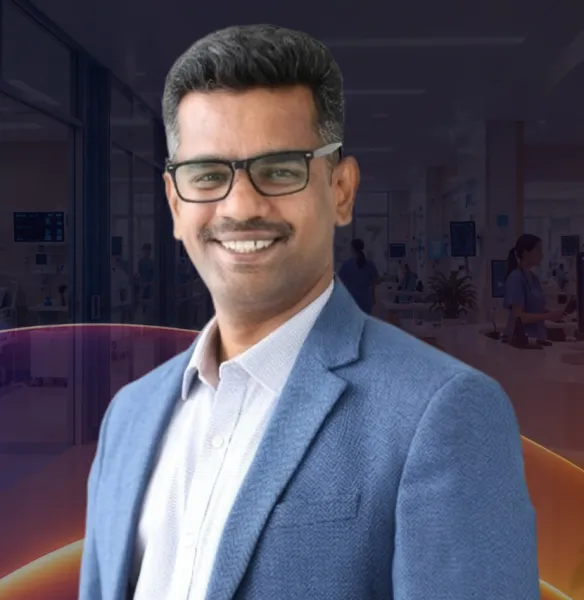
In an exclusive conversation with Rahul Ranganathan, Chief Executive Officer of NuGenomics, we discuss the company's efforts to make genomics more accessible, the role of Indian health data in precision medicine, and the broader opportunities and challenges shaping the future of personalized healthcare.
Affordable genomics sits at the heart of NuGenomics' vision. For years, precision healthcare has largely remained out of reach for most consumers. What has changed now, and what gives you confidence that affordable genomics can become a mainstream healthcare offering in India?
Today, we are seeing the convergence of three things: the cost of genomic technologies has fallen dramatically, data science has become far more capable, and consumers are beginning to think about health proactively.
For a long time, genomics was viewed as something highly specialized and expensive. Today, we are able to combine genetic information with lifestyle, physiological, microbiome, and clinical data to create insights that are far more practical for everyday health decisions.
India is also at an important inflection point. We have a young and digitally engaged population, rising awareness of preventive health, and a high burden of lifestyle-related conditions such as obesity, diabetes, cardiovascular risk, and metabolic disorders. These are exactly the areas where personalized, preventive healthcare can make a meaningful difference.
Our confidence comes from seeing genomics move from a “test report” to a health intelligence layer. When insights are affordable, easy to understand, and connected to nutrition, fitness, medication response and coaching, genomics can become part of mainstream healthcare rather than a niche premium product.
As awareness around preventive healthcare grows, where are you seeing the strongest demand for genomics-led insights today, among consumers, corporates, healthcare providers, or other segments?
The strongest demand is coming from areas where people can see a direct connection between insight and action.
Among consumers, we see strong interest in weight management, metabolic health and diabetes management. We are also seeing interest rise towards age reversal and skin and hair improvement.
Corporates are another important segment. Employers are increasingly realizing that annual health checkups alone do not solve the larger problem of employee health. They are looking for precise, personalized and measurable programs that can improve well-being, reduce long-term risk, and create a healthier workforce.
Healthcare providers are also beginning to see genomics as a decision-support layer, especially in areas such as pharmacogenomics, chronic disease management and nutrition. Sports is an emerging but very exciting area, where athletes and coaches are looking at personalized recovery, injury risk, nutrition, endurance, strength, and performance optimization.
So, demand is not limited to one segment. It is strongest wherever genomics is linked to a clear outcome: better prevention, better personalization, better adherence, or better performance.
A recurring challenge in healthcare is turning health data into actionable outcomes. How do you ensure that genetic insights translate into practical interventions rather than simply becoming another health report for consumers?
This is a very important point. A genetic report by itself is not enough. The real value lies in interpretation, contextualization, and follow-through.
At NuGenomics, our approach is to combine genetic insights with other layers of information such as lifestyle, medical history, blood parameters, microbiome, physical parameters and clinical history. This helps us move from “you have this genetic predisposition” to “here is what this means for your health journey, and here are the interventions that may be relevant.”
We also focus heavily on making insights understandable. People should not have to interpret complex genetic terminology on their own. The reports have to translate data into practical recommendations around nutrition, fitness, supplementation and medication discussions with doctors.
Equally important is expert support. Genetic information should guide better conversations with healthcare professionals and health coaches; it is not meant to replace clinical judgment. Our goal is to create a pathway where the consumer receives not just information, but a structured, personalized plan that can be monitored and improved over time.
NuGenomics has spoken about building a large-scale health database combining genetic, lifestyle, physiological, and clinical information. How critical is India-specific data in advancing precision healthcare, and what gaps still need to be addressed?
India-specific data is absolutely critical. Most global genomic datasets have historically underrepresented the Indian population, despite India being one of the most genetically, culturally, dietarily, and geographically diverse countries in the world. If we rely only on Western datasets, we are building healthcare recommendations that are not fully relevant to Indian biology and lifestyle.
Precision healthcare in India needs Indian reference data across multiple dimensions: genetics, microbiome, blood biomarkers, lifestyle and food habits, environment, disease history and medication response. This is what will allow us to move beyond generic recommendations and build models that are more accurate for Indian consumers and patients.
The gaps are still significant. We need more representative datasets across regions, ethnicities, age groups, socioeconomic backgrounds, and disease categories. We also need longitudinal data, because health risk is not static; it changes with lifestyle, age, interventions, and environment. Finally, the ecosystem needs stronger standards around consent, privacy, interoperability, and clinical validation.
For us, building an India-relevant health intelligence platform is not just a data initiative. It is foundational to making precision healthcare meaningful and equitable for the Indian population.
The healthcare sector is witnessing growing interest in AI-powered decision support. How do you see artificial intelligence complementing genomics, and where do you believe it can create the greatest impact in personalized healthcare?
AI and genomics are highly complementary. Genomics gives us deep biological information, but it is only one layer of the health picture. AI helps bring together multiple layers: genetic predisposition, lifestyle patterns, clinical history, blood markers, microbiome, wearable data, and outcomes over time.
The greatest impact will come from AI’s ability to identify patterns that are difficult for humans to detect manually. For example, AI can help personalize nutrition plans, support pharmacogenomic interpretations, recommend precision interventions, and track whether an intervention is actually improving outcomes.
At NuGenomics, we see AI as the intelligence layer that can turn complex health data into clear, personalized, and continuously improving recommendations. The future is not simply genetic testing; it is adaptive, AI-enabled precision health. However, AI in healthcare must be used responsibly. It should support clinicians, coaches, and consumers, not operate as an opaque black box. Explainability and human oversight are essential.
As genetic testing becomes more accessible, discussions around data privacy and responsible use of health information are becoming increasingly important. How is NuGenomics approaching these concerns while building a large-scale health intelligence platform?
Genetic and health data are among the most sensitive forms of personal information, so privacy and responsible use must be built into the platform from the beginning.
Our approach is based on informed consent, data minimization, secure storage, controlled access, and responsible use of data only for clearly defined purposes. Consumers should understand what data is being collected, why it is being collected, how it will be used, and what choices they have.
We also believe that health intelligence platforms must separate individual-level care from population-level insights. Aggregated and anonymized data can help improve research, algorithms, and public health understanding, but individual privacy must remain protected.
Trust is fundamental in this category. Without trust, genomics cannot scale responsibly. As India’s data protection framework evolves, companies will have to go beyond just compliance and build privacy, transparency, and ethical governance into the operating model and culture of the company.
Despite growing interest in precision medicine, adoption at scale remains a challenge globally. In your view, what are the biggest barriers slowing the wider adoption of genomics-led healthcare in India today?
The first barrier is awareness. Many people still associate genomics either with ancestry testing or with rare disease diagnostics. They do not yet fully understand how genomics can support everyday health in understanding and personalizing nutrition, fitness, medication response, and chronic disease management.
The second is actionability. If a genetic test does not lead to clear next steps, consumers and doctors will not see enough value. We, as an industry, have to move beyond static reports and provide integrated care pathways.
The third is clinician and ecosystem adoption. Doctors, nutritionists, and health coaches all need to understand how to use genomics appropriately. This requires education and stronger integration with existing healthcare workflows.
The fourth and probably the most important is trust, especially around data privacy, interpretation quality, and overclaiming. Genomics is powerful, but it should be communicated responsibly. It is about risk, predisposition, and personalization, not deterministic prediction.
Finally, affordability and access remain important. For genomics-led healthcare to scale in India, solutions must be priced for wider adoption and designed for Indian realities across language, geography, and healthcare access.
Looking ahead, what are the key priorities and growth plans for NuGenomics over the next few years, and where do you see the company positioning itself within India's evolving precision healthcare landscape?
Our priority is to build NuGenomics as a leading precision health intelligence layer for India.
Over the next few years, we will focus on three areas. First, expanding access to affordable genomics-led health solutions across consumers, corporates, healthcare providers, and sports organizations. Second, strengthening our multi-layered health intelligence platform by deeper integration of genetics, lifestyle, microbiome, blood biomarkers, physiological parameters, and clinical data. Third, building deeper India-specific datasets and AI-driven decision support systems that can make recommendations more personalized, contextual, and outcome-oriented.
Our long-term vision is to make precision healthcare accessible, actionable, and mainstream. We do not see genomics as a one-time test. We see it as the foundation for a lifelong, personalized health journey, one that helps individuals, doctors, employers, and healthcare systems move from reactive treatment to proactive and precise interventions.
Stay tuned for more such updates on Digital Health News
Follow us