Bridging the Digital Divide in Indian Hospitals: From Fragmented Systems to Integrated Healthcare IT

Bridging the Digital Divide in Indian Hospitals: From Fragmented Systems to Integrated Healthcare IT

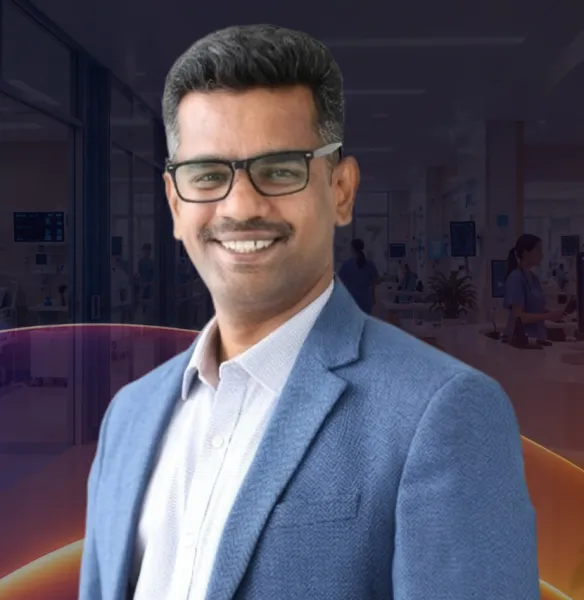
Authored by Venugopal Venkatesh Bhat, Vice President of Group Strategic Initiatives & Chief Operating Officer, MGM Healthcare, Chennai

Healthcare IT adoption in India varies significantly across different sectors, reflecting uneven levels of digital maturity. Corporate hospital chains show the highest adoption, with around 70-80% implementing advanced systems such as integrated Hospital Information Systems (HIS), Electronic Medical Records (EMR), Picture Archiving and Communication Systems (PACS), and some AI-enabled solutions. Large private hospitals demonstrate moderate adoption at approximately 50-60%, typically with partial EMR implementation and some diagnostic system integration.

In contrast, small and mid-sized hospitals and clinics have much lower adoption levels, around 20-30%, often limited to billing software and basic digital records, while continuing to rely heavily on paper-based documentation. Government tertiary hospitals have an estimated 30-40% digital adoption through hospital management systems and national digital health initiatives, whereas primary health centres and rural government facilities remain at about 20-25% adoption due to limited infrastructure and resources. Although basic HIS platforms exist in many institutions, fully integrated EMR systems, AI-driven analytics, and medical equipment connectivity remain below 25-30% across the broader healthcare ecosystem.

While digital technologies such as EMR, Artificial Intelligence, and advanced medical equipment have the potential to significantly improve hospital operations and patient outcomes, the adoption of comprehensive and integrated digital healthcare systems in India is still evolving. From an operational leadership perspective, addressing these structural gaps and practical challenges is essential to unlock the full potential of healthcare technology.

Fragmentation: A Challenge to Integration

One of the most visible gaps is the fragmentation of digital systems within hospitals. In many institutions, outpatient (OP) services, inpatient (IP) management, diagnostic systems, and medical equipment operate on separate platforms. Outpatient consultation software, admission and billing systems, laboratory systems, and radiology platforms are often supplied by different vendors.

This leads to multiple data silos within the same hospital. As a result, a patient’s medical information may be scattered across different systems rather than being available as a unified clinical record. Such fragmentation affects care continuity, increases administrative workload, and reduces the effectiveness of clinical decision-making.

Inconsistent EMR Adoption Remains an Issue

Another significant challenge lies in the adoption and usage of EMR systems by healthcare professionals. Even where EMR platforms are implemented, consultants, nursing staff, and administrative teams often continue to rely on paper-based documentation.

Consultants may prefer handwritten notes because they feel it allows faster consultations, while nursing staff may be more comfortable with traditional charting methods. In some hospitals, this results in parallel documentation, both paper and digital, which defeats the purpose of digitization and leads to incomplete digital records. Without consistent data capture in the EMR, hospitals cannot build reliable digital patient histories.

Limited Infrastructure & Integration Constraints

Infrastructure and cost considerations also play an important role in slowing digital transformation. Implementing a robust EMR system requires substantial hardware infrastructure, including computers in consultation rooms, nursing stations, wards, and diagnostic areas. Hospitals must also invest in servers, networking infrastructure, cybersecurity systems, and IT support teams. Hardware requires regular maintenance, upgrades, and replacement, adding to operational costs. For many hospitals, especially mid-sized institutions, these investments can appear financially challenging.

Medical equipment integration presents another major operational issue. Hospitals often procure diagnostic devices such as laboratory analysers, imaging systems, ICU monitors, ECG machines, and echocardiography equipment from multiple vendors. Each device may have its own proprietary software and communication protocol.

Because of these differences, many devices operate as standalone units rather than being digitally connected to the hospital’s EMR or HIS. As a result, diagnostic reports are frequently transferred manually, increasing the risk of transcription errors and delays. In such environments, the true potential of both medical equipment and digital hospital systems remains underutilised.

AI’s Potential is Tied to Data Quality

Artificial Intelligence is often discussed as the next major transformation in healthcare, but its effectiveness depends entirely on data availability and quality. AI systems can provide predictive analytics, diagnostic support, and operational insights only when they have access to structured and reliable data. If patient information is incomplete or stored in fragmented systems, AI tools cannot generate meaningful results. In simple terms, AI is only as powerful as the data that feeds it. Without consistent digital documentation, the benefits of AI remain limited.

Additionally, AI-enabled medical equipment and advanced digital platforms can be expensive. End-to-end AI-driven systems that combine equipment, analytics, and software integration are not always economically viable for many hospitals. This makes it important to identify cost-effective ways to leverage existing equipment while gradually introducing digital intelligence.

Need for Interoperability & Phased Transformation

Data security and interoperability concerns also need attention. Hospitals must ensure that patient information is protected through secure data storage, controlled access, and strong cybersecurity frameworks. At the same time, hospitals must improve digital connectivity with external stakeholders such as insurance providers and Third Party Administrators (TPAs). Currently, many hospitals still rely on manual submission of documents for insurance processing. Integrating digital medical records with external claim systems can significantly reduce administrative delays and improve operational efficiency.

Addressing these challenges requires a strategic and phased approach. Hospitals must move toward integrated digital health platforms that connect outpatient services, inpatient management, diagnostics, and medical equipment within a single ecosystem. Systems should be selected based on interoperability standards that allow devices and software from different vendors to communicate seamlessly. Middleware solutions can help connect existing equipment to EMR systems without requiring complete replacement.

Equally important is organizational change management. Consultants, nurses, and administrative staff must receive adequate training and support to transition from paper-based workflows to digital systems. When clinicians see that EMR systems reduce duplication, improve accessibility of patient records, and support clinical decision-making, adoption improves significantly.

Conclusion

Digital transformation in healthcare is not merely a technological upgrade; it is an operational transformation. For hospital leadership, the goal is to create a connected ecosystem where clinical data flows seamlessly across departments, equipment, and external stakeholders. When digital platforms, medical devices, and healthcare professionals operate within an integrated system, hospitals can deliver safer, faster, and more efficient care.

From a Chief Operating Officer’s perspective, bridging the digital gap is essential not only for operational excellence but also for building the hospitals of the future.

Disclaimer: This is an authored article, DHN is not liable for the claims made in the same.

Stay tuned for more such updates on Digital Health News

Follow us

More Articles By This Author


Show All

Sign In / Sign up