From Single Patients to Connected Care: Rethinking Digital Health in India

From Single Patients to Connected Care: Rethinking Digital Health in India

Advertisement

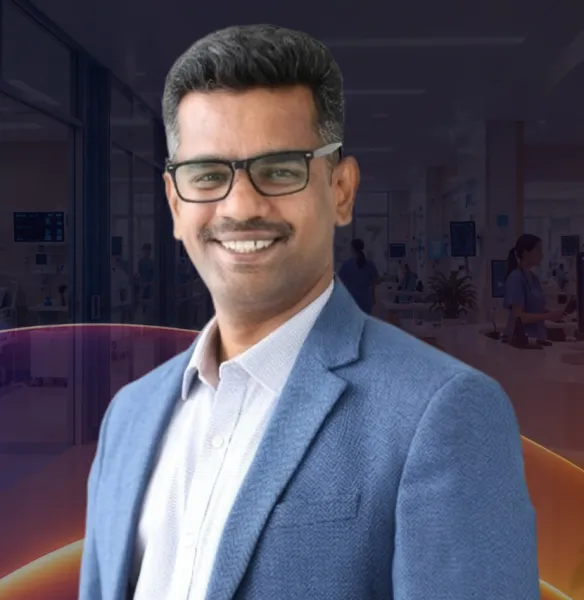
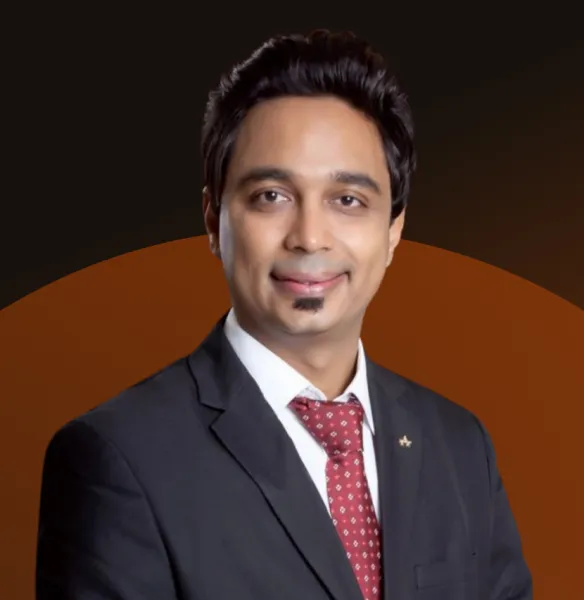
Dr Stephen K Mathew, COO, Sringeri Sharada Equitas Hospital, Chennai

Walk the corridors of any government medical college or mid-tier private hospital in India, and the first thing you notice isn’t clinical activity - it’s people. Waiting areas overflow not with lone patients but with clusters of two, five, sometimes ten family members. An elderly man recovering from bypass surgery may have his son managing insurance paperwork, his daughter-in-law coordinating with nurses, and his brother-in-law relaying updates to relatives in another city. A woman admitted for a complicated pregnancy may have her mother, mother-in-law, and husband rotating through in shifts, each carrying different fragments of information, each asking the same questions to different nurses, each making independent decisions about food, medication access, and financial approvals.

This is not non-compliance or system failure. It is the architecture of Indian family-driven care, and digital healthcare now has an opportunity to better understand and integrate into care design.

The Collectivist Reality

India’s approach to illness is rooted in a deeply collectivist cultural framework. Healthcare decision-making tends to occur at the collective level, with family members playing a significant, and sometimes conflicting, role in shaping treatment choices. This cuts across urban and rural, educated and uneducated populations alike. In many Indian families, a cancer diagnosis is first shared with a senior family member, who then decides how and whether to tell the patient.

Research across critical care settings in India and Bangladesh, involving over 1,000 hours of observation, has identified family inclusion not as a peripheral nicety but as a core mediator of care quality. Studies on neonatal ICUs have reinforced the same point: when family involvement is designed for rather than managed around, outcomes measurably improve.

The Invisible Workforce: India’s Attenders

One of the most underappreciated features of Indian hospital life is the role of the attender or bystander, the family member officially permitted to remain with the patient. In public hospitals, attenders appear in ward registers; private hospitals issue attender passes. Yet within most digital hospital ecosystems, the attender remains largely absent from care workflows, communication systems, and patient engagement design.

Attenders in Indian hospitals perform a remarkable range of functions. They collect prescriptions, carry blood samples to lab windows, navigate insurance counters, hold patients’ ABHA (Ayushman Bharat Health Account) cards, and communicate medical updates to extended family networks, increasingly through digital channels such as WhatsApp. Despite their central operational role, these interactions are rarely reflected in conventional patient journey mapping. Most healthcare workflows continue to be designed as linear clinical pathways from registration to discharge, whereas the actual care journey in India is far more dynamic, collaborative, and digitally interconnected.

How Digital Pathways Leave Families Behind

India’s Ayushman Bharat Digital Mission represents an ambitious technical infrastructure, with over 1,000 private companies integrated into its ecosystem. Its architecture has accelerated the standardisation of digital identities, health records, and consent-based data exchange. However, the framework is still evolving to better reflect the realities of family-supported care models common across India. The ABHA ID is issued to an individual. Health records are linked to that individual. Consent for data sharing is typically structured around individual ownership.

In practice, however, healthcare access in India is often mediated through family networks. Elderly patients, individuals in rural regions, and those with limited digital literacy frequently rely on relatives’ smartphones, messaging platforms, and caregiver support to access healthcare services and teleconsultations. Family-assisted digital access has effectively become a routine operational layer within Indian healthcare delivery.

This creates important opportunities for the next phase of digital health innovation. Hospital communication workflows, discharge instructions, medication reminders, and follow-up alerts are directed to a single registered mobile number that may belong to a son in another city who cannot physically act on the information. Designing systems that support authorised multi-caregiver access, contextual communication pathways, and collaborative care coordination could significantly improve continuity of care, patient engagement, and healthcare outcomes in India’s uniquely family-driven care environment.

The Repeated Query Problem

One of the most frustrating symptoms of this misalignment is the phenomenon of repeated queries. A ward nurse explains post-operative care at 10 a.m. By 2 p.m., a family member who wasn’t present asks the same questions. By 6 p.m., another relative asks the treating physician for an update. By the next morning, a new rotation has arrived, and the cycle begins again. In such contexts, information shared with only one individual rarely reaches the entire caregiving network. This creates a strong case for digital health systems that support shared caregiver communication, coordinated updates, and more collaborative patient engagement models.

Designing for the Family, Not Against It

Redesigning patient journeys for the Indian context does not require discarding digital innovation; it requires a conceptual shift from patient-as-unit to family-as-unit-of-care. Hospital information systems should support multi-stakeholder access, allowing patients to designate family members as care participants with role-based access to clinical information. Discharge summaries should be designed for distribution. Attenders must be formally mapped as personas in patient journey design. Teleconsultation platforms should allow family-inclusive sessions by default.

India’s National Health Policy 2017 emphasises people-centred care. But in the Indian healthcare context, truly people-centred care must extend beyond the individual patient to acknowledge the larger family-supported caregiving ecosystem.

The family is always at the bedside. The next evolution of digital health systems should be to meaningfully incorporate and support that reality.

Disclaimer: This is an authored article; DHN is not liable for the claims made in the same.

Stay tuned for more such updates on Digital Health News

Follow us

More Articles By This Author


Show All

Sign In / Sign up