Scalable Healthcare Beyond Metros: Hospitals, Diagnostics, and Digital Models Reshaping India’s Care Delivery

Advertisement
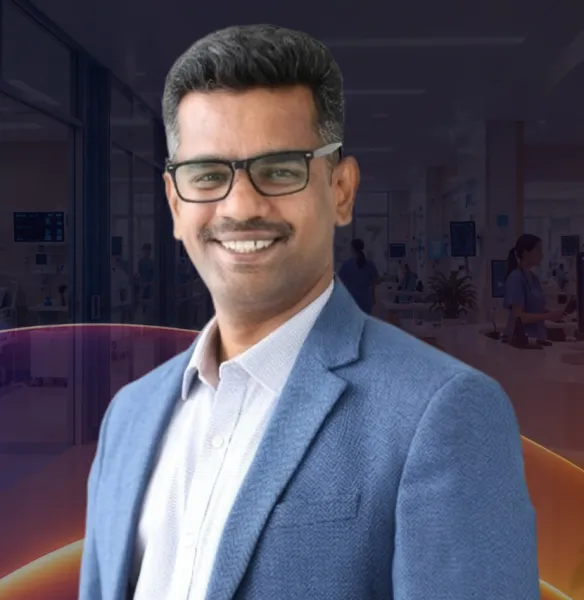
By- Ramesh Kannan, Partner at Somerset Indus Healthcare Fund
The growth of scalable hospitals and diagnostic and diagnostic ecosystems (radiology, lab) beyond metros in tier II and tier III is driven by and dependent on technology, which mitigates the lack of a skilled and trained labour force.
The most important part of any offering is the product/service fit to the population.
Secondly, the costs of operating are very important
Thirdly, the price points for self-pay, insurance, and the government are critical.
Providing what is required, scaling and expanding when appropriate, are key to viable businesses to survive and grow.
In the current context, big iron medical equipment, mid-range medical equipment, medical devices, etc., are available to budding entrepreneurs either as pre-owned, financed or placed to help the market grow.
India requires Oncology, Nephrology, Neurology, etc., and these require the availability of expensive equipment in a model that makes it viable and feasible to install in these geographies. While physical requirements are one of the greater challenges, reading and understanding the data to report correctly and ensure the required intervention is done to save patients.
It is to the credit of India and its technologists and startup entrepreneurs that a lot of this medical equipment/devices are managed, paramedics and technicians are connected, and care enables seamless movement of data to the doctors located anywhere to read, report, and refer to the right treating doctor. This has significantly opened up the market
Point of care devices supporting preventive care, mobile vans taking diagnosis closer to where the patient lives, digital x-rays, all of them have made it easier and more convenient for healthcare to access the growing market.
One of the biggest advantages in the lab business is the rental reagent model, where the lab investigative equipment is placed free at the doctor’s end, and the consumable (in this case, reagent) is charged per use. This helps the growth of the lab business much faster.
The technology leading to remote care capabilities, and the active participation of PPP plans to help advanced care delivered at optimal cost with support from the government on scale, is a game-changing measure truly taking healthcare closer to home.
Increasing medical education and opening of schools/colleges beyond tier I cities, coupled with major nursing technician, paramedics, and post-graduation courses offered by existing, reputed hospitals, are enabling talent to be available.
Operation optimisation comes through technology adoption, both enterprise and business, to deliver scale and size at lower costs.
Engaging with the doctors on fixed, floating models and rewarding them through ESOP is helping in moderating the cost linked to volume.
Eliminating routine errors, duplication, repetitive work, etc., is being seen by the adoption of AI, wherein productivity and efficiency is gaining ground.
The most attractive technological development is the game-changing voice-to-text conversion, both in OPD and IPD, mitigating errors, unlocking time for doctors, instant documentation, digital files, easy retrieval, data analysts, trends understanding, all of which enable better treatment.
The urgency and renewed focus on accreditation (NABH, NABL) are bringing in standardisation.
Affordable HMIS coupled with interoperability leads to better utilization of time, reducing errors, avoiding repeat investigation, and ensuring better outcomes.
The technology linking the equipment and after-sales services provider – biomedical service engineer in real time is ensuring better adoption and use of medical equipment, and reducing maintenance costs.
Communication is happening through very active social media and digital methodologies, leading to better management of chronic care both at the hospital and at home.
There is a growing awareness of patients' experience and relationship management with the entire enterprise participating to arrive at a higher outcome medically and personally.
A new emerging trend is an OPD insurance based on a subscription model, wherein on paying a fixed fee per annum, the outpatient services, be it consulting, diagnostics, lab, and pharma, are taken care.
In addition, rightful reference to the hospital is made to treat and cure early.
There is an active collaboration between various schools of Medicine, Allopathy, Ayur Vedha, Homeopathy, Unani, etc. to offer an integrated care, affordable and result-oriented.
In the diagnostic phase, in addition to general diagnostics, specialised diagnostics like Genomics, Oncology, Nephrology, Neurology, etc., are coming into play, resulting in specialised care now being available.
A new trend emerging is micro health, wherein a small to medium hospital with limited services and a technology-enabled platform covers 3-5 km and provides urgent care. This is particularly true in big, congested cities.
Diagnostic companies are innovating by working on the pay once for 1year, use services (select) as many times required, and pay for other services at a lower cost, thereby making tests more regular, monitoring more effective, and treating much better
Ambulatory services with all the bells and whistles to seamlessly connect a patient on the bed to the doctor at the hospital, and treatment starting immediately on wheels is gaining ground and saving lives. This again is a feature more prevalent in the Tier I cities.
Initiatives are being tested out on our mental health, companion dogs breeding, trained dogs’ availability, better mobility for those challenged, fertility advancement for men (Andrology), and women to open up childbearing possibilities.
Net, the entrepreneurial Indian is working on business models, low-cost options, high-impact initiatives, overcoming limitations of talent paucity, overcoming impediments, overcoming financial inadequacies, and finding ways and means to continually grow healthcare both within and outside India and pave the way for Indian healthcare 2.0.
Stay tuned for more such updates on Digital Health News