NIMHANS Launches India’s First Endovascular Innovation Lab, Unveils ‘PARICHAY’ Stroke Device Prototype
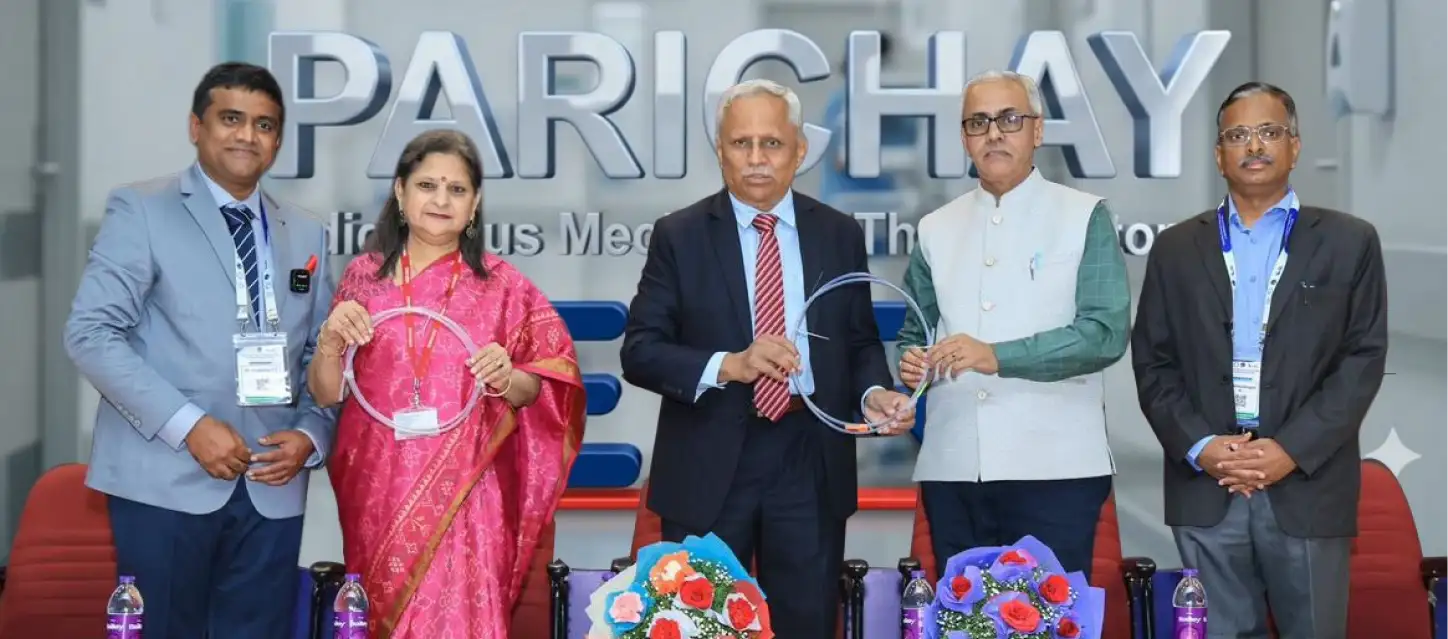
The newly established endovascular innovation lab is dedicated to the research, design, development and clinical translation of neurovascular technologies.
The National Institute of Mental Health and Neurosciences (NIMHANS) has launched India’s first dedicated Endovascular Research and Innovation (EVRI) Laboratory and introduced the alpha prototype of ‘PARICHAY’, an indigenous stroke device prototype designed for acute ischemic stroke intervention.
The EVRI Laboratory has been established with support from the Science and Engineering Research Board (SERB) and now functions under the Anusandhan National Research Foundation (ANRF), Government of India.
The newly established endovascular innovation lab is dedicated to the research, design, development and clinical translation of neurovascular technologies.
By bringing together clinicians, engineers and researchers, the laboratory aims to accelerate the development of indigenous solutions for complex neurological and vascular conditions while reducing dependence on imported medical devices.
‘PARICHAY’, an indigenous stroke device prototype developed for mechanical thrombectomy procedures, was unveiled by Dr B. N. Gangadhar, former chairman of the National Medical Commission and former director of NIMHANS.
NIMHANS Director Dr Prabha S. Chandra emphasized the importance of innovation-driven healthcare and the need to build domestic capabilities in high-end medical technology development.
Dr Lingaraju T. S., principal investigator of the EVRI Laboratory, highlighted the role of clinician-led innovation in transforming research into practical and affordable healthcare solutions.
Experts from institutions including the Indian Institute of Science (IISc), Indian Institute of Management Bangalore (IIMB), Sree Chitra Tirunal Institute for Medical Sciences and Technology (SCTIMST), C-CAMP, Lok Nayak Hospital, Maulana Azad Medical College, RV College of Engineering and industry partners participated in discussions.
Deliberations focused on intellectual property rights, technology transfer, academia-industry partnerships, start-up development and biomedical device innovation.
Stay tuned for more such updates on Digital Health News
Follow us