New Swasth Bharat Portal Aims to Connect India’s Healthcare Systems Digitally

The portal has been developed by the Ministry of Health and Family Welfare (MoHFW) to connect multiple public health programme applications through a single digital framework.
India has introduced the Swasth Bharat Portal as part of ongoing efforts to streamline digital health systems and improve coordination among national healthcare programmes.
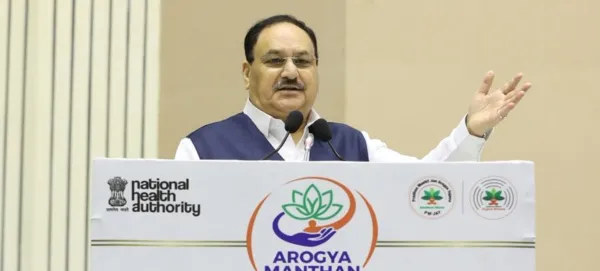
The platform was launched by Union Health Minister Jagat Prakash Nadda during the 10th National Summit on Innovation and Inclusivity: Best Practices Shaping India’s Health Future.
Under the new system, frontline healthcare workers such as ASHAs, ANMs, Community Health Officers and Medical Officers will be able to access several programme interfaces through a common platform. The Ministry said this approach is intended to reduce duplicate data entry, minimise the use of multiple login credentials, and simplify reporting workflows.
The portal has been developed by the Ministry of Health and Family Welfare (MoHFW) to connect multiple public health programme applications through a single digital framework. It uses an API-based structure to enable interoperability between systems that have traditionally functioned independently, often resulting in fragmented datasets and repeated manual reporting.
The portal also includes data visualisation and monitoring tools aimed at supporting programme tracking and decision-making at different administrative levels. Officials stated that the platform is aligned with the Ayushman Bharat Digital Mission (ABDM), allowing integration with the Ayushman Bharat Health Account for secure exchange of digital health records.
In addition, the system is expected to connect with national databases, including the Healthcare Professionals Registry and the Health Facility Registry, to support standardised data exchange across healthcare services.
According to the ministry, implementation of the unified platform could lower infrastructure load by 20–30 percent while reducing data entry efforts and duplication of human resources by 20–40 percent. The integration is also expected to improve the availability of consolidated health data for programme management and operational planning.
The Ministry noted that the portal has been designed to support data-driven governance by consolidating multiple digital health systems into a single interoperable structure.
Stay tuned for more such updates on Digital Health News
Follow us