ICMR Pushes Medtech Partnerships to boost Health Research Systems
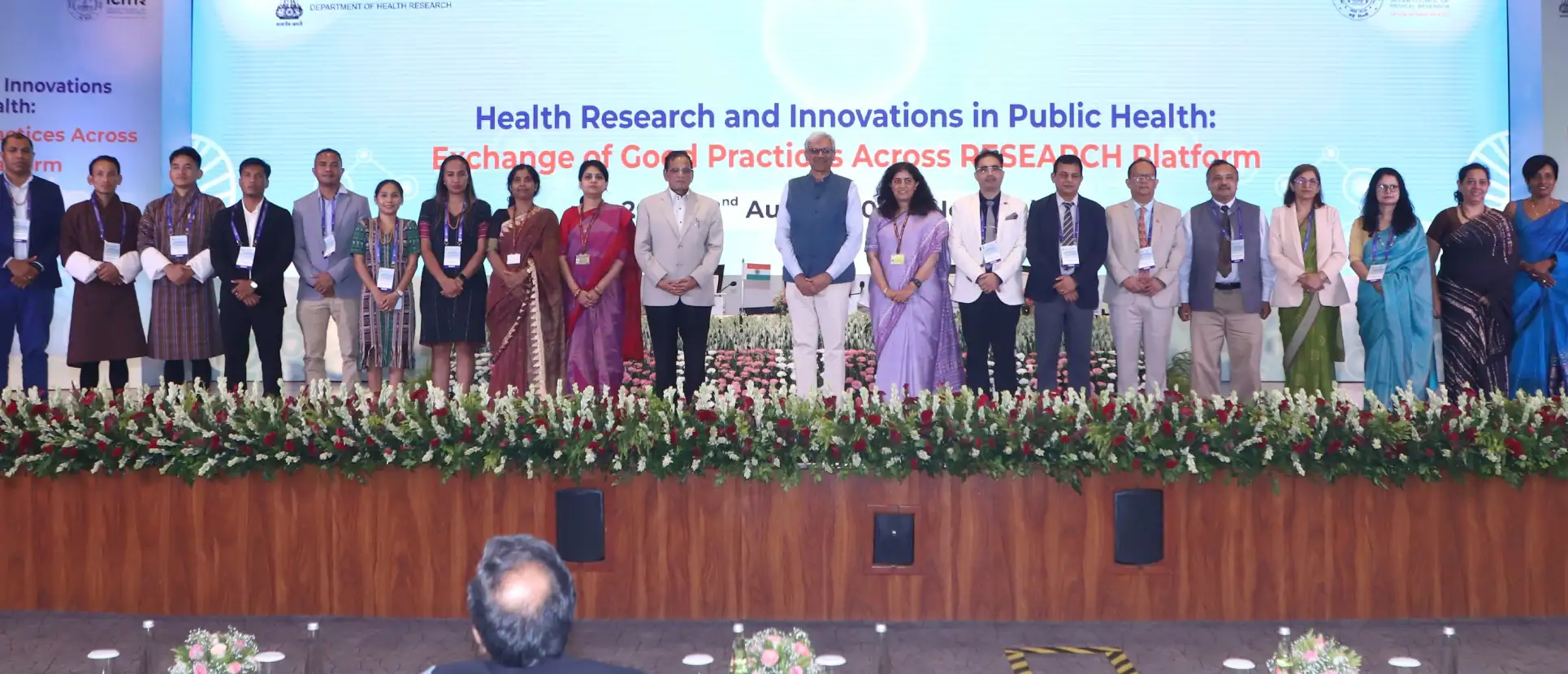
Representatives from Bhutan, Nepal, Sri Lanka, Timor-Leste, and India participated in the meeting, which marked a step forward in fostering regional cooperation to ensure that research informs policy, addresses priorities, and builds sustainable systems.
The Indian Council of Medical Research (ICMR), Department of Health Research (DHR), has convened a high-level regional dialogue on strengthening health research systems at Sushma Swaraj Bhawan, New Delhi, on August 22.
Representatives from Bhutan, Nepal, Sri Lanka, Timor-Leste, and India participated in the meeting, which marked a step forward in fostering regional cooperation to ensure that research informs policy, addresses priorities, and builds sustainable systems.
Sessions were chaired by senior experts including Dr V.K. Paul, Member, NITI Aayog; Amit Agrawal, Secretary, Department of Pharmaceuticals; Dr Rajeev Singh Raghuvanshi, Drugs Controller General of India; Prof Dr K Srinath Reddy, Honorary Distinguished Professor, Public Health Foundation of India (PHFI); Dr Shamika Ravi, Member, Economic Advisory Council to the Prime Minister; Dr Shivkumar Kalyanaraman, CEO, Anusandhan National Research Foundation; Rajesh Bhushan, former Secretary, Ministry of Health and Family Welfare; and Dr Renu Swarup, former Secretary, Department of Biotechnology.
Sharing India’s progress in medtech innovation, Amit Agrawal said, “India today stands at the forefront of scientific research and innovation for health. I urge our research platform partners to actively engage with India’s open innovation platforms, so that together we can nurture start-ups, accelerate MedTech breakthroughs, and deliver affordable solutions that serve both economic growth and the larger public good.”
Dr Rajiv Bahl, Secretary DHR and Director-General ICMR, added during the way forward session, “Global partnerships and science diplomacy have always been central to India’s strategy. South–South collaboration remains a priority through joint projects and capacity building to ensure that the region benefits from each other’s expertise. Above all, science and research must serve people directly.”
Countries reached consensus on three key areas: strengthening South–South collaboration to address shared challenges such as antimicrobial resistance, non-communicable diseases, and One Health; pooling resources and expertise in medical technology innovation, training, and ethics; and establishing mechanisms to ensure research findings directly inform policy.
ICMR further noted that the organizarion is committed to sharing resources, including ethics review tools and free online training, enabling countries to adapt them without starting from scratch.
Future plans include annual or biannual convenings, exchange visits, and joint programmes in research methods, ethics, grant writing, and science communication.
The meeting concluded with a shared commitment to shift from knowledge-sharing to joint action, with each country exploring leadership in thematic areas such as pandemic preparedness, infectious and vector-borne diseases, non-communicable diseases, maternal health, and medical innovation.
The event was attended by Dr Vishwajeet Kumar, founder and CEO of Community Empowerment Lab, along with several senior leaders from ICMR including Dr Sanghamitra Pati, Manisha Saxena, Dr R S Dhaliwal, Dr Roli Mathur, Dr Taruna Madan, Dr Tanvir Kaur, and Dr Nivedita Gupta, who moderated discussions.
Stay tuned for more such updates on Digital Health News
Follow us