How MedTech Innovation is Reshaping Modern Healthcare Delivery

How MedTech Innovation is Reshaping Modern Healthcare Delivery

Advertisement

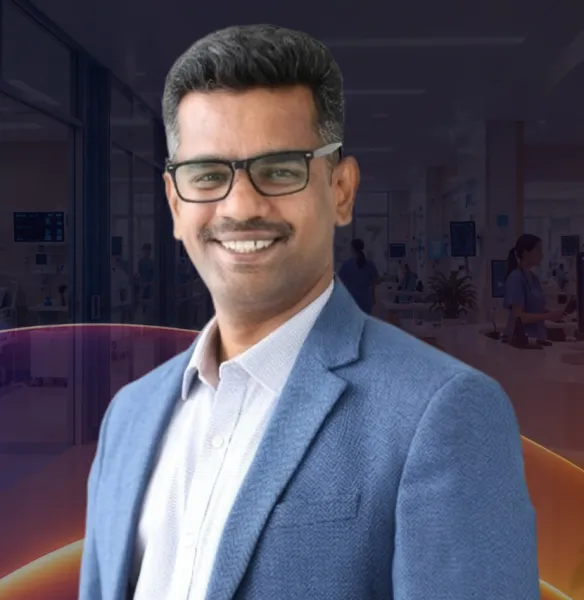
By: Dr. Shravan Subramanyam, Managing Director, BPL Medical Technologies

For decades, progress in healthcare was largely measured through physical expansion. More hospitals, more beds, more equipment, and larger clinical teams were seen as indicators of a stronger healthcare system. While infrastructure remains essential, healthcare leaders today are confronting a different reality. Rising patient volumes, increasing chronic disease burdens, workforce shortages, and growing financial pressures have exposed the limitations of relying on expansion alone.

The challenge facing healthcare today is not simply one of capacity. It is one of delivery. Patients expect faster diagnoses, seamless experiences, personalized treatment, and greater access to care. Meeting these expectations requires healthcare systems to become smarter, more connected, and more efficient. This is where MedTech is beginning to play a transformative role. No longer confined to medical devices, MedTech is increasingly shaping how healthcare is delivered, how decisions are made, and how outcomes are achieved.

Why Healthcare Leaders Must Rethink Delivery Models

Healthcare today does not suffer from a shortage of medical knowledge. The challenge lies in how that knowledge moves through the system. Patients often encounter delays between diagnosis and treatment, information remains fragmented across departments, and clinicians frequently spend valuable time navigating administrative processes rather than focusing on patient care.

For years, the response to rising demand has been to expand infrastructure. While this approach has its place, it does little to address the inefficiencies that exist within the system itself. A larger hospital network can still struggle with disconnected workflows and inconsistent patient experiences.

Healthcare leaders are therefore beginning to shift their attention from capacity building to care delivery optimization. The focus is moving towards creating systems where information flows seamlessly, decisions are made faster, and care pathways are more coordinated. Technology is becoming central to this transition because it enables healthcare organizations to improve efficiency without compromising quality.

The Competitive Advantage Is Moving from Treatment to Early Intervention

Traditionally, healthcare has been built around treating illness after symptoms appear. However, some of the most important advances in healthcare today are happening before a patient ever reaches a hospital bed.

Advancements in diagnostics, imaging technologies, predictive analytics, and artificial intelligence are enabling clinicians to identify risks earlier than ever before. The conversation is gradually shifting from treatment to anticipation. Instead of asking how effectively a disease can be managed, healthcare providers are increasingly asking how early it can be detected.

This shift is particularly significant in areas such as cancer, cardiovascular disease, and diabetes, where early diagnosis can dramatically improve outcomes. It also makes economic sense. Detecting a condition early is often less costly than managing it once complications arise.

As healthcare systems become increasingly outcome-focused, early intervention is emerging as a critical differentiator. Organizations that can identify risks sooner and act faster will be better positioned to improve both patient outcomes and operational efficiency.

Continuous Care will Replace Episodic Care

However, the current practice of healthcare has been largely episodic for most of its modern history, implying that patients come to see a doctor once they feel sick, receive help, and come back only when another problem emerges. Although this approach works well for urgent problems, it is not appropriate for an environment where many chronic diseases make up a major portion of healthcare consumption.

Fortunately, MedTech can help to transform the situation for the better. With remote patient monitoring systems, wearables, and connected healthcare equipment, doctors will be able to monitor patients' health status after their visit to the clinic.

Thus, it opens the door for preventive actions that allow for identifying any risk factors before the emergence of complications that may worsen patients' conditions. The adoption of the new care approach can help those who have chronic diseases live better lives, reduce the number of hospital visits, and gain more confidence in the management of their health.

The Most Valuable Technologies are the Barely Visible Ones

Healthcare professionals are working in increasingly demanding environments. Administrative responsibilities continue to grow, patient expectations are rising, and workforce shortages remain a concern across many healthcare systems.

Against this backdrop, the success of any technology depends on whether it makes a clinician's job easier, not harder.

The most effective MedTech solutions are rarely the most visible. They are the systems that quietly reduce documentation burdens, simplify access to information, automate repetitive tasks, and support better decision-making without disrupting clinical workflows.

Technology should not compete for a clinician's attention. It should help clinicians focus their attention where it matters most: on patients.

This is particularly important as healthcare organizations seek to address clinician burnout while maintaining high standards of care. Innovations that reduce cognitive burden and streamline workflows are not simply operational improvements. They are becoming essential tools for delivering patient-centric, high-quality healthcare.

MedTech is Expanding Access Without Expanding Infrastructure

One of the most persistent challenges in healthcare is ensuring that quality care reaches everyone who needs it. Historically, improving access meant building more facilities, recruiting more specialists, and expanding physical infrastructure. While those investments remain important, they are often expensive, time-consuming, and difficult to scale. Technology is changing that equation.

Through telemedicine, connected diagnostics, and digital health platforms, healthcare organizations can now extend expertise far beyond traditional care settings. A specialist based in a metropolitan hospital can support patients hundreds of kilometres away. Diagnostic insights can be shared instantly. Clinical decisions can be supported without requiring patients to travel long distances.

The real breakthrough is not remote connectivity. It is the ability to scale expertise. MedTech allows healthcare systems to extend knowledge, capability, and quality of care without proportionately expanding physical infrastructure. In a country like India, where healthcare access remains uneven, this capability could prove transformational.

Conclusion

The healthcare organizations that will define the next decade are unlikely to be those with the largest footprint. They will be those who build the most effective care delivery models.

Healthcare is at a point where better outcomes can no longer be achieved through infrastructure expansion alone. The ability to diagnose earlier, make informed decisions faster, support clinicians more effectively, and reach patients beyond traditional care settings is becoming equally important.

MedTech is playing a central role in this shift. Its value lies not in the technology itself, but in its ability to solve real healthcare challenges and help providers deliver better care with greater efficiency.

For healthcare leaders, the conversation is no longer about adopting technology for the sake of innovation. It is about identifying where technology can create a meaningful impact for patients, clinicians, and healthcare systems alike. Those who approach MedTech with this mindset will be better equipped to meet the growing demands of modern healthcare and build care delivery models that are prepared for the future.

Stay tuned for more such updates on Digital Health News

Follow us

More Articles By This Author


Show All

Sign In / Sign up