HIMSS26 Highlights Shift Toward Agentic AI Across Healthcare IT Workflows
HIMSS26 announcements spotlight the rise of Agentic AI in healthcare IT, with vendors unveiling autonomous solutions for revenue cycle management, clinical workflows, telehealth, and enterprise infrastructure.
HIMSS26 opened with a clear signal that healthcare AI is entering a new phase. While previous years centered on the promise of generative AI, early announcements from the conference point to a growing focus on “Agentic AI,” autonomous systems designed to execute workflows, manage operational processes, and operate within complex healthcare IT environments.
Across revenue cycle management, clinical workflows, telehealth, and enterprise infrastructure, vendors introduced platforms aimed at reducing manual administrative tasks and supporting clinical operations through automation.
Autonomous Revenue Cycle Management Gains Momentum
Several vendors unveiled AI-driven solutions targeting revenue cycle management, an area where health systems continue to face administrative burden and financial inefficiencies.
FinThrive introduced its Fusion data architecture, positioning agentic AI as an operational model capable of identifying financial risk and executing workflows across more than 50 use cases. According to the company, early adopters have reported recovering approximately 1.1% of underpayments, representing nearly $1 million in recovered revenue within three months.
Innovaccer launched Flow Capture, a system that combines ambient documentation with automated coding technology. The platform is designed to autonomously code about 80% of patient encounters, while complex cases are routed to certified coders.
XiFin also announced its Empower AI ecosystem, featuring an autonomous Appeals Agent capable of reviewing denied claims, retrieving medical necessity documentation, drafting appeal letters, and submitting them to payors within defined compliance guardrails.
Clinical Copilots and AI-Powered Care Environments
Beyond administrative automation, several vendors showcased technologies aimed at improving clinical workflows and reducing friction at the point of care.
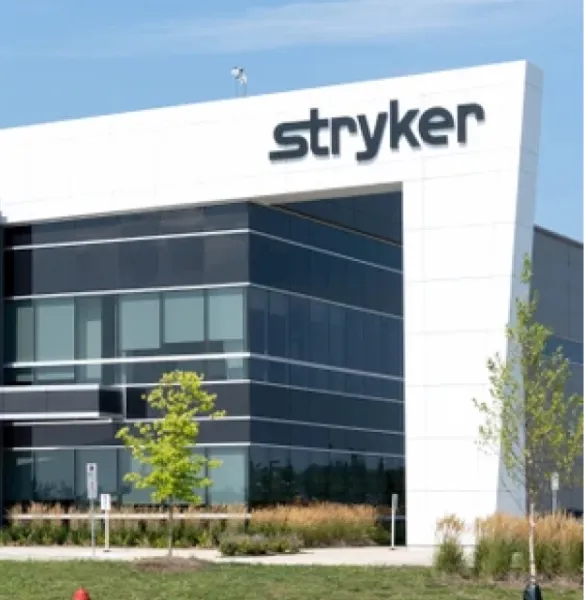
Stryker introduced its SmartHospital Platform, designed to connect devices, care teams, and clinical data through ambient sensors and virtual nursing workflows. The platform includes the Engage middleware engine, which filters alarms and streamlines communication across care teams.
Telehealth company VSee launched an autonomous telehealth robot equipped with LiDAR and infrared night vision that can navigate hospital corridors independently to conduct bedside virtual rounds and support telestroke responses.
ModMed demonstrated Scribe 2.0, an AI-powered documentation tool integrated within its electronic health record platform. The system has reportedly been used in more than 240,000 clinical visits within its first 100 days and is designed to support specialty workflows such as dermatology and orthopedics.
Wolters Kluwer also announced the integration of its UpToDate Expert AI with Microsoft Dragon Copilot and Microsoft Teams, embedding clinical decision intelligence directly within existing clinician workflows.
Expanding Care Beyond Hospital Walls
Several announcements focused on extending healthcare intelligence beyond traditional clinical settings.
Sword Health introduced Dawn, a direct-to-consumer AI mental health platform built on a proprietary clinical model and supported by safety classifiers designed to guide evidence-based therapy and interventions.
Kneu Health presented data from Cedars-Sinai demonstrating the use of an FDA-cleared smartphone application for continuous neurological monitoring in Parkinson’s disease patients. The technology generates data between clinical visits and contributes to earlier interventions in 79% of encounters.
Andor Health and PsynergyHealth highlighted a model combining ambient AI with a virtual clinical workforce to support rural hospitals through automated documentation and telehealth coordination.
Cherish and Aileen also announced a partnership combining radar-based monitoring with an AI voice companion designed to contact seniors if changes in daily routines, such as missed meals or altered sleep patterns, are detected.
Infrastructure, Governance, and Interoperability
Several HIMSS26 announcements emphasized the infrastructure required to support autonomous AI systems across healthcare organizations.
Singulr AI launched Agent Pulse, a governance platform designed to monitor and control the behavior of AI agents through real-time risk intelligence and contextual policy enforcement.
athenahealth unveiled a Model Context Protocol server allowing authorized AI agents to securely access patient data within the athenaOne platform.
Clearsense highlighted an AI-driven archiving strategy aimed at accelerating the decommissioning of legacy IT systems while transforming historical data into governed intelligence layers.
Additional announcements included expanded specialty therapy access tools from CoverMyMeds, an updated AI-enabled EHR platform from Juno Health, endpoint management solutions from NinjaOne, and enterprise imaging strategies from GE HealthCare and Merge.
Medicomp Systems also reported that Institut Jantung Negara achieved HIMSS EMRAM Stage 7 validation using its Quippe clinical documentation platform.
Stay tuned for more such updates on Digital Health News
Follow us