



Healthcare Market Trends in India: An Overview

India’s healthcare sector is undergoing a profound transformation, propelled by demographic shifts, technological innovation, policy reforms, and rising consumer expectations.
The convergence of digital health, expanded access, and private-sector participation has accelerated growth across segments such as hospitals, diagnostics, pharmaceuticals, and health technology.
In this article, we shall examine the current market trends, industry size, government initiatives, especially digital healthcare policies, innovation dynamics, and emerging future trends.
Healthcare Market Size & Industry Growth
India’s healthcare market has witnessed robust expansion in recent years. As per industry estimates, the sector’s total valuation continues to grow significantly, supported by both public and private spending, and is expected to expand steadily through the end of this decade.
The current total healthcare market size of India was valued at $ 638 billion in 2025, projected to reach $ 1.5 trillion by 2030, with a CAGR of 12%.
The Indian digital health market size was estimated at USD 14.50 billion in 2024 and is projected to reach USD 106.97 billion by 2033, growing at a CAGR of 25.12% from 2025 to 2033, driven by Ayushman Bharat Digital Mission, which promotes digital health records, telemedicine, and tech-enabled service delivery.
While a 2025 industry overview estimates India has over 11,000 healthtech startups, spanning teleconsultation, medtech, biotech, health-informatics, wellness, and more.
The breadth of healthtech is expanding; not just hospital software or imaging AI, but remote patient monitoring, chronic-care platforms, wellness, telemedicine, and preventive health, making technology part of the full continuum of care.
Government Initiatives & Digital Healthcare Policies
The government healthcare technology initiatives and policy have been a central driver of structural change in India’s healthcare market, particularly in digital health innovation and access expansion.
Ayushman Bharat Digital Mission (ABDM)
The Ayushman Bharat Digital Mission (ABDM) aims to create an interoperable digital health ecosystem by assigning unique ABHA Health IDs to citizens, enabling secure storage and seamless exchange of health records. This platform supports digital health infrastructure, telemedicine, and the integration of electronic medical records (EMRs).
As of 11th Jan 2026, over 84.79 crore ABHA IDs have been created, 82.69 crore health records have been linked, and 4.1 lakh facilities have been registered.
Telemedicine & eHealth Services
Telemedicine programs like eSanjeevani, India’s national telemedicine service, have significantly expanded access to remote consultations, particularly in rural and underserved regions, by integrating digital tools with primary care delivery systems.
National Health Stack & mHealth Apps
Support EMR standardization, mobile health monitoring, and disease-specific tracking tools like TB monitoring and Aarogya Setu.
AI & Emerging Tech Programs
Govt Initiatives like India AI mission and States like Uttar Pradesh are promoting AI integration in healthcare for diagnostics, public health analytics, and predictive modeling.
Key Healthcare Market Trends India
The Indian healthcare market is influenced by several converging trends:
a. Digital Transformation & Telehealth Adoption
The adoption of digital tools, especially telemedicine platforms, has dramatically increased, driven by convenience, accessibility, and cost efficiency. Telehealth rapidly expanded after COVID-19, the pandemic, and continues to thrive as a mainstream care delivery option.
Hospitals and clinics are now integrating digital consultations, e-prescriptions, and remote follow-ups, making care more accessible to underserved populations
b. Chronic Disease Focus
With the growing prevalence of lifestyle illnesses such as diabetes and cardiovascular conditions, digital health solutions for disease monitoring and management are gaining traction. Telemedicine and mobile health apps are consequently seeing higher adoption rates.
c. IoT Integration &RPM
Hospitals are increasingly leveraging IoT and data analytics to streamline operations, optimize patient flows, and reduce costs, while RPM allows continuous tracking of chronic patients’ health at home, reducing readmissions
By 2028, a significant number of hospitals are expected to implement connected healthcare systems, enhancing efficiency, safety, and patient outcomes while supporting India’s growing digital health infrastructure.
d. Patient Empowerment & mHealth
Mobile health platforms provide patients with direct access to health information, virtual consultations, electronic prescriptions, and personalized care tools, enabling patient-centric healthcare interactions.
Platforms like TeleMand etc are empowers patients to take proactive steps in managing their health and foster engagement between patients and providers.
e. Collaborative Innovation Ecosystems
Public-private collaborations and startup accelerators are fostering innovation and rapid adoption of health technologies, from AI diagnostics to digital therapeutics, and are expanding the sector’s capabilities.
These programs align with broader digital transformation goals, enhancing operational efficiency and patient outcomes.
f. Next-Generation Diagnostics
The shift from individual “Diagnostics-at-Home” to Diagnostics-at-Scale enables efficient testing for large populations. Combining mobile sample collection, automated lab workflows, and real-time digital reporting, this model supports mass screening, early disease detection, and population health management.
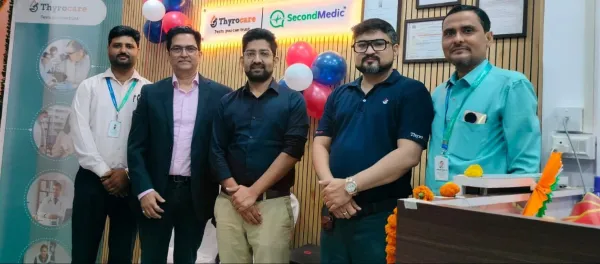
For example, services Thyrocare Home Collection and startup-led mobile labs facilitate remote sample collection, automated lab analysis, and real-time digital reporting.
This model supports mass screening for infectious diseases, early detection of chronic conditions, and public health initiatives.
g. AI-Enabled Clinical Insights
Actionable AI moves beyond traditional diagnostics by analyzing complex clinical data to generate treatment recommendations and predictive insights. These AI-driven tools help clinicians make informed decisions, optimize workflows, and improve patient outcomes.
In India, platforms like Qure.ai use AI to interpret radiology scans, flag critical conditions, and assist clinicians in decision-making.
h. Precision Medicine Through Genomic Triage
Integrating AI with genomic data allows healthcare providers to identify high-risk patients, tailor interventions, and prioritize care.
Genomic triage supports predictive strategies in oncology, cardiology, and inherited disorders, enabling personalized and preventative healthcare at scale.
This approach enhances patient outcomes, reduces unnecessary treatments, and positions India at the forefront of personalized and precision healthcare.
Challenges & Risks in Indian Healthcare
Despite the growing market trend the India healthcare sector faces numerous challenges including-
- Infrastructure Gaps: Rural and semi-urban areas remain underserved, with limited access to hospitals, diagnostic labs, and telehealth services.
- Adoption Gap in Smaller Cities: Despite digital health initiatives, uptake of EHR/EMR, AI diagnostics, and remote monitoring is uneven outside metros. Many clinics still rely on paper-based workflows.
- Skilled Workforce Shortage: Limited availability of trained personnel in AI/ML, health informatics, and telehealth operations slows digital transformation.
- Regulatory & Compliance Complexity: Scaling digital health increases scrutiny around data privacy, security, patient consent, and governance, posing challenges for startups and hospitals.
- Capital & ROI Pressures: Hospitals and investors require measurable outcomes; startups must balance innovation with demonstrable efficiency, cost-effectiveness, and patient benefits.
- Affordability Concerns: High-cost technologies may restrict access for lower-income populations, potentially widening healthcare disparities.
Future Outlook
India’s healthcare market is poised for robust growth, with projections indicating it will exceed $1.5 trillion by 2020, driven in large part by the rapid expansion of digital health solutions. The integration of AI and predictive analytics is expected to significantly enhance diagnostics, patient management, and hospital operations, enabling more precise and efficient care delivery.
At the same time, telehealth and mHealth platforms are scaling rapidly, with widespread adoption of remote care models, wearable devices, and personalized health monitoring tools. The development of a national health data infrastructure will further support data-driven policymaking, allowing for improved planning, disease surveillance, and optimal resource allocation.
These trends, combined with strong investment opportunities in startups, MedTech, digital therapeutics, and health analytics, position India to become a global hub for digital health innovation, where technology, policy, and entrepreneurship converge to drive a more accessible, efficient, and patient-centric healthcare ecosystem.
Wrapping Up
India’s healthcare market is at a critical juncture, characterized by rapid digitization, policy support, and robust innovation ecosystems. The combination of significant market growth, ambitious government initiatives, especially in digital healthcare and the integration of emerging technologies like AI, IoT, and big data analytics is driving a new era of health services delivery. As digital adoption continues to scale, the industry is expected to achieve heightened efficiency, improved accessibility, and more personalized care. The future of Indian healthcare lies in harnessing these technological trends while ensuring equitable access and sustainable health outcomes for its diverse population.
Stay tuned for more such updates on Digital Health News
Follow us