A Look into Key Government Healthcare Technology Initiatives

India’s digital health strategy is anchored in building a national digital public infrastructure to improve access, continuity of care, efficiency, and public health governance. Over the last decade, India has undergone a seismic shift from fragmented, paper-based medical services to a unified, data-driven digital health ecosystem.
As of early 2026, the convergence of the Ayushman Bharat Digital Mission (ABDM), artificial intelligence (AI), and robust telemedicine networks has created a global blueprint for public health governance.
The Government of India recognizes the critical role of digital health in transforming healthcare delivery. By implementing effective monitoring and evaluation platforms and promoting the use of Information and Communication Technology (ICT), the government aims to fulfill its goal of "reaching services to citizens" and "citizen empowerment through information dissemination" to bring about significant improvements in the public healthcare delivery."
In this article, we shall discuss some Key Government Healthcare Technology initiatives that are reshaping the healthcare system.
Key Government Healthcare Technology Initiatives
The following initiatives form the backbone of government-led digital health transformation, which includes
1. National Digital Health Blueprint (NDHB)
The National Digital Health Blueprint (NDHB) is a foundational framework released in October 2019 to guide the creation of a national digital health ecosystem in India.
It articulates a vision to support Universal Health Coverage by leveraging open, interoperable, and standards-based digital systems that can be adopted across the healthcare continuum.
The blueprint places strong emphasis on data security, privacy, and confidentiality, ensuring that health information is managed in a safe and trusted manner.
By defining core architectural components, governance structures, and implementation principles, NDHB provides a structured roadmap for the phased and coordinated rollout of digital health initiatives at the national level.
2. Ayushman Bharat Digital Mission (ABDM)
The Ayushman Bharat Digital Mission (ABDM) is a flagship nationwide initiative launched in 2021 to build a federated interoperable digital health ecosystem across India.
The mission focuses on issuing unique Ayushman Bharat Health Account (ABHA) IDs to citizens, enabling the creation and access of electronic health records (EHRs) that can be securely shared across healthcare providers with patient consent.
It also establishes comprehensive registries of healthcare facilities and healthcare professionals, supporting standardized identification and interoperability within the system.
By enabling continuity of care, seamless data exchange, and integration of digital health services across public and private providers, ABDM aims to make healthcare delivery more citizen-centric, affordable, efficient, and secure.
3. Telemedicine and eSanjeevani
Implemented under MoHFW’s digital health efforts to provide cloud-based telemedicine services, the eSanjeevani platform has evolved into the world's largest government-led telemedicine service.
It operates on a "Hub and Spoke" model, connecting rural Ayushman Arogya Mandirs (Health & Wellness Centers) to specialist doctors in urban medical colleges.
This system has significantly reduced out-of-pocket expenditure (OOPE) by eliminating the need for rural patients to travel long distances for primary and secondary consultations.
It operates in two modes: Doctor-to-Doctor teleconsultations (provider-to-provider model) and Patient-to-Doctor teleconsultations for remote primary healthcare
Has rapidly scaled as one of the world’s largest telemedicine platforms, enabling remote healthcare access for millions of Indians. Till now, the platform has served more than 442,516,847 patients.
4.CoWIN and Aarogya Setu
The pandemic-era systems CoWIN and Aarogya Setu have evolved beyond their initial mandates. CoWIN’s scalability, handling over 2 billion vaccination records, has informed new designs for population-wide health campaigns, immunisation tracking, and outbreak surveillance.
Aarogya Setu’s risk-scoring and mobility analytics frameworks are being repurposed for early warning systems and communicable disease monitoring. Both platforms now feed insights into national health dashboards and ABDM-linked registries.
5. U-WIN Portal
U-WIN (Universal Immunization Platform) was launched to digitize India’s Universal Immunization Programme (UIP) and is modeled on the scalable architecture of the Co-WIN platform developed during the COVID-19 pandemic.
The platform is equipped with key features such as e automated SMS alerts for upcoming vaccine doses and the issuance of a universal QR-based e-Vaccination Certificate, helping improve coverage, reduce drop-outs, and ensure that no child is missed in the immunization cycle.
6.Tele-MANAS (Mental Health Support)
A 24/7 national tele-mental health helpline launched to address the rising need for psychological support.
The service provides free and confidential counseling through trained professionals and is available in more than 20 regional languages, improving reach and inclusivity.
7. AI and MedTech Innovation in India
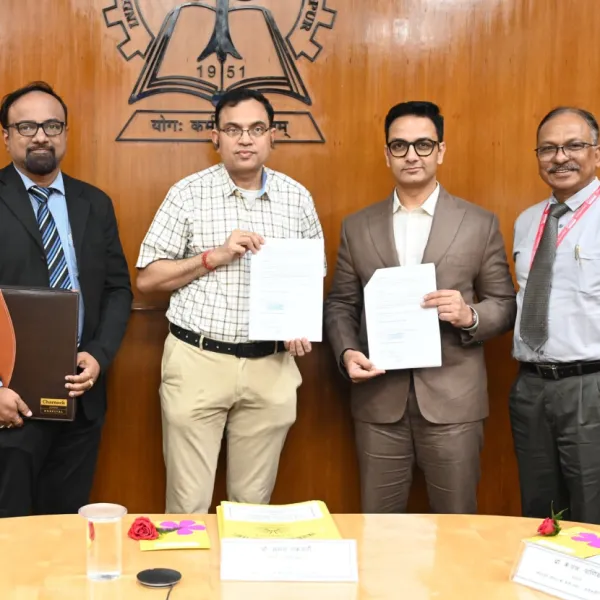
AI and MedTech Innovation in India is accelerating under the government’s “AI for All” vision through the IndiaAI Mission, supported by partnerships with institutions such as IIT Kanpur. These efforts are moving AI from research environments into routine use across public hospitals and national health programmes.
At the national level, the MoHFW’s eHealth AI unit, operated by the Wadhwani Institute of Artificial Intelligence, is developing image-based AI solutions with leading institutions such as AIIMS Delhi, AIIMS Rishikesh, and PGIMER Chandigarh. Several tools, including clinical decision support systems in eSanjeevani, disease surveillance solutions under IDSP, and AI models for diabetic retinopathy and chest X-ray analysis, are already deployed or ready for scale-up, reflecting the growing integration of AI into India’s public healthcare infrastructure.
Significance of Key Government Healthcare Technology Initiatives
- Enhanced Access: Digital health initiatives such as eSanjeevani, Tele-MANAS, and U-WIN expand access to healthcare and mental health services, particularly in rural and underserved regions.
- Continuity of Care: ABDM and health ID systems enable seamless sharing of electronic health records across providers, improving patient management and follow-up.
- Data-Driven Public Health: Platforms like CoWIN, Aarogya Setu, and AI-driven surveillance enable real-time tracking, early warning, and predictive analytics for population health management.
- Operational Efficiency: AI-enabled laboratory systems and workflow digitization reduce turnaround times, streamline hospital operations, and lower out-of-pocket expenditures.
- Citizen Empowerment: SMS alerts, QR-based certificates, and digital dashboards empower citizens with timely information and facilitate informed healthcare decisions.
- Innovation in Healthcare Delivery: Initiatives like AI and MedTech solutions bring cutting-edge diagnostic and clinical support technologies to public health infrastructure.
Wrapping Up
India’s healthcare landscape is undergoing a substantial digital transformation through a well-crafted mix of government technology initiatives. Programs like the Ayushman Bharat Digital Mission, eSanjeevani are shaping a future where healthcare is more accessible, efficient, and integrated.
The continued expansion of interoperable systems, predictive analytics, and AI solutions has further strengthened early disease detection, optimized resource allocation, and enabled personalized patient care.
With continued innovation and policy support, government healthcare technology initiatives in India are well-positioned to deliver equitable, quality, and data-driven healthcare for all.
Stay tuned for more such updates on Digital Health News
Follow us