FHIR API in Healthcare: How it Enables Seamless Data Exchange in India

Just enter any hospital in India, and you will see the same scenario where patients are seen carrying their plastic folders containing X-ray scans, laboratory test reports and prescriptions from three separate hospitals, none of which can "communicate" with each other. The moment they change their physician; the process begins all over again. It is exactly this problem that FHIR has been designed for, and in India, it has become the core of one of the most ambitious digital healthcare initiatives in the world.
What Exactly is FHIR?
FHIR (Fast Healthcare Interoperability Resources, pronounced as "fire") is a data standard developed by HL7 International, which provides healthcare systems with a way to communicate in a standard language. Rather than having each hospital, each laboratory, and each insurance company develop its own proprietary format, FHIR segments health information into "resources" that have standardized structure, such as Patient, Observation, Medication Request, Diagnostic Report, etc. The resources move via modern APIs based on web technology, namely JSON and XML.
The main difference between FHIR and previous standards used in health IT solutions is that FHIR does not try to become a single monolithic solution; it is modular. For instance, the laboratory sends a diagnostic report only; the pharmacy sends a record about medications; while the EHR at the hospital assembles the whole picture of the patient’s condition.
Why India Needed This
In India, the problem with healthcare data is not about a lack but rather fragmentation. A person’s MRI can be on a CD in one city; his/her diabetes information can be available in some other local software of the clinics in another city, while their insurance information is in yet another different system altogether.
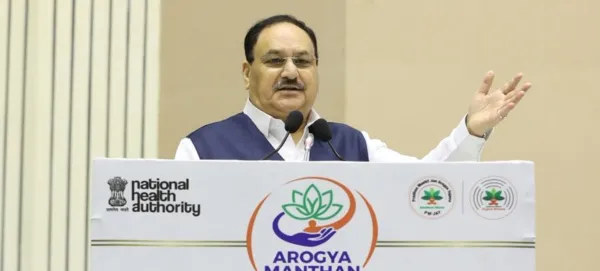
Ayushman Bharat Digital Mission (ABDM), created by India's National Health Authority, was supposed to solve just this problem through the use of FHIR (FHIR R4 to be specific, using the FHIR Implementation Guide for ABDM). It is often compared to the UPI revolution of payments, where the idea was to create a single digital platform where various previously isolated players, such as hospitals, laboratories, pharmacies, and insurance companies, could communicate with each other through a standardised format.
How the Architecture Actually Works
The ABDM ecosystem is built using the following foundational components:
• ABHA (Ayushman Bharat Health Account): This is the unique identity of the person in the form of a digital ID, which acts much like the Aadhaar number in the case of health care.
• Health Information Provider (HIP): These include entities that generate health information - hospitals, laboratories, clinics.
• Health Information User (HIU): This includes entities that use such health information after receiving the patient's explicit consent – another hospital, insurance company, or specialist.
• Consent Manager (HIE-CM): This acts as the consent layer that makes sure no information moves without getting the explicit consent of the patient, for the specified period of time and the purpose.
• Health Facility Registry (HFR) and Healthcare Professionals Registry (HPR): These are national registries of the facilities and professionals participating in the ecosystem.
When the patient visits the new doctor and gives consent to share his history, then the request goes through the consent manager; the HIP prepares the health records in the form of bundles of FHIR and sends them to HIU for further analysis - not the scanned copy that needs to be manually entered in the new system.
The Real-World Payoff
The advantages manifest themselves rather tangibly:
1) Continuity of care – a cardiologist in Bengaluru can access a patient’s previous ECG and medication information via a clinic in Patna instead of starting from scratch.
2) Avoidance of duplicate tests – when past lab reports are available to the doctor, there is no need for ordering them twice, saving time and money.
3) Faster claims processing – the National Health Claims Exchange (NHCX) takes advantage of the same FHIR infrastructure to streamline claim and evidence transfer between hospitals and insurers.
4) Ownership by patients – thanks to the use of a consent-based approach and identification via ABHA, patients rather than hospitals get control over record access.
5) International compatibility – by using an existing standard instead of developing a proprietary one, India's digital health system becomes interoperable with EHRs worldwide
The Roadblocks That Remain
All of the above comes at a cost. Hospital IT infrastructure that predates FHIR, particularly in small-town settings, requires effort and money for a proper implementation. Digital literacy remains inconsistent; many patients fail to understand how "consent giving" through applications works. There is currently no specific data protection legislation regarding personal health information in India on par with the GDPR, and therefore, certain grey areas remain in relation to potential misuse and liability within the ABDM consent framework. The process of integration is a multistep certification procedure (the M1-M3 milestones in ABDM) and can be very costly for small clinics and startups without integration services.
Where This is Headed
Adoption is picking up pace. Several crores of ABHA IDs have been generated, and every quarter sees an increase in hospitals, diagnostics chains, and insurance companies joining the HIP/HIU platform. With FHIR-based exchange improving, the far greater advantage will be of having a longitudinal health record of every Indian individual across various doctors, cities, and insurance agencies using a global standard.
As FHIR-enabled interoperability becomes the standard practice at hospitals, laboratories, and insurance companies in India, the more important issue is one of trust – will patients be sufficiently comfortable in their consent structure to allow their data to flow, or will the issue of data protection prove to be the most significant impediment to India’s digital health ambitions?
Stay tuned for more such updates on Digital Health News
Follow us