Wearable Neonatal Monitoring System NemoCare Raksha Expands Continuous Care Beyond ICUs
NemoCare is developing an AI-enabled neonatal analytics platform with support from BIRAC and ICMR to predict illness onset and long-term complications.
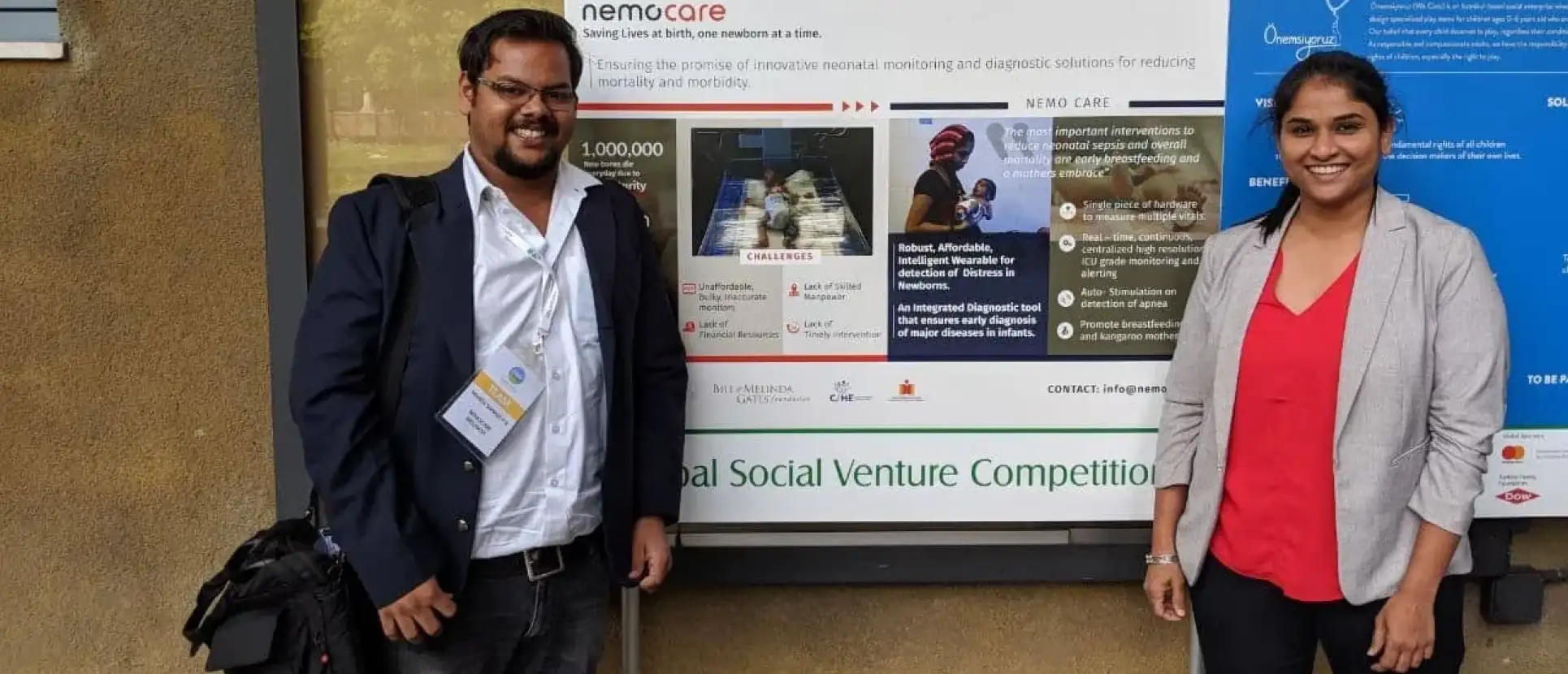
India has seen growing adoption of NemoCare Raksha, a wearable neonatal monitoring system developed by engineers Manoj Sanker and Pratyusha Pareddy under their Telangana-based startup NemoCare Wellness.
The device delivers continuous, ICU-grade vital sign tracking for newborns in low-resource settings, helping clinicians identify early signs of distress and intervene in time.
India has continued to face persistent challenges in neonatal care, particularly outside tertiary hospitals, where access to continuous monitoring remains limited. NemoCare Raksha has been designed to address this gap by extending reliable monitoring to government hospitals and small healthcare facilities.
The technology emerged from the founders’ personal experiences with premature births and their clinical exposure during a fellowship at the Centre for Healthcare Entrepreneurship at IIT Hyderabad.
During this period, they observed widespread shortages of neonatal monitoring infrastructure, especially in public hospitals managing high patient loads with limited staff and equipment.
The need for such solutions is underscored by India’s neonatal burden. National and global estimates indicate that around 3.2 million preterm births occurred in India in 2020, contributing significantly to neonatal mortality.
Early identification of physiological distress through continuous monitoring is known to improve survival, yet such monitoring is often unavailable outside intensive care units.
Wearable technologies like Raksha aim to close this gap by enabling early detection and reducing dependence on manual observation.
Raksha is a sock-like wearable device placed on a newborn’s foot. It continuously tracks heart rate, respiratory rate, blood oxygen saturation, and body temperature, while also capturing advanced indicators such as heart rate variability and perfusion index.
These parameters are wirelessly transmitted to a central dashboard accessible on bedside tablets, allowing a single nurse to oversee 40 to 50 babies simultaneously. Automated alerts flag abnormal trends, enabling faster clinical response.
A distinguishing feature of the wearable system is its ability to provide uninterrupted monitoring even when a newborn is outside an incubator.
This supports safer Kangaroo Mother Care, where skin-to-skin contact between mother and infant improves outcomes for preterm babies but is often restricted due to a lack of monitoring. By combining mobility with clinical-grade accuracy, the wearable extends quality neonatal care beyond conventional intensive care settings.
Since its commercial launch in 2022, the wearable monitoring system has been used for over 20,000 newborns nationwide.
Building on this foundation, NemoCare is developing an AI-enabled neonatal analytics platform with support from BIRAC and ICMR to predict illness onset and long-term complications.
With multiple Indian patents, a US FDA application underway, and Rs 1 crore in funding raised, the company positions wearable neonatal monitoring as a scalable component of India’s digital health ecosystem.
Stay tuned for more such updates on Digital Health News
Follow us