Philips Launches AI-Powered DeviceGuide to Support Minimally Invasive Valve Repair Procedures
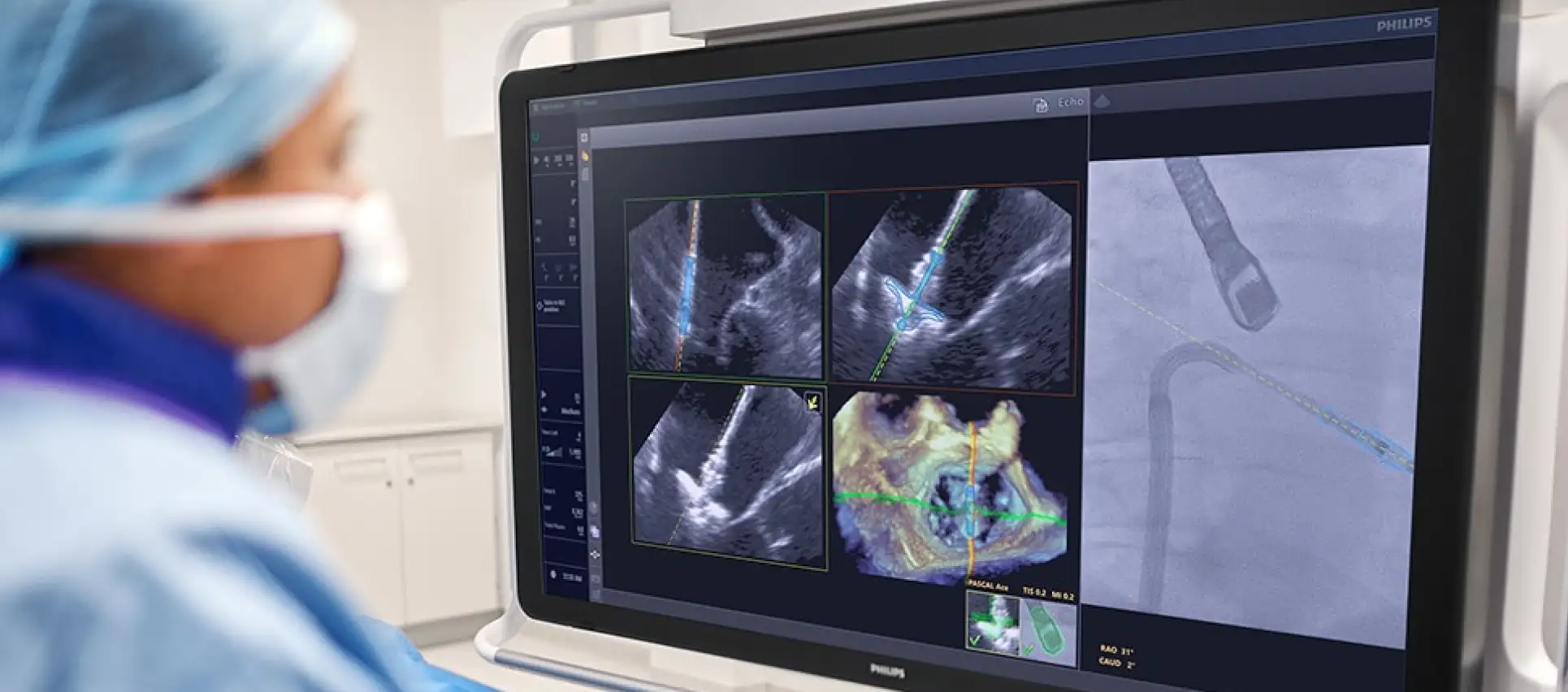
The tool integrates directly into the company’s EchoNavigator imaging platform and provides real-time visualization to guide complex procedures such as mitral transcatheter edge-to-edge repair (M-TEER).
Philips has introduced DeviceGuide, an AI-enabled device-tracking solution developed to support clinicians performing minimally invasive heart valve repair. The tool integrates directly into the company’s EchoNavigator imaging platform and provides real-time visualization to guide complex procedures such as mitral transcatheter edge-to-edge repair (M-TEER).
The launch targets a growing global need for advanced imaging support in treating mitral valve regurgitation, a condition affecting more than 35 million adults worldwide. Many patients are considered too high-risk for open-heart surgery, making minimally invasive options like M-TEER increasingly essential. These procedures demand precise device placement and continuous interpretation of multiple imaging streams inside a moving heart.
DeviceGuide is designed to streamline this process through automated AI-based tracking. The software identifies and follows the small repair device as it moves through the chambers of the heart, combining live X-ray and echocardiography feeds to build a synchronized 3D model. This model is superimposed on the real-time images displayed to the physician, offering clearer spatial orientation and reducing the cognitive load associated with manual interpretation.
According to Philips, the software aims to help clinicians maintain accuracy while navigating complex anatomical structures during valve repair. Its integration with the existing EchoNavigator platform allows teams to switch seamlessly between imaging views without losing positional awareness of the device.
Dr. Atul Gupta, Chief Medical Officer for Diagnosis & Treatment at Philips, highlighted the relevance of bringing AI assistance directly into procedural workflows. He stated, “With DeviceGuide, we’re bringing AI into the heart of the procedure room, and into the heart itself.”
The company notes that the technology is intended to support clinical decision-making rather than replace manual expertise. By improving visualization and tracking, DeviceGuide may help reduce variability and streamline procedural steps in high-risk patient populations requiring minimally invasive repair.
Philips continues to expand its AI portfolio across cardiology and image-guided therapy, with DeviceGuide representing its latest advancement in real-time procedural support tools.
Stay tuned for more such updates on Digital Health News
Follow us