Philips Introduces Rembra CT to Accelerate Imaging Speed & Expand Patient Access
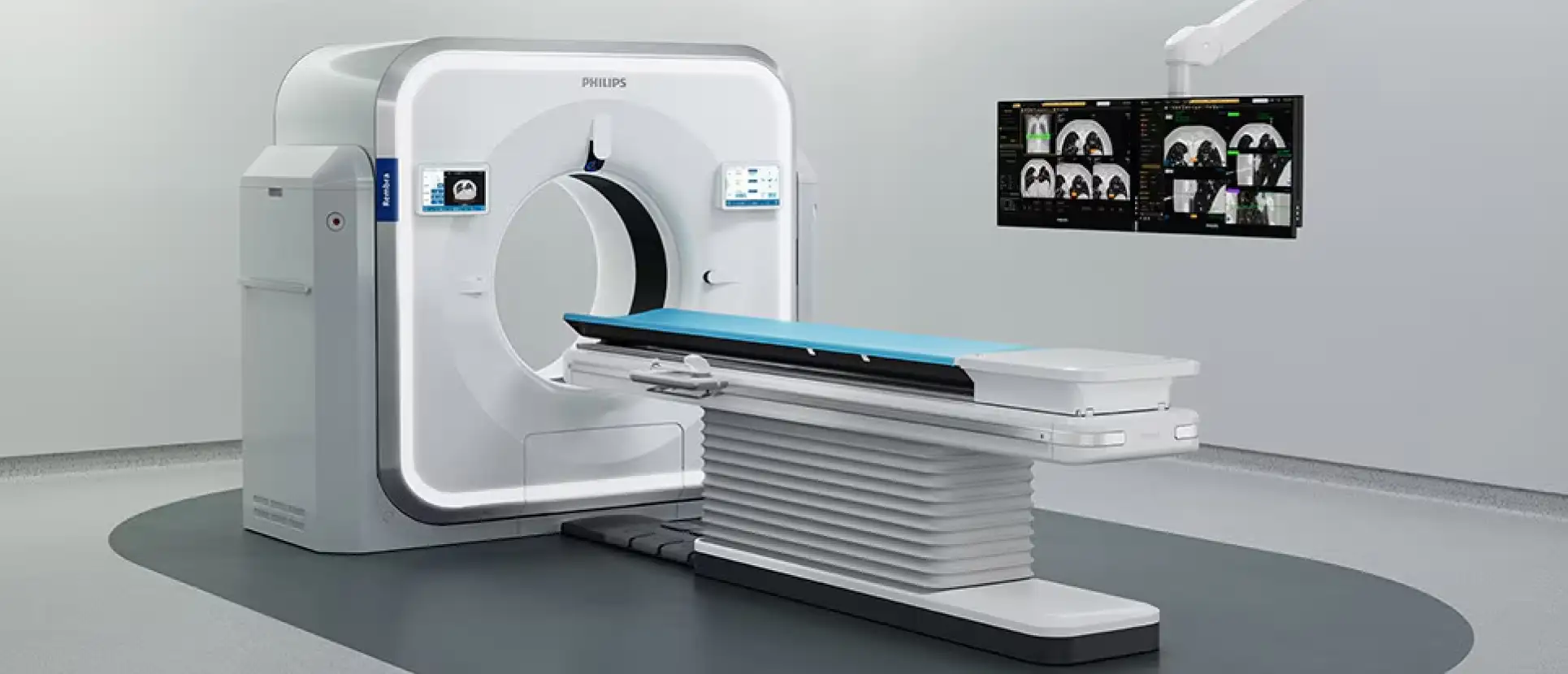
The system can reconstruct images at speeds of up to 106 images per second, with AI-enabled workflow tools integrated into the system to automate routine imaging steps for radiology teams.
Philips has introduced its next-generation Rembra CT system, designed to support high-acuity imaging environments with faster image reconstruction, AI-supported workflows and improved patient accessibility.
The system aims to help radiology departments manage rising imaging demand while enabling quicker clinical decision-making.
According to Philips, the system can reconstruct images at speeds of up to 106 images per second, allowing clinicians to review scans almost immediately after acquisition. In time-sensitive situations such as trauma or stroke assessment, this capability may help radiologists and emergency teams make quicker clinical decisions.
The system is also engineered for high throughput. Philips states that Rembra CT can support up to 270 examinations per day, helping imaging departments manage growing demand without slowing diagnostic workflows.
Patient accessibility and positioning have also been key design considerations. The Rembra CT system features an 85 cm bore, described as the largest in its class among frontline radiology CT systems.
The wider opening is intended to accommodate a broader range of patient types, including bariatric patients, trauma cases and individuals undergoing complex interventional procedures.
The system includes a 60 cm standard field of view and an extended 85 cm field of view, allowing comprehensive anatomical visualization in a single scan. This capability may help reduce the need for repeat imaging and improve patient comfort during examinations.
“Rembra is built for the realities that clinicians face every day,” said Dan Xu, Business Leader for Computed Tomography at Philips. “By combining our most advanced detector technology with AI-powered workflows and industry-leading speed, Rembra represents a significant step forward for high-acuity imaging, delivering speed, access and diagnostic confidence when it matters most.”
At the core of the Philips Rembra CT platform is the company’s NanoPanel Precise XD detector, developed to operate alongside AI-driven imaging tools. The detector offers in-plane spatial resolution of 23 line pairs per centimetre, enabling detailed visualization of anatomical structures as small as 0.25 mm.
A two-dimensional anti-scatter grid has been incorporated to help maintain image clarity across a wide range of patient sizes and clinical scenarios.
AI-enabled workflow tools are also integrated into the system to automate routine imaging steps and simplify daily operations for radiology teams. These workflow capabilities are intended to support productivity and deliver more consistent imaging outcomes across different operators and patient conditions.
Philips has designed the Rembra CT system for long-term operational reliability, stating that it can function in high-altitude environments of up to 5,000 metres and support a system lifespan of up to 20 years with appropriate maintenance and upgrades.
Stay tuned for more such updates on Digital Health News
Follow us