NUS Medicine, PolyU Partner to Develop AI-Based Community Screening for Knee Osteoarthritis
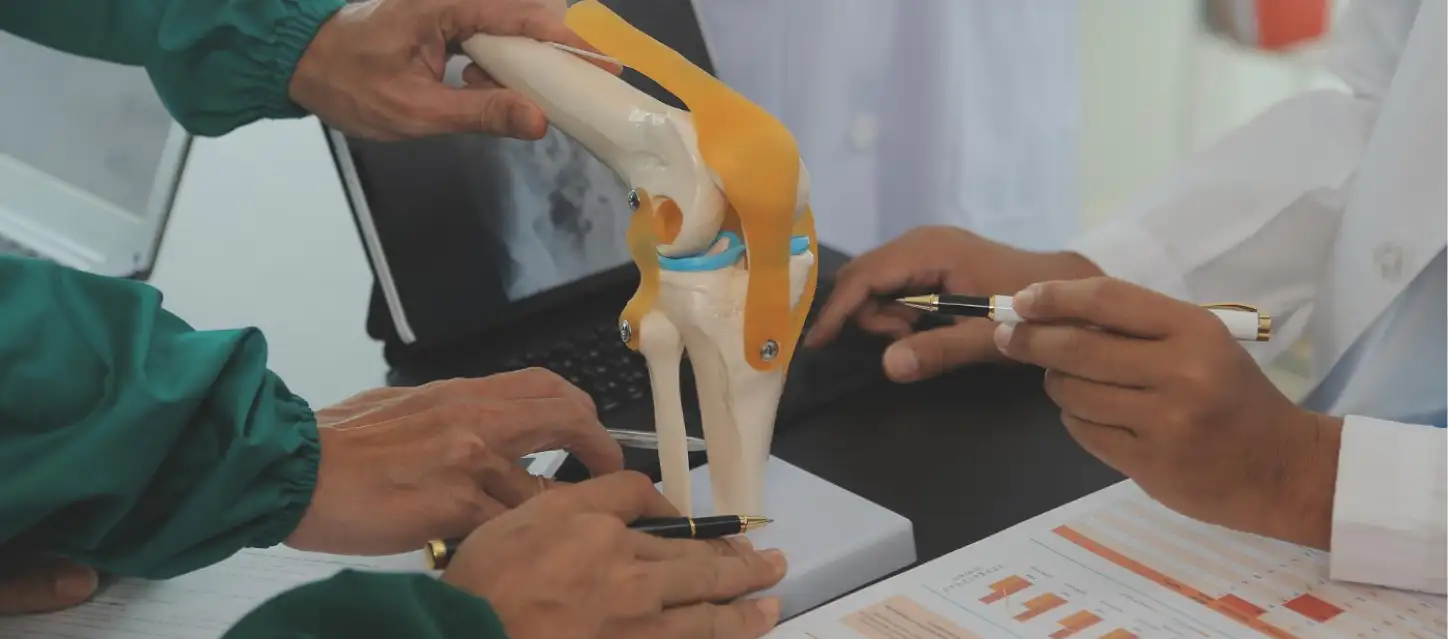
The collaboration, formalized through a memorandum of understanding between the NUS Medicine Department of Orthopaedic Surgery and the PolyU Department of Biomedical Engineering, will focus on advancing community-based musculoskeletal research through the JointCare program.
The Yong Loo Lin School of Medicine at the National University of Singapore (NUS Medicine) and The Hong Kong Polytechnic University (PolyU) have entered into a strategic partnership to develop and test an artificial intelligence-enabled approach for identifying and managing knee osteoarthritis (OA) in community settings.
The collaboration, formalized through a memorandum of understanding between the NUS Medicine Department of Orthopaedic Surgery and the PolyU Department of Biomedical Engineering, will focus on advancing community-based musculoskeletal research through the JointCare program.
According to the institutions, JointCare is developing an AI-enabled, label-free motion profiling system designed to assess lower-limb movement patterns associated with knee osteoarthritis. The technology will be used alongside a structured questionnaire to support community-based risk stratification and patient triage.
The program aims to improve the early identification of individuals at risk of knee OA and help determine the most appropriate care pathway. Researchers said the approach could enable more patients to receive care within community settings while identifying cases that require clinical intervention.
NUS Medicine noted that the initiative could help reduce unnecessary specialist referrals by distinguishing patients suitable for community-based management. It may also support faster review of clinically significant cases and help ease demand on hospital services.
An initial proof-of-concept pilot is expected to begin in the fourth quarter of 2026 in Boon Lay, Singapore. The study will evaluate the feasibility and performance of the AI-based screening model in a real-world community environment and help refine operational workflows before wider deployment.
Following the pilot, the JointCare program is planned for gradual expansion across communities in western Singapore. The two universities will also explore opportunities to extend the initiative through multi-site research collaborations outside Singapore, including potential implementation in Hong Kong.
The partnership reflects growing interest in the use of AI for osteoarthritis management. In 2025, researchers in South Korea introduced an AI model designed to predict the likelihood that patients with osteoarthritis in one knee would develop the condition in the opposite knee.
NUS Medicine has also expanded its community-focused healthcare research efforts in recent years. In 2023, the institution established the Centre for Innovation and Precision Eye Health to support community-based eye care initiatives and research.
Stay tuned for more such updates on Digital Health News
Follow us